


Everybody has a recipe they copied off a parent’s card and could never quite match. The beef browns the same way. The tomatoes come out of the same cans. The pot sits on the stove all afternoon, and the sauce still tastes like a Tuesday instead of like home. Almost always, the gap is one line nobody bothered to write down. In the case of the spaghetti and meat sauce I keep coming back to, that line was dried whole cloves.
The cook who shares this family sauce only worked it out after her sister texted a photo of her own copy of their mom’s recipe, cloves and all. Her mom picked up the trick from a friend named Virginia. Four to six whole cloves go into the pot with the bay leaves, and three hours later nobody at the table can name what makes the sauce taste better than theirs.
Why Whole Cloves Belong in a Pot of Red Sauce
Cloves are not a standard meat sauce ingredient. You will not find them in most jarred marinara, and you will not find them in the basic tomato-garlic-onion-oregano formula almost every spaghetti recipe runs on. That is exactly why they work. They add an earthy, spiced flavor that is hard to place, the sort of background warmth people notice without being able to point at it.
Her mom uses five or six cloves. Her husband prefers four. I side with four. Cloves are loud on their own, and a long simmer pulls plenty out of them. Start at four, taste the sauce at the two-hour mark, and if you want more next time, go to five.
Use whole cloves, not ground. Whole ones release their flavor slowly over three hours and stay visible, so you can scoop them out with the bay leaves before serving. Ground clove dumps everything at once and there is no taking it back.
What Else Goes In, and the One Rule About Mushrooms
The meat is one pound of 85% lean ground angus beef, which has enough fat to taste like something without leaving a slick on top. Ground turkey works if that is what is in the freezer. Brown it, drain the rendered fat, then put the meat back in the pot.
Three canned tomato products go in, not one: 29 ounces of diced tomatoes, 29 ounces of tomato sauce, and 6 ounces of tomato paste. The blend gives you a more nuanced tomato flavor and a better texture than any single can. Buy a brand you trust, because cheap canned tomatoes are where sauces pick up that harsh acidic or faintly metallic edge. Plenty of cooks go straight to imported San Marzano cans for this reason, and most grocery stores carry at least one brand.
The mushrooms are canned. Fourteen ounces of canned sliced mushrooms, never fresh. It sounds like a shortcut and it is not: fresh mushrooms throw off water and keep their bite, while canned ones go soft and surrender into the sauce the way this recipe wants. There is also a practical bonus. The empty mushroom can is the measuring cup for the wine.
A cup of red wine goes in, plus a 15-ounce can of beef broth for another layer of meatiness. Use wine you would actually drink. A decent boxed blend or a Pinot Noir is the house pick. Skipping alcohol? A quarter cup of balsamic vinegar covers the acid and the savory depth instead.
Round it out with a chopped yellow onion, four stalks of celery, four cloves of garlic, two bay leaves, two tablespoons of granulated sugar, dried basil, dried oregano, chopped parsley, kosher salt and black pepper.
Three Hours Is the Recipe, Not a Suggestion
Prep runs about 25 minutes. After that the pot does the work: bring everything to a boil, drop the heat, cover, and let it go at least three hours on medium-low. That is how long it takes for the beef, the broth, the wine and the cloves to stop tasting like separate things.
Stir occasionally. A meat sauce this thick will catch on the bottom of the pot if you walk away for the whole afternoon, and anything that scorches down there turns the entire batch bitter. Use a heavy-bottomed stock pot if you have one.
Bitterness has a second source, and it happens in the first ten minutes. Cook the onion, celery and garlic just until they soften, five to seven minutes. Let the garlic take on real color and you will taste it three hours later.
One optional move at the very start, borrowed from cooks who want a smoky note: coat the bottom of the pot with a thin layer of tomato paste and a few drops of olive oil, and let it caramelize over medium-low heat until it chars before anything else goes in. Smaller flakes work their way into the sauce. Larger pieces are easy to lift out. I would do this in place of some of the paste in the recipe, not on top of it.
If the Sauce Still Tastes Sharp
Two tablespoons of sugar are already in this recipe, and that handles most of the tomato tang. If your cans were especially acidic, add more sugar a teaspoon at a time and taste after each one. Pulling a sauce back from too sweet is far more work than nudging it sweeter.
Carrots do the same job with less sweetness. Grate a tablespoon or two and add them early, or do what Giada De Laurentiis does and drop in two small peeled carrot sticks you can pull out once they have absorbed the acidity. You get the balance without the sugar.
Baking soda is the savory fix. A small pinch near the end of the simmer neutralizes some of the acid without adding any sweetness at all. Wait for the foam to settle before you decide whether it needs more, and go slowly. Too much and the sauce goes flat, dull or soapy. If you overshoot, a squeeze of lemon juice or a splash of vinegar brings the brightness back.
Two Finishing Moves Worth Stealing
Save your Parmesan rinds. Dropped into the pot once everything else is in, a rind slowly releases a salty, aged-cheese richness, then comes out at the end like a bay leaf. De Laurentiis uses the rind from a whole block in her pomodoro and lets it go about 35 minutes on low. Rinds keep in a bag in the fridge for a couple of months, or in the freezer for a year.
The other move is butter. One or two tablespoons stirred in right before serving melts into the sauce and leaves it silkier and rounder without making it taste like a cream sauce. Brown the butter first and you get a nutty, toasted note underneath the tomato. It takes thirty seconds and it is the single easiest upgrade here after the cloves.
Other Secret Ingredients People Swear By
Instant coffee has a following. A teaspoon dissolved in water or stock, stirred into a full batch, adds depth without any coffee flavor, and it works on jarred sauce too. The idea went mainstream when British grocery chain Sainsbury’s put instant coffee in its spaghetti bolognese recipe as part of a 2015 campaign. Brewed coffee does the job if you have no instant. Skip anything flavored.
Cocoa powder runs on the same logic. Ana Sortun of Oleana in Cambridge, Massachusetts adds it to her pasta sauce because it gives the sauce “a complex, meaty taste.”
My honest read: pick one. A sauce with cloves and coffee and cocoa and a Parmesan rind is a sauce that tastes confused. The cloves are the one I would never skip.
Serving It, and Saving the Rest
Salt the pasta water like the sea. Pasta that tastes like nothing on its own makes the whole plate feel thin, no matter how good the sauce is. A pound of dried spaghetti feeds the batch, though the sauce is just as happy on tortellini, ravioli or any twirly shape, and it makes a serious lasagna filling.
The recipe makes 10 servings at 365 calories each, so plan on leftovers. The sauce keeps in the refrigerator for three to four days, or in a gallon zip-top bag in the freezer for up to three months. Thaw frozen sauce in the fridge for a day, or heat it covered over medium to medium-low until it loosens. Reheat leftover plated spaghetti in a covered saucepan over medium-low with a splash of beef broth.
Serve it with a cold, crunchy iceberg salad and garlic bread, and grate Parmesan over the top at the table. If you change one thing about your red sauce this year, make it the four cloves.
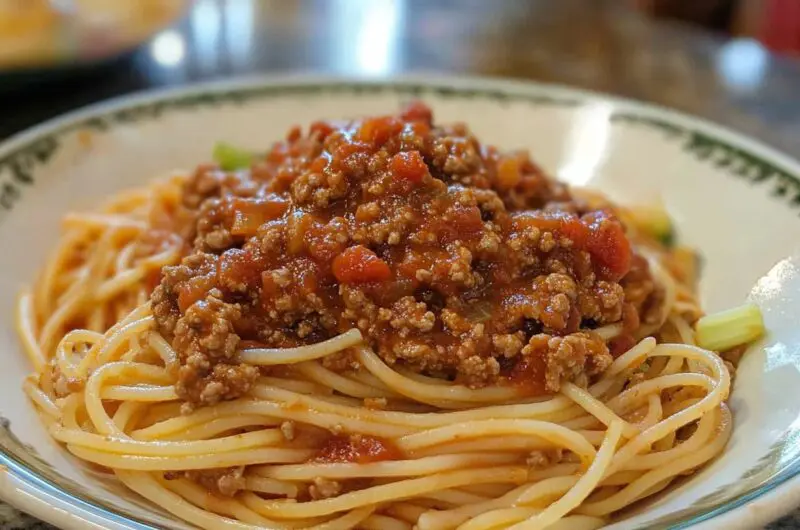
Mom’s Spaghetti and Meat Sauce with Whole Cloves
Course: Main CourseCuisine: Italian10
servings25
minutes3
hours365
kcalThe three-hour meat sauce with one pantry spice nobody ever guesses.
Ingredients
1 pound 85% lean ground beef
1 yellow onion, chopped
4 stalks celery, chopped
4 cloves garlic, minced or pressed
29 ounces canned diced tomatoes
29 ounces tomato sauce
6 ounces tomato paste
14 ounces canned sliced mushrooms (not fresh)
1 cup red wine (Pinot Noir preferred)
15 ounce can beef broth
4-6 whole cloves (4 preferred)
2 bay leaves
2 tablespoons granulated sugar
1/4 cup chopped fresh parsley (or 4 teaspoons dried)
1 teaspoon dried basil
1 teaspoon dried oregano
1 teaspoon kosher salt
1 teaspoon freshly ground black pepper
1 pound dried spaghetti noodles
Grated Parmesan cheese, for serving
Directions
- Brown the ground beef in a large heavy-bottomed stock pot over medium-high heat for about 5 to 7 minutes, stirring occasionally so it cooks evenly. Drain off the rendered fat, then return the meat to the pot. Skipping the draining step is what makes a meat sauce taste greasy.
- Add the chopped onion, celery and garlic to the beef and cook for another 5 to 7 minutes, until the vegetables soften. Keep the heat moderate and do not let the onion and garlic take on much color. Browned garlic turns bitter and that bitterness sticks around through the whole simmer.
- Stir in the diced tomatoes, tomato sauce, tomato paste and the canned mushrooms with their liquid. Use the empty mushroom can to measure the red wine, then pour it in along with the beef broth. The three tomato products together give the sauce its body and a more layered tomato flavor than any single can would.
- Drop in the whole cloves and the bay leaves, then add the sugar, parsley, basil, oregano, salt and black pepper. Start with 4 cloves if this is your first time making the sauce. Stir everything together so the spices are distributed before the pot comes up to temperature.
- Bring the sauce to a boil, then reduce the heat to a low simmer and cover with a lid. Cook for at least 3 hours on medium-low heat. This long, slow simmer is what turns a pot of separate ingredients into one rich, meaty sauce, so do not cut it short.
- Stir the sauce occasionally while it simmers, scraping the bottom of the pot each time. A thick meat sauce will catch and scorch if left alone for hours, and anything that burns down there will turn the whole batch bitter. Taste around the two-hour mark and adjust the salt if it needs it.
- When the sauce is nearly done, bring a large pot of water to a boil and salt it generously. Cook the spaghetti according to the package directions, then drain it. Well-salted water gives the pasta its own flavor instead of leaving the sauce to do all the work.
- Fish out the bay leaves and the whole cloves before serving so nobody bites into one. Toss the drained spaghetti into the sauce, or spoon the sauce over the noodles. Finish each plate with grated Parmesan and extra chopped parsley.
Notes
- No wine in the house, or you would rather not use it? Swap in 1/4 cup of balsamic vinegar for acid and savory depth.
- Use canned sliced mushrooms here, not fresh. Fresh mushrooms release water and keep their texture; canned ones melt into the sauce the way this recipe is built for.
- The sauce keeps in the refrigerator for 3 to 4 days, or in a gallon zip-top bag in the freezer for up to 3 months. Defrost in the fridge for a day before reheating.
Frequently Asked Questions
Q: Will my spaghetti sauce taste like cloves?
A: No. Four to six whole cloves spread across a pot this size and three hours of simmering reads as an earthy, spiced warmth in the background rather than a recognizable clove flavor. That is the whole appeal: people can tell the sauce is better, but they cannot tell you why.
Q: Can I use ground cloves instead of whole ones?
A: I would not. Whole cloves release their flavor slowly and can be lifted out with the bay leaves before you serve. Ground clove goes in all at once and there is no way to pull it back if you overdo it.
Q: What if my sauce still tastes too acidic at the end?
A: Add sugar a teaspoon at a time and taste after each addition, or stir in a little finely grated carrot. For a savory fix with no sweetness, add a tiny pinch of baking soda near the end, let the foam settle, and taste before adding any more.
Q: Can I make this sauce ahead for lasagna or stuffed shells?
A: Yes, and it is one of the better reasons to make the full batch. Refrigerate it for three to four days or freeze it for up to three months, then use it as a filling for lasagna, stuffed shells, ravioli or any twirly pasta instead of spaghetti.