


Let me tell you about the night I ruined my shot at a promotion with a plate of spaghetti aglio e olio.
It was a Tuesday. My boss had invited our whole team to a nice Italian place downtown — the kind with cloth napkins and a wine list that didn’t have prices next to anything. I was feeling confident. I’d been killing it on a project for weeks, and this dinner felt like a quiet acknowledgment that I was being noticed. So when the waiter came around, I ordered the aglio e olio. It’s one of my favorite pastas. Simple. Classic. Garlic, olive oil, red pepper flakes, maybe some parsley. I make it at home all the time. What could go wrong?
Everything. Everything could go wrong.
The plate arrived gleaming with oil, the garlic aroma hitting our end of the table like a fog machine. My boss visibly leaned back. The long noodles flopped and splattered as I twirled them, leaving tiny flecks of oil on my shirt cuff. I spent half the dinner trying not to slurp, and the other half realizing that my breath was turning into a biohazard. By dessert — which nobody ordered — I could tell the vibe had shifted. The colleague who got promoted three weeks later? She’d ordered the grilled salmon with a side of roasted vegetables. Fork and knife. No mess. No smell cloud.
I’m not bitter. I’m educated now. And I still love aglio e olio — I just keep it where it belongs: in my own kitchen, on a Friday night, where nobody’s judging me for licking garlic off my fingers.
So here’s the deal. I’m going to give you my very best aglio e olio recipe — the one I’ve been perfecting for years — and I’m also going to tell you exactly when and where to eat it, and more importantly, when not to.
Why Aglio e Olio Is the Wrong Move in Public
Garlic-heavy dishes like aglio e olio are specifically called out as one of the worst foods to order at a business dinner. The issue isn’t the taste — aglio e olio is genuinely one of the best pastas ever created. The issue is that the garlic is pungent, potent, and lingers in the air and on your breath for hours. At a business dinner where conversation is the whole point, you’re basically fumigating your tablemates with every word you speak.
And it’s not just the garlic. Long pastas like spaghetti are a nightmare to eat neatly. The noodles flop around, they drip sauce (or in this case, oil), and they can stain your shirt or — if you’re really unlucky — the paperwork sitting next to your plate. Etiquette expert Nikesha Tannehill Tyson, who literally wrote a book on protocol, specifically warns against ordering spaghetti and other long pastas at business meals because they’re cumbersome to eat and pull attention away from professional conversation.
The same logic applies to bringing garlic-heavy pasta to the office for lunch. The aromatic compounds in garlic get released when heated, creating an invisible cloud that follows you around all afternoon. Gum won’t fix it. Mints won’t fix it. Even brushing your teeth won’t completely get rid of the smell. Your coworkers might not say anything to your face, but trust me — they’ll remember.
Why Aglio e Olio Is the Perfect Home Cook Pasta
Now that we’ve established this is a home-only recipe, let’s talk about why it’s so good. Aglio e olio — which literally translates to “garlic and oil” — is one of the oldest, simplest pasta recipes in Italian cooking. You need about six ingredients. It takes less than 20 minutes from start to finish. It costs almost nothing to make. And when it’s done right, it’s one of those dishes that makes you wonder why anyone bothers with complicated cream sauces.
The magic is in the technique. You’re toasting garlic slices in olive oil until they turn golden and fragrant, then tossing that oil with hot pasta and a splash of starchy cooking water. The starch emulsifies with the oil and creates a silky, clingy sauce that coats every strand. It sounds simple because it is — but the margin for error is razor thin. Burn the garlic by 30 seconds and the whole batch tastes bitter. Use too little pasta water and the dish feels dry and greasy instead of glossy.
I’ve made this easily 200 times. What I’m giving you below is the version that finally clicked — the one where everything comes together and the spaghetti actually shines instead of sitting in a puddle of oil at the bottom of the bowl.
The Garlic Situation
This is a garlic-forward dish, so the garlic matters. You want fresh cloves — the whole head you buy loose or in a bag at Kroger or Walmart, not the pre-minced stuff in a jar. Pre-minced garlic is preserved in citric acid and water, and it tastes flat and a little sour. For a pasta where garlic is literally 50% of the name, that’s a non-starter.
I use 8 cloves for a pound of pasta, which most recipes would call aggressive. I like it that way. You’re slicing them thin — not mincing, not pressing, not chopping into chunks. Thin, even slices about the thickness of a nickel. This matters because sliced garlic toasts more evenly than minced garlic, which has tiny pieces that burn while the bigger ones are still raw. You get crispy golden chips of garlic distributed throughout the pasta, and they actually add a little crunch.
If 8 cloves sounds like too much, start with 6. But this is not a dish where you want to be timid with the garlic. The whole point is the garlic.
The Olive Oil Debate
Use extra virgin olive oil. I know some people say you shouldn’t cook with extra virgin because of its lower smoke point, but we’re not deep frying here — we’re gently warming garlic over medium-low heat. You want the fruity, peppery flavor of a decent extra virgin. You don’t need to spend $30 on a fancy bottle. California Olive Ranch or Bertolli from Target or Aldi will work great. What you want to avoid is anything labeled “light” olive oil or “pure” olive oil — those have had most of the flavor refined out of them, and in a dish this simple, bland oil means bland pasta.
Use a generous 1/3 cup for a pound of spaghetti. That might sound like a lot, but the oil IS the sauce. It needs to be enough to coat every strand.
The Red Pepper Flakes Are Non-Negotiable
A good aglio e olio has a gentle kick from crushed red pepper flakes. Not enough to make you sweat — this isn’t a spicy food situation — just enough warmth to balance the richness of the oil and the sweetness of the toasted garlic. About 1/2 teaspoon, bloomed in the oil alongside the garlic, gives you a subtle heat that builds as you eat.
If you’ve had your red pepper flakes sitting in the spice cabinet for three years, toss them. Old red pepper flakes lose their heat and taste like dust. A fresh jar from McCormick costs about $4 and makes a real difference.
Pasta Water: The Secret Ingredient That Isn’t a Secret
Everyone talks about pasta water now, but most people still don’t use enough of it. When you cook spaghetti, the water fills up with starch from the pasta. That starchy water, when tossed with oil, creates an emulsion — a creamy, cohesive sauce that clings to the noodles instead of pooling at the bottom. Without it, you just have oily spaghetti.
The trick: salt your pasta water generously (it should taste like the ocean) and right before you drain the spaghetti, scoop out at least a full cup of that cloudy cooking water. You’ll add it to the garlic oil a few tablespoons at a time while tossing the pasta. The pasta will go from looking greasy to looking glossy. You might not use the whole cup, but you’ll want it on hand. I’ve ruined this dish more times by not saving enough pasta water than by any other mistake.
Common Mistakes That Ruin the Whole Thing
There are really only three ways to mess this up, but they’re all easy traps. The first is burning the garlic. Garlic goes from golden to black in about 15 seconds if your heat is too high. Keep it at medium-low and watch it like a hawk. If any slices start turning dark brown, pull the pan off the heat immediately.
The second is overcooking the spaghetti. You want it al dente — slightly firm when you bite it — because it finishes cooking in the pan with the garlic oil. If you cook it all the way through in the water, it’ll turn mushy when you toss it. Pull it about one minute before the box time says it’s done.
The third is skipping the tossing step. You can’t just dump spaghetti on a plate and pour garlic oil over it. You need to toss the pasta in the pan with the oil and pasta water for a solid minute, using tongs to lift and turn the noodles so every strand gets coated. This is where the emulsion happens. Skip this and you get dry noodles swimming in a puddle.
When to Make This (and When to Absolutely Not)
Make this on a weeknight when you want something fast and satisfying. Make it on a Friday when you’re too tired to think about a real recipe. Make it for your friends who appreciate garlic the way it deserves to be appreciated.
Do not make this the night before a work presentation. Do not order it when your boss is sitting across the table. Do not bring leftovers to the office microwave and reheat them in the break room unless you want to be known as the garlic person for the rest of your tenure. The smell will linger on furniture, on your clothes, on everything. Your coworkers will not thank you.
This is a private pleasure. A solo Friday night. A dinner party with close friends who don’t mind sharing the same garlic breath. It’s too good to give up — you just have to be smart about where you eat it.
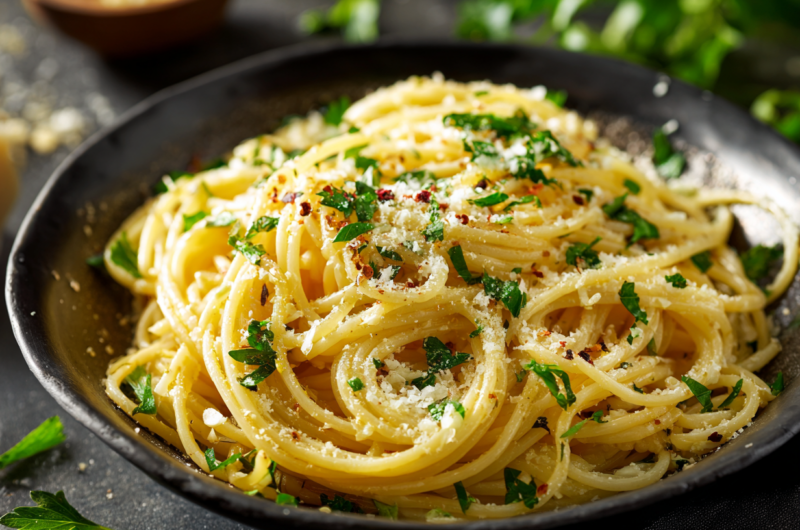
Perfect Spaghetti Aglio e Olio
Course: DinnerCuisine: Italian4
servings5
minutes15
minutes420
kcalThe simplest pasta you’ll ever make — and the one that almost cost me a promotion.
Ingredients
1 pound spaghetti (De Cecco or Barilla work great)
1/3 cup extra virgin olive oil
8 cloves garlic, thinly sliced
1/2 teaspoon crushed red pepper flakes
Kosher salt (Diamond Crystal preferred)
1 cup reserved pasta cooking water
1/4 cup fresh flat-leaf parsley, roughly chopped
1/2 cup freshly grated Pecorino Romano (optional)
Fresh black pepper to taste
Directions
- Bring a large pot of water to a rolling boil. Add enough kosher salt so the water tastes like the sea — about 2 tablespoons for a standard pot. Add the spaghetti and cook, stirring occasionally, until it’s about 1 minute short of the package directions. It should still have a firm bite in the center.
- While the pasta cooks, slice the garlic cloves as thin and evenly as you can — about the thickness of a nickel. Don’t mince or press them. Even, thin slices are key so everything toasts at the same rate and you don’t end up with burned bits.
- Add the olive oil to a large, cold skillet — big enough to hold all the pasta later. Place it over medium-low heat and add the sliced garlic in a single layer. Let it cook slowly, swirling the pan occasionally, for 3 to 4 minutes. You’re looking for light golden edges. The garlic will continue to cook after you remove the heat, so pull it early rather than late.
- When the garlic is just turning golden, add the red pepper flakes to the oil and stir for about 15 seconds. The flakes will sizzle and bloom in the hot oil, releasing their heat. If any garlic pieces are getting too dark, pull the pan off the burner entirely.
- Before draining the spaghetti, scoop out a full cup of the starchy pasta water with a measuring cup or ladle. Set it aside — you’ll need this. Then drain the pasta but don’t rinse it. You want that starchy coating on the noodles.
- Add the drained spaghetti directly to the skillet with the garlic oil. Toss with tongs over medium heat, adding the reserved pasta water a few tablespoons at a time. Keep tossing and turning the noodles for about 60 to 90 seconds. The oil and starchy water will combine into a glossy, cohesive sauce that clings to every strand.
- Remove from heat. Add most of the chopped parsley and toss one more time. Taste and add more salt if needed — the pasta should be well-seasoned on its own. Crack some fresh black pepper over the top.
- Plate the spaghetti using tongs, twirling it into a nest in each bowl. Scatter the remaining parsley on top and add a dusting of Pecorino Romano if using. Serve immediately — this dish does not reheat well and is best eaten the moment it’s done.
Notes
- Start the garlic in cold oil, not hot. Adding garlic to a screaming hot pan is the fastest way to burn it. Letting the oil and garlic heat up together gives you much more control and even toasting.
- Don’t skip saving the pasta water. It’s the difference between oily spaghetti and a properly sauced dish. If you forget, you can dissolve 1/2 teaspoon of cornstarch in 1 cup of warm water as a backup, but it won’t be quite the same.
- Purists skip the cheese entirely since traditional aglio e olio doesn’t include it. But a little Pecorino Romano adds a salty, sharp bite that I think makes the dish even better. Use Pecorino, not Parmesan — the sharper flavor works better with the garlic and pepper flakes.
Frequently Asked Questions
Q: Can I use pre-minced garlic from a jar instead of fresh cloves?
A: You can, but it won’t taste the same. Jarred garlic is preserved in citric acid and water, which gives it a flat, slightly sour flavor. In a dish where garlic is the star, the difference is really noticeable. Fresh cloves take about two minutes to slice and the flavor payoff is huge.
Q: Can I use a different pasta shape instead of spaghetti?
A: Absolutely. Linguine and bucatini are the most common alternatives and both work really well. Shorter shapes like penne or rigatoni are fine too, but you lose some of that twirly, silky quality that makes aglio e olio so satisfying. Stick with long pasta if you can.
Q: How do I keep the garlic from burning?
A: The biggest mistake is using high heat. Start with cold oil and cold garlic together in the pan, then turn the heat to medium-low. Watch it constantly — once the edges start turning golden, you have maybe 30 seconds before it goes too far. If you see any dark brown spots, pull the pan off the burner right away.
Q: Does this pasta reheat well as leftovers?
A: Honestly, no. The noodles absorb the oil as they sit, and reheating tends to make them gummy. Aglio e olio is best eaten the moment it’s done. The good news is it only takes about 20 minutes to make from scratch, so there’s no real reason to make it ahead of time.