


I used to think pasta salad was foolproof. Boil some noodles, chop some veggies, dump in dressing, done. And honestly, that approach gave me years of mediocre results that I just kind of accepted. Dry, bland, starchy pasta clumping together in a bowl, barely rescued by whatever Italian dressing I poured over it at the last second. It was fine. Forgettable, but fine.
Then I learned the one thing I’d been skipping, and it changed everything: you have to dress your pasta salad twice. Once while the pasta is still warm, and again right before you serve it. That’s it. That’s the move. And if you’re not doing it, you’re leaving all the flavor on the table.
Why Dressing Twice Actually Matters
Here’s what happens when you only dress pasta salad once: if you add the dressing while the pasta is warm, the noodles soak it all up like a sponge. By the time the salad comes out of the fridge, it looks dry, tastes flat, and has all the appeal of yesterday’s leftovers. If you wait and only dress it cold, the pasta never absorbs the flavors in the first place. It just sits there, coated on the surface but bland at the core.
The double dressing method solves both problems at once. When pasta is warm, it’s porous. The starch is still loose, and the noodles are ready to absorb liquid. That first round of dressing gets pulled right into the pasta itself, seasoning it from the inside out. Then, while everything chills in the fridge for a few hours, the pasta continues absorbing moisture. By the time you’re ready to serve, the noodles have sucked up most of that initial dressing. The second round refreshes the whole thing, brightens the flavors, and adds back the moisture that cold storage stole.
In a side-by-side test of six different pasta salad methods, this two-stage approach rated highest for both texture and flavor. Not second best. Not tied. The clear winner.
How to Actually Do It (the Right Way)
The ratio is simple. Take your total amount of dressing and split it roughly 60/40. Add about 60% of the dressing to the pasta right after you drain it, while it’s still warm. Toss it well so every noodle gets coated. Then let the salad cool to room temperature, cover it, and stick it in the fridge for at least a couple of hours (overnight is even better). Right before serving, add the remaining 40% of dressing, toss everything again, and taste for seasoning.
A good rule of thumb from professional cooks is one cup of dressing per pound of pasta. That might sound like a lot, but remember, the noodles are going to drink up more than half of it. If you only make enough for one round, you’ll run out when it matters most.
A Note About Mayo-Based Dressings
If you’re making a creamy pasta salad with mayo or sour cream, there’s one important thing to keep in mind. Mayo contains egg yolk, and if you pour it over piping hot pasta, it can curdle and separate. Not pretty. The fix is easy: let the pasta cool down to warm (not hot) before adding the first round of creamy dressing. You still want the pasta above room temperature so it absorbs flavor, just not so hot that it scrambles the mayo. As one source put it, warm is the sweet spot for mayo-based recipes. For vinaigrettes and oil-based dressings, you can go right from the colander.
Pick the Right Pasta Shape (It Matters More Than You Think)
You can nail the dressing technique and still end up with a subpar salad if you’re using the wrong noodle. Long pasta like spaghetti, linguine, and fettuccine is a no-go. When pasta cools, it gets stiffer and less flexible. Long noodles clump, break apart, and don’t distribute mix-ins evenly. They’re also a pain to serve from a big bowl at a cookout.
Stick with short shapes that have ridges, curves, and pockets. Rotini, fusilli, cavatappi, farfalle, and shells are all great options. Those nooks and crannies trap dressing, bits of cheese, and tiny veggie pieces so every forkful is well balanced. Avoid large tube shapes like rigatoni too. They trap way too much dressing inside the tube, making every other bite an overwhelming blast of vinaigrette.
Cook Your Pasta a Little Longer Than Usual
This one trips people up because it goes against everything we’ve been told about cooking pasta. For hot dishes, al dente is king. For pasta salad, it’s a mistake. There’s a process called retrogradation where the starch in pasta firms up as it cools. So if you pull it at perfect al dente, it’ll be unpleasantly chewy and tough after a few hours in the fridge.
The fix is to cook your pasta about one minute past the al dente stage. Start checking by tasting a noodle around the 5-minute mark and every minute after. When it hits al dente, set a timer for 60 more seconds. The noodles should feel slightly softer than you’d want for a hot dinner, knowing they’ll tighten up once chilled. (Note: Barilla’s head chef actually recommends going one minute less than package time, so there’s some debate. In my experience, going slightly past al dente produces better results for cold salads that sit in the fridge.)
Salt Your Water Like You Mean It
Cold food tastes more muted than hot food. That’s just how our taste perception works. So if you under-season your pasta water, the noodles themselves will taste like nothing, and no amount of dressing can fix that from the outside. The recommended ratio is one pound of pasta, two tablespoons of salt, and four quarts of water. Skip the iodized table salt if you can. Kosher salt or sea salt dissolves more evenly and won’t leave a metallic taste.
Use Briny Ingredients Instead of Extra Vinegar
One of the most common ways people try to fix bland pasta salad is by dumping in more vinegar. The problem is that as pasta salad sits in the fridge, vinegar gets sharper and more metallic. What tasted bright and acidic on day one tastes harsh and almost tinny by day two.
A better approach is to use briny, salty ingredients that add complexity without that vinegar edge. Kalamata olives, capers, pickled pepperoncini, artichoke hearts, and sun-dried tomatoes all bring acidity and salt in a much more rounded, interesting way. They also add texture and visual pop, which plain vinegar obviously can’t do. If you do use vinegar in your dressing, go with something milder like white wine vinegar, champagne vinegar, or rice vinegar instead of red wine or plain white vinegar.
Cheese and Veggie Tips That Actually Help
Cheese is where a lot of pasta salads go sideways. Cubed cheddar sounds like a classic move, but it gets weirdly rubbery and oily in cold pasta salad. Soft cheeses like brie basically disappear into a smear. Your best bets are crumbled feta, fresh mozzarella (the kind packed in water, cut into small pieces), or shaved Parmesan or pecorino. And add your cheese after the pasta has cooled and been dressed, not before.
For vegetables, the golden rule is size consistency. Cut everything roughly the same size as your pasta pieces. If you’re using rotini, your cucumber, bell pepper, and tomato pieces should be about the same size as a single rotini noodle. Blanch harder veggies like broccoli and cauliflower in boiling water for about 60 seconds before adding them so they’re tender but still have some snap. And if you’re adding anything delicate (fresh basil, baby spinach, soft cheese), hold those back until right before serving. A long soak in acidic dressing will wilt greens and turn soft cheese into mush.
Don’t Serve It Ice Cold
Last thing, and this is an easy one: don’t serve pasta salad straight from the fridge. Pull it out about 15 minutes before you plan to eat. Let it lose that deep chill. Cold temperatures suppress flavor, so a salad that tastes perfectly seasoned at room temp will taste flat and dull if it’s fridge-cold. Give it that second round of dressing, a good toss, maybe a sprinkle of fresh herbs on top, and you’re set.
This whole approach takes zero extra effort. You’re not buying special equipment or learning a new skill. You’re just splitting your dressing into two batches and adding it at two different times. That’s it. And the difference between doing this and not doing it is the difference between pasta salad people politely eat and pasta salad people actually go back for seconds on.
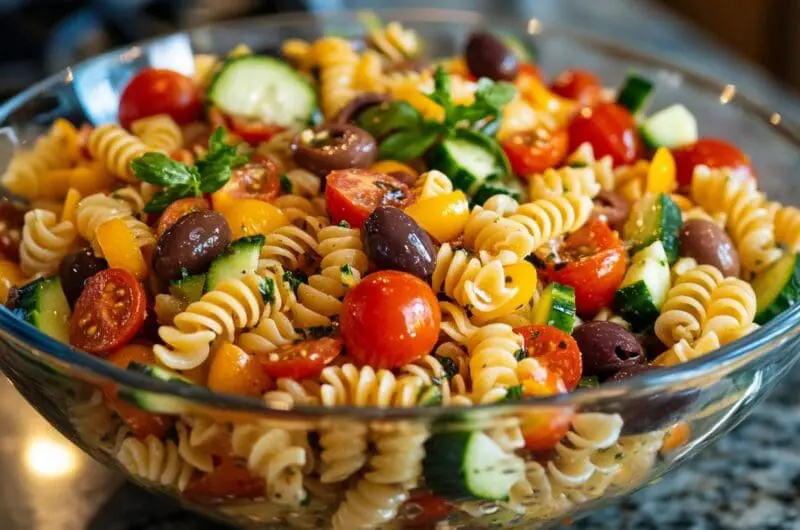
Double-Dressed Italian Pasta Salad
Course: Side DishCuisine: American, Italian8
servings20
minutes12
minutes320
kcalThe secret to pasta salad that actually tastes good after sitting in the fridge. Dress it twice and never go back.
Ingredients
1 pound rotini or fusilli pasta
2 tablespoons kosher salt (for pasta water)
1 cup Italian vinaigrette (store-bought or homemade, divided)
1 cup cherry tomatoes, halved
1 English cucumber, diced small
1/2 cup Kalamata olives, halved
1/2 cup pepperoncini, sliced into rings
4 ounces crumbled feta cheese
1/4 cup fresh basil, torn (added just before serving)
Directions
- Bring 4 quarts of water to a rolling boil in a large pot. Add 2 tablespoons of kosher salt and stir until dissolved. Add the pasta and cook for 1 minute past the al dente time listed on the package. Taste a noodle to check. It should be slightly softer than you’d want for a hot dinner.
- Drain the pasta in a large colander and give it a quick shake to remove excess water. Do not rinse. Transfer the warm pasta to a large mixing bowl immediately.
- Pour about 2/3 of the vinaigrette (roughly 2/3 cup) over the warm pasta and toss thoroughly until every piece is well coated. The warm noodles will begin absorbing the dressing right away. Set the remaining 1/3 cup of dressing aside in the fridge.
- Let the dressed pasta cool to room temperature, stirring once or twice to prevent sticking. This takes about 20 to 30 minutes. Once cool, cover the bowl tightly and refrigerate for at least 2 hours, or up to overnight.
- While the pasta chills, prep your vegetables. Halve the cherry tomatoes, dice the cucumber to roughly the same size as the pasta, halve the olives, and slice the pepperoncini into thin rings. Keep the prepped veggies in a separate container in the fridge.
- When you’re ready to serve, pull the pasta out of the fridge about 15 minutes early to take the deep chill off. Add the prepped vegetables, crumbled feta, and the reserved 1/3 cup of dressing. Toss everything together thoroughly.
- Taste the salad and adjust seasoning. It may need a pinch of salt or a small squeeze of lemon juice. Scatter torn fresh basil over the top just before bringing it to the table.
- Serve at cool room temperature for the best flavor. If there are leftovers, stir well before storing and add a splash of dressing or olive oil when you reheat the next day to revive the moisture and flavor.
Notes
- For a mayo-based version, let the pasta cool to warm (not hot) before adding the first round of creamy dressing to prevent the mayo from curdling.
- Store prepped vegetables separately from the dressed pasta in the fridge if making more than a day ahead. Toss them together right before serving so the veggies stay crisp and don’t release liquid into the noodles.
- Avoid adding dark-colored ingredients like black olives or black beans until just before serving, as they can stain the pasta during long refrigeration.
Frequently Asked Questions
Q: Can I use any pasta shape for pasta salad?
A: Short, ridged shapes work best. Rotini, fusilli, farfalle, cavatappi, and shells are all great because their nooks and crannies trap dressing and small ingredients. Avoid long noodles like spaghetti or linguine (they clump and break apart when cold) and large tubes like rigatoni (they trap too much dressing inside).
Q: Should I rinse pasta after cooking it for pasta salad?
A: This is genuinely debated. Some cooks say rinsing prevents clumping and stops the cooking process. Others say it washes away the starch that helps dressing cling to the noodles. If you skip rinsing, dress the warm pasta immediately so it doesn’t stick. If you do rinse, use a quick pass of cool water and dress right after.
Q: How far in advance can I make pasta salad?
A: You can cook and dress the pasta (the first round) up to a day in advance. Keep the vegetables in a separate container until you’re ready to serve. Add the second round of dressing, the veggies, cheese, and fresh herbs right before serving for the best texture and flavor.
Q: Why does my pasta salad always taste bland after sitting in the fridge?
A: Cold temperatures mute flavors, and pasta absorbs dressing as it sits, leaving the salad dry and flat. The fix is twofold: salt your pasta water generously so the noodles are seasoned from the inside, and dress the salad twice. The second round of dressing right before serving brings back all the brightness and moisture that refrigeration took away.