


Popeyes builds its classic chicken sandwich out of a battered and breaded buttermilk chicken breast, pickle slices, mayo, and a toasted brioche bun. That is the entire list. You can buy every one of those things at Kroger, fry a better piece of chicken than any teenager working a lunch rush, and still end up with something that eats like a cafeteria tray. Chick-fil-A does it with even less: freshly breaded chicken and tangy pickle chips, and theirs still wins. The gap is not the bird and it is not the bun. It is that most of us stop at mayonnaise. Mayonnaise is a starting point, not a sauce. Stir it together with barbecue sauce and Dijon mustard, and the sandwich you have been making for years suddenly tastes like the one you keep paying for.
Why Those Three Things Work Together
Mayo earns its spot because it brings creaminess plus a bright tang that breaks up the heaviness of a fried filet. On its own, though, it mostly just adds fat. Barbecue sauce brings smoke, sweetness, and a little color so the sandwich stops looking beige. Dijon is the part almost everyone skips, and it is the part that makes the mix taste like a sauce instead of sweetened mayonnaise. That sharp, vinegary bite is what ties the other two together, and it is the same three-part sauce Once Upon a Chef puts on its fried version at home.
If you make exactly one change to how you build a chicken sandwich this year, make it this one. It costs nothing, it takes less time than toasting the bun, and it works on fried chicken, grilled chicken, a frozen patty from the freezer aisle, and leftover rotisserie meat piled on a roll.
The Ratio, And How To Mess With It
Start with a half cup of mayonnaise, 2 tablespoons of barbecue sauce, and 1 tablespoon of Dijon. Whisk it with a fork until the streaks disappear. Taste it on a pickle chip rather than off a spoon, because a spoonful of any mayo-based sauce tastes too rich out of context. If your barbecue sauce leans sweet, add a little more Dijon. If it leans vinegary, pull the Dijon back.
Once you understand the structure (creamy base, sweet-smoky middle, sharp finish), you can rebuild it a dozen ways. Barbecue sauce mixed with ranch dressing goes creamier and milder. Equal parts Dijon and honey with a spoonful of mayo stirred in gives you a real honey mustard instead of the bottled stuff. Sriracha and mayo with a squeeze of lime is the standard spicy move for a reason, and a garlic aioli is just mayo with minced garlic, lemon juice, and salt. Ketchup people are not wrong either, especially with a few dashes of Tabasco stirred in.
The Crust Underneath Still Has To Crunch
Great sauce on soggy chicken is a waste of a half cup of mayo. Brine the breasts first in 2 cups of cold water with 2 tablespoons of salt and 2 teaspoons of sugar. Then build the dredge out of 1 1/2 cups all-purpose flour, 3 tablespoons cornstarch, and 1 1/2 teaspoons baking powder. The cornstarch is doing real work: it fries up lighter and crispier than flour alone, and the baking powder puffs the coating slightly as it hits the oil, which is where those craggy edges come from.
Season the dredge, not just the chicken. Three-quarters of a teaspoon each of garlic powder and salt, a full tablespoon of freshly ground black pepper, and a teaspoon of paprika give you a crust that tastes like something before any sauce touches it. If you want a shaggier, crunchier coating, swap in panko and run a three-step dredge of flour, egg, then crumbs, with cornstarch worked into the flour to pull moisture off the surface of the meat.
Pickles Are Basically Part Of The Sauce
Bread and butter pickles are the sleeper pick here. Their sweet-tangy crunch sits right next to the barbecue sauce and makes the whole thing taste more deliberate. Classic dill chips work too, as long as they are thin slices and not a fat spear flopping off the side. Bagel Mill, a bagel cafe in Peterborough, New Hampshire, says it always keeps pickles on the menu because their tanginess keeps rich ingredients in check, and that is exactly the job they are doing on a fried chicken sandwich.
The relationship runs both ways. Creamy condiments mellow out the sour edge of the pickle, and the pickle’s acid keeps the creamy condiment from coating your mouth. Skip them and you will notice the sandwich feels heavier two bites in.
Build It In This Order
Toast the bun. Always. Brush the cut sides with melted butter or olive oil first, and you get a sturdy barrier against sogginess plus a nutty, browned flavor you cannot fake. Sesame brioche buns are richer than standard hamburger buns and hold up better under sauce.
Sauce goes on both halves. A thin layer of cream cheese on the toasted bottom bun is an old trick worth knowing, because it blocks moisture and adds a quiet tang underneath everything. Then the patty, with the cheese laid on during the last minute of cooking so it melts slightly instead of sitting there as a cold slab. American and provolone melt best, pepper jack if you want heat. Sturdy toppings like bacon and onions go next, delicate ones like lettuce last, so the wet ingredients never touch the bread directly.
Add tomato right before you eat, never earlier, or the bun starts absorbing juice while you are still plating. Dry your lettuce leaves properly; water is what makes a sandwich come apart in your hands. And if raw onion is usually too sharp for you, soak the slices in cold water for about 15 minutes. You keep the crunch and lose most of the bite.
The Mistakes That Flatten A Good Sandwich
Piling on toppings straight from the refrigerator cools a perfectly hot patty down to lukewarm. Pull the cheese, pickles, and lettuce out and let them sit at room temperature while the chicken cooks. It sounds fussy until you taste the difference.
Sweetness is the other place home cooks lose control. Barbecue sauce, honey mustard, hot honey, and ketchup are all good individually and a disaster stacked together. Pick one sweet element and let the rest of the sandwich stay savory and sharp. Underripe tomatoes are worth skipping entirely too; hard, grainy slices add nothing but water.
If You Want To Push It Further
Bacon is the obvious addition and still the best one, smoky and salty enough to stand up to a fried filet. Coleslaw instead of lettuce turns the sandwich into something closer to a Southern plate lunch. Pickled jalapeños bring heat and acid at the same time, and Trader Joe’s Jalapeño Sauce, which is more than 50% jalapeños and very creamy, drizzles over fried or roasted chicken without any chopping.
The same logic applies at the drive-thru. Burger King’s original chicken sandwich takes well to added bacon and American cheese for a small upcharge. Popeyes sells a Sweet Heat sauce that fits right in with the pickles and mayo already on its classic sandwich. And at Chick-fil-A, you can order the grilled chicken club and ask for the original fried chicken breast instead of the lemon-herb marinated one, which gets you bacon, Colby Jack, lettuce, and tomato wrapped around a crunchy filet. All of those are worth ordering, but none of them will beat what you can do at home with a fork and three jars.
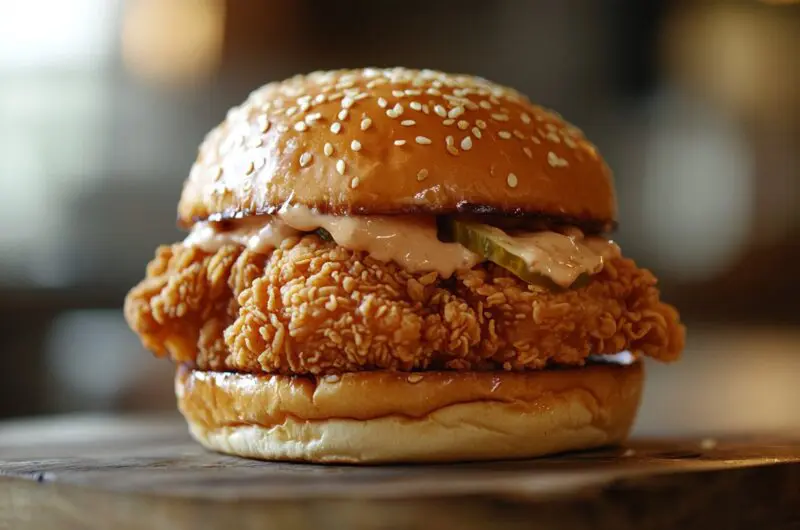
Fried Chicken Sandwiches With Three-Ingredient Sauce
Course: LunchCuisine: American3
servings45
minutes20
minutes700
kcalThe mayo, barbecue, and Dijon sauce that makes a homemade chicken sandwich beat the drive-thru.
Ingredients
3 boneless, skinless chicken breasts (about 1 1/3 pounds), halved horizontally if thick
Brine: 2 cups cold water, 2 tablespoons plus 3/4 teaspoon salt, 2 teaspoons sugar
1 large egg beaten with 1/2 cup milk
1 1/2 cups all-purpose flour, 3 tablespoons cornstarch, 1 1/2 teaspoons baking powder
3/4 teaspoon garlic powder, 1 tablespoon freshly ground black pepper, 1 teaspoon paprika
4 to 6 cups vegetable or peanut oil, for frying
Sauce: 1/2 cup mayonnaise, 2 tablespoons barbecue sauce, 1 tablespoon Dijon mustard
3 sesame brioche buns, split, with softened butter for toasting
Bread and butter pickle chips, plus dried lettuce leaves and sliced tomato if you like
Directions
- Stir the salt and sugar into the cold water in a bowl until both dissolve completely. Add the chicken, cover, and refrigerate for at least 30 minutes while you get everything else ready. This is what keeps the meat juicy once it hits hot oil.
- Make the sauce while the chicken brines. Whisk the mayonnaise, barbecue sauce, and Dijon together with a fork until no streaks remain, then taste it on a pickle chip and adjust. More Dijon if your barbecue sauce is sweet, more barbecue sauce if it tastes too sharp.
- Whisk the flour, cornstarch, baking powder, garlic powder, black pepper, and paprika together in a wide shallow dish. Beat the egg and milk in a second dish. Set both next to a wire rack so you are not carrying wet chicken across the kitchen.
- Lift the chicken out of the brine and pat every piece dry with paper towels. Dip each one in the egg mixture, let the excess drip off, then press it firmly into the seasoned flour on both sides. Pile the coating on and squeeze it into the meat so it holds.
- Pour the oil into a heavy pot or Dutch oven so it comes up about two inches, and heat it to 350 degrees Fahrenheit. Let the breaded chicken sit on the rack for a few minutes while the oil comes up to temperature. That rest helps the crust stay put in the fryer.
- Fry the chicken one or two pieces at a time so the oil temperature does not crash. Cook until the crust is deep golden and the chicken is cooked through, turning once. Drain on a clean wire rack rather than paper towels, which trap steam and soften the bottom.
- Butter the cut sides of the buns and toast them in a dry skillet until browned. Meanwhile, let the pickles and lettuce sit out at room temperature so they do not cool the hot chicken down. Toasting is not optional here; it is what keeps the bottom bun from going limp.
- Spread the sauce generously on both halves of each toasted bun. Set the hot chicken on the bottom, add a layer of pickle chips, then lettuce and tomato if you are using them. Close it up and eat it immediately, while the crust is still loud.
Notes
- A teaspoon of Accent flavor enhancer whisked into the seasoned flour deepens the savory flavor of the crust, and is worth adding if you keep it in the cupboard.
- For a creamier, milder sauce, mix the barbecue sauce with ranch dressing before adding the Dijon. For a sweeter one, use equal parts Dijon and honey with a spoonful of mayo.
- The sauce keeps well in an airtight container in the refrigerator, so make a double batch and assembly on a weeknight takes about five minutes.
Frequently Asked Questions
Q: What kind of barbecue sauce should I use?
A: Whichever bottle you already like. A sweeter, thicker sauce gives you more of that sticky drive-thru quality, while a vinegary one keeps things sharper. Just taste the finished mix before it goes on the bun and balance it with more Dijon if it skews sweet.
Q: Does this sauce work on grilled chicken, not just fried?
A: Yes. Grilled chicken breast is often juicier than a beef patty but short on richness, and this sauce fills that gap without burying the meat. It also works on a deli chicken sub or a roasted chicken panini.
Q: Bread and butter pickles or dill?
A: Bread and butter chips give you the sweet-tangy crunch that plays best with barbecue sauce. Dill chips give you a cleaner acidic hit that cuts the mayo. Either beats a thick spear on the side, which is too much pickle in one bite.
Q: Can I use a frozen chicken patty instead of frying?
A: Absolutely, and this is where the sauce earns its keep. Bake the patty until it is genuinely crisp, toast and butter the bun, melt a slice of American cheese on top during the last minute, then sauce both halves and add pickles. It will not taste like a shortcut.