


Betty White never pretended to be a cook. In a 2014 interview with Bon Appétit she said she wasn’t a big cook at all, and that she only went into the kitchen to feed her dog. When she did make herself lunch, it was a sandwich, and then she got on with her life. The sandwich was not avocado toast or a turkey club. It was three ingredients her mother used to put together for her when she was a little girl: peanut butter, bologna and iceberg lettuce on toasted white bread.
People either laugh at that or go quiet and admit they want to try it. Both reactions are correct. It is a strange sandwich on paper and a surprisingly balanced one in your hand, and it takes about four minutes to make.
The Sandwich, Exactly As She Built It
People’s cover story marking her 100th birthday named the lunch: a peanut butter, bologna and iceberg lettuce sandwich on white bread. Her executive personal assistant of nearly a decade, Kiersten Mikelas, said White’s mother used to make the same thing for her as a child, which is the whole reason it stuck around for ninety-odd years. The same interview is where White gave her famous answer about her secret to a long life. “I try to avoid anything green,” she joked, before adding, “I guess it’s working.” The lettuce, apparently, did not count.
The build is simple. Peanut butter goes on one slice, bologna on the other, lettuce in the middle, bread toasted. Nobody mentioned mustard, mayo or cheese. If you have ever eaten a peanut butter and jelly sandwich and a cold bologna sandwich on the same day, you already own every ingredient.
Why Peanut Butter And Bologna Actually Works
Salt and fat are the entire argument. Bologna is soft, mild, fatty and salty. Peanut butter is thick, salty, slightly sweet and sticky. Put them together and the peanut butter does the job mayonnaise usually does, coating the meat and gluing the whole thing into one bite instead of three loose layers.
The pairing is older and more common than most people assume. Peanut butter and pickle sandwiches turned up on lunch-counter menus during the Great Depression and printed in cookbooks in the 1930s and ’40s, and the peanut butter burger has a loyal following in the Midwest. Swapping a beef patty for a slice of bologna is a short jump from there. Bologna itself has been eaten in its home city of Bologna, Italy since the Middle Ages, and the American version was already a lunch-pail staple by the Great Depression.
What makes White’s version better than a plain peanut butter and bologna stack is the lettuce. Iceberg brings water and crunch to a sandwich that would otherwise be two kinds of soft. Romaine will not do the same thing. You want the cheap, pale, snappy stuff.
Toast The Bread. This Part Is Not Optional.
A post on White’s Instagram account, shared by Mikelas months after White’s death, showed her making one of the sandwiches in her own kitchen and spelled out the details: peanut butter and bologna with lettuce on toasted white bread. The caption called them one of her mom’s specialties, said White loved making them and signed off with a dare at the end: don’t knock it til you’ve tried it. The comments split exactly the way you’d expect, somewhere between horror and genuine curiosity, with plenty of people admitting they were going to go buy bologna. The kitchen in the photo looked like anybody’s kitchen, which is part of why the thing landed.
Toasting matters more here than in almost any other sandwich. Untoasted white bread turns to paste the second peanut butter hits it, and bologna is already soft. A light, dry toast, pale gold and still flexible, gives you a surface the peanut butter can grab without soaking through. Do not toast it dark. Burnt toast fights the peanut butter and loses.
Where People Go Wrong
Too much peanut butter is the number one problem. Two tablespoons on one slice is plenty for a sandwich this size. Pile it on like you’re making a PB&J for a nine-year-old and you’ll taste nothing but peanut butter for ten minutes.
The second mistake is fancy bread. Sourdough, seeded whole grain and bakery rye all have opinions, and this sandwich does not want opinions. Soft white sandwich bread is the correct choice, and White’s version was built on it.
Third, don’t use natural peanut butter straight from the fridge. The oil separates, the texture goes gritty, and cold peanut butter tears soft bread. Stir it well and let it sit on the counter for a few minutes, or just use regular creamy peanut butter, which is what this sandwich was raised on.
Finally, resist the urge to improve it. White was a famously simple eater, and the sandwich works because it has three jobs and three ingredients. Adding tomato makes it wet. Adding mustard makes it loud. Try it her way once before you start redecorating.
Ways To Change It Up Without Ruining It
Fried bologna is the best upgrade available. Cut two small slits in the edge of each slice so it doesn’t curl into a bowl, then lay it in a dry skillet over medium heat for about 90 seconds a side until the edges brown and crisp. The warm meat softens the peanut butter slightly and the browning adds a smoky note the cold version doesn’t have. People who eat peanut butter and bologna regularly almost always recommend frying it.
Crunchy peanut butter is a fair swap if you like more texture. A thin smear of mayonnaise on the second slice is another common addition, and a slice of American cheese turns it into something closer to a diner sandwich. Pickle chips belong here too, given the long history of peanut butter and pickles together.
For a side, follow her lead. Potato chips were on her short list of favorite foods, and a handful of plain salted chips next to this sandwich is more correct than any salad you could build. In a 2012 interview with People she laid the whole list out: hot dogs and Red Vines and potato chips and French fries were her favorite foods.
The Other Lunch She Was Known For
The sandwich had competition. At 92, White told Bon Appétit that lunch was usually a hot dog and French fries, “or something equally devilish.” Her “Hot in Cleveland” castmates talked openly about how much hot dog and red licorice she got through, and Diet Coke was the drink that kept her moving. She had a vodka on the rocks before dinner, not with lunch.
The hot dog loyalty was serious enough to get memorialized. Pink’s Hot Dogs in Los Angeles, a place she visited often, put the Betty White Naked Dog on the menu permanently: a plain all-beef hot dog in a bun, no toppings. Co-owner Richard Pink has said she launched Pink’s at City Walk in 2010 by eating a hot dog in front of him, and when he offered to add toppings she turned him down. By his account she told him she liked them plain, just the beef and the bun, and that he could tell everybody Betty White gets naked at Pink’s. In Oak Park, where she was born, what would have been her 100th birthday, January 17, 2022, was named Betty White Day, and Mickey’s Gyros and Ribs marked it with a combo of a hot dog, fries and a Diet Coke.
Between the two lunches, the sandwich is the one worth making at home. Anybody can order a hot dog. The peanut butter and bologna is the one that came from her mother’s kitchen, the one she made with her own hands, and the one that costs about a dollar fifty to put together. She died at the end of 2021, shortly before her 100th birthday. Her advice in that 100th-birthday interview was to taste every moment, which from a woman eating peanut butter and bologna for lunch reads less like a slogan and more like instructions.
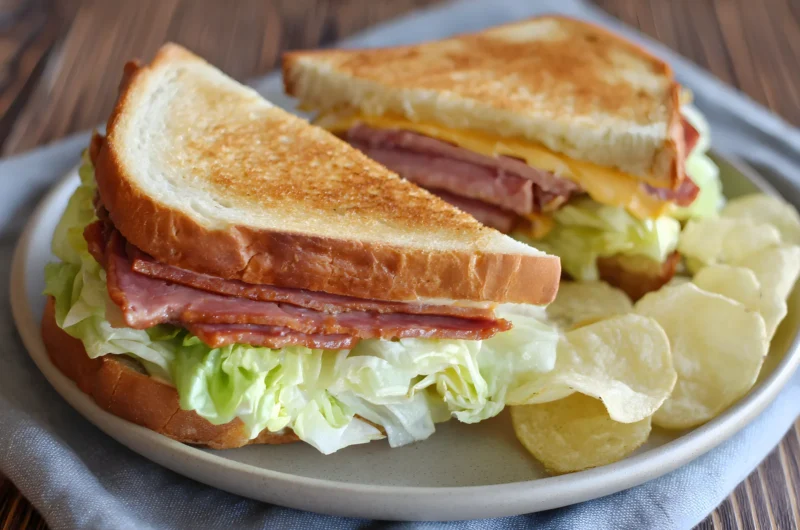
Betty White’s Peanut Butter and Bologna Sandwich
Course: LunchCuisine: American1
servings4
minutes4
minutes520
kcalThe three-ingredient childhood sandwich Betty White ate for lunch, and yes, the peanut butter belongs there.
Ingredients
2 slices soft white sandwich bread
2 tablespoons creamy peanut butter, at room temperature
3 slices bologna (about 3 ounces)
2 crisp leaves iceberg lettuce, torn to fit the bread
1 teaspoon mayonnaise (optional)
1 teaspoon butter or neutral oil, only if frying the bologna
Pinch of kosher salt
Freshly ground black pepper, to taste
Dill pickle chips and plain potato chips, for serving (optional)
Directions
- Pull the peanut butter out of the cupboard or fridge first and let it sit while you get everything else ready. Cold peanut butter drags and tears soft bread. If you are using a natural brand, stir it thoroughly so the oil is worked back in.
- Tear two leaves from the center of an iceberg head and rinse them under cold water. Pat them completely dry with a paper towel. Any water left on the lettuce will turn the toast soggy before you finish the first half.
- Toast the two slices of white bread to a light gold, not dark brown. You want a dry surface with some structure, but the bread should still bend when you press it. Set the slices on a plate and let them cool for about 30 seconds so the peanut butter does not melt and run.
- If you want fried bologna, cut two small slits into the edge of each slice so it lies flat instead of curling into a cup. Melt the butter in a skillet over medium heat and cook the slices for about 90 seconds per side, until the edges brown and crisp. Drain them on a paper towel for a moment.
- Spread the peanut butter evenly over one slice of toast, right to the edges. Keep it to a thin, even layer of about two tablespoons total. A thick mound will bury the bologna and dominate every bite.
- Spread the mayonnaise on the second slice if you are using it, then lay the bologna over it in overlapping slices so the meat covers the bread completely. Season the bologna with a small pinch of salt and a few grinds of black pepper. Skip the salt entirely if you fried the slices, since the browning already pushed the flavor up.
- Pile the dry iceberg lettuce on top of the bologna, folding the leaves so they sit flat rather than sticking out past the crust. Add pickle chips here if you want them. Close the sandwich with the peanut butter slice, spread side down, and press gently so the peanut butter grabs the lettuce.
- Cut the sandwich in half on the diagonal with a serrated knife, using a sawing motion so you do not squash the layers. Eat it right away while the toast still has snap. Serve with plain salted potato chips and a cold Diet Coke to keep it fully in character.
Notes
- Use iceberg and nothing else. Its water content and snap are what keep the sandwich from turning into two soft layers stuck together, and romaine or spring mix will not do the same job.
- Frying the bologna is the single best optional step. The browned edges add a smoky flavor that stands up to the peanut butter, and the warm meat makes the spread softer and easier to bite through.
- This does not pack well for later. Peanut butter and toast go gummy within an hour or two, so build it when you are ready to eat and keep the components separate if you are taking it to work.
Frequently Asked Questions
Q: Did Betty White really eat peanut butter and bologna every day?
A: People reported it as her lunch of choice, and it came straight from her childhood. Her assistant, Kiersten Mikelas, said White’s mother made the sandwich for her as a girl.
Q: What kind of bologna should I buy?
A: Standard supermarket beef or beef-and-pork bologna from the deli case is what this sandwich is built on. Ask for it sliced a little thicker than sandwich-thin if you plan to fry it, since paper-thin slices curl up and dry out in the pan.
Q: Can I use crunchy peanut butter or jelly instead?
A: Crunchy works fine and adds texture. Jelly is a different sandwich entirely, and the sweetness fights the bologna instead of balancing it. If you want contrast, add pickle chips, which have a long history alongside peanut butter.
Q: What should I serve with it?
A: Plain salted potato chips, which were on her own list of favorite foods alongside hot dogs, French fries and Red Vines. A Diet Coke is the period-correct drink. Save the vodka for before dinner, the way she did.