


Katharine Hepburn won four Academy Awards, wore trousers before it was socially acceptable, and had the kind of iron-willed personality that made studio executives nervous. She was also, by all accounts, absolutely obsessed with pancakes. Not fancy ones. Not the kind you’d find on a brunch menu at some overpriced restaurant in Brooklyn. We’re talking about simple, protein-packed cottage cheese pancakes that she ate for breakfast — and sometimes lunch, and sometimes as a midnight snack — for decades.
The recipe is almost suspiciously simple. A cup of cottage cheese, three eggs, four tablespoons of whole wheat flour, a little olive oil, and a pinch of salt. That’s it. No baking powder. No buttermilk. No vanilla extract. Just five ingredients that you almost certainly have in your kitchen right now. And yet, these pancakes are genuinely good — tangy, tender, with a slight chew from the whole wheat flour and little pockets of warm cottage cheese throughout.
I first made them on a whim after reading about Hepburn’s pancake habit, expecting something bland and virtuous-tasting. I was wrong. They’re not like regular pancakes — they’re denser, richer, and more satisfying. You eat two or three and you’re actually full, which is not something I can say about a stack of Bisquick flapjacks drowning in Log Cabin.
Where This Recipe Came From
Two different pancake recipes are attributed to Hepburn. The cottage cheese version showed up in a Hartford, Connecticut newspaper sometime in the 1940s. The other — a much more indulgent midnight snack version with pancake mix, melted chocolate, chopped nuts, and a whipped cream sauce — came from her goddaughter, Katharine “Kat” Kramer. Both are worth making, but the cottage cheese pancakes are the ones Hepburn returned to again and again, the ones that became part of her daily routine.
Much of what we know about Hepburn’s eating habits comes from Norah Considine, her personal cook and housekeeper for the last thirty years of her life. Considine worked at both Hepburn’s Manhattan townhouse on East 49th Street and her family compound in Fenwick, the waterfront section of Old Saybrook, Connecticut. Considine’s daughter, Eileen Considine-Meara, later wrote a book called At Home With Kate that documented the actress’s daily life — including what she ate, when she ate it, and how particular she was about all of it.
And Hepburn was particular. This was a woman who scolded a neighbor for putting too much flour in brownies. A woman who ate cold beet soup out of a coffee mug so she could sip it without a spoon. A woman who served dinner at 6:00 PM sharp and expected guests to leave by 8:00 PM so she could be in bed by 8:15. She knew what she liked, and cottage cheese pancakes were at the top of the list.
Why These Pancakes Actually Work
If you’ve never made pancakes with cottage cheese before, here’s what’s happening. The cottage cheese provides moisture and fat, which means you need almost no flour. Four tablespoons — that’s a quarter cup. Compare that to a standard pancake recipe, which might call for a cup and a half. Less flour means less gluten development, which means a more tender pancake. The eggs do most of the structural work here, binding everything together and giving the pancakes a slight puff when they hit the hot pan.
The whole wheat flour adds a nutty, slightly earthy flavor that pairs well with the tanginess of the cottage cheese. You could swap in all-purpose flour if that’s what you have, but I’d encourage you to stick with whole wheat at least once. It makes a difference. Not a dramatic one, but enough that you’ll notice.
These aren’t fluffy diner pancakes. They’re thinner, more like a cross between a pancake and a crepe, with an almost custardy interior. The cottage cheese doesn’t fully melt — you’ll get little pockets of it throughout, which some people love and some people find weird. If you’re in the second camp, you can blitz the batter in a blender for 10 to 15 seconds to smooth out the curds. It changes the texture quite a bit — makes them more uniform and a little more like a traditional pancake.
The Technique That Makes or Breaks Them
The biggest mistake people make with cottage cheese pancakes is treating them like regular pancakes. They’re not. The batter is wetter, looser, and more delicate. Here’s what you need to know.
First, beat the eggs until they’re frothy before adding them to the rest of the ingredients. This is in the original instructions and it matters. The air you whip into the eggs is the only leavening these pancakes have. Skip this step and you’ll end up with flat, dense discs that taste fine but feel heavy.
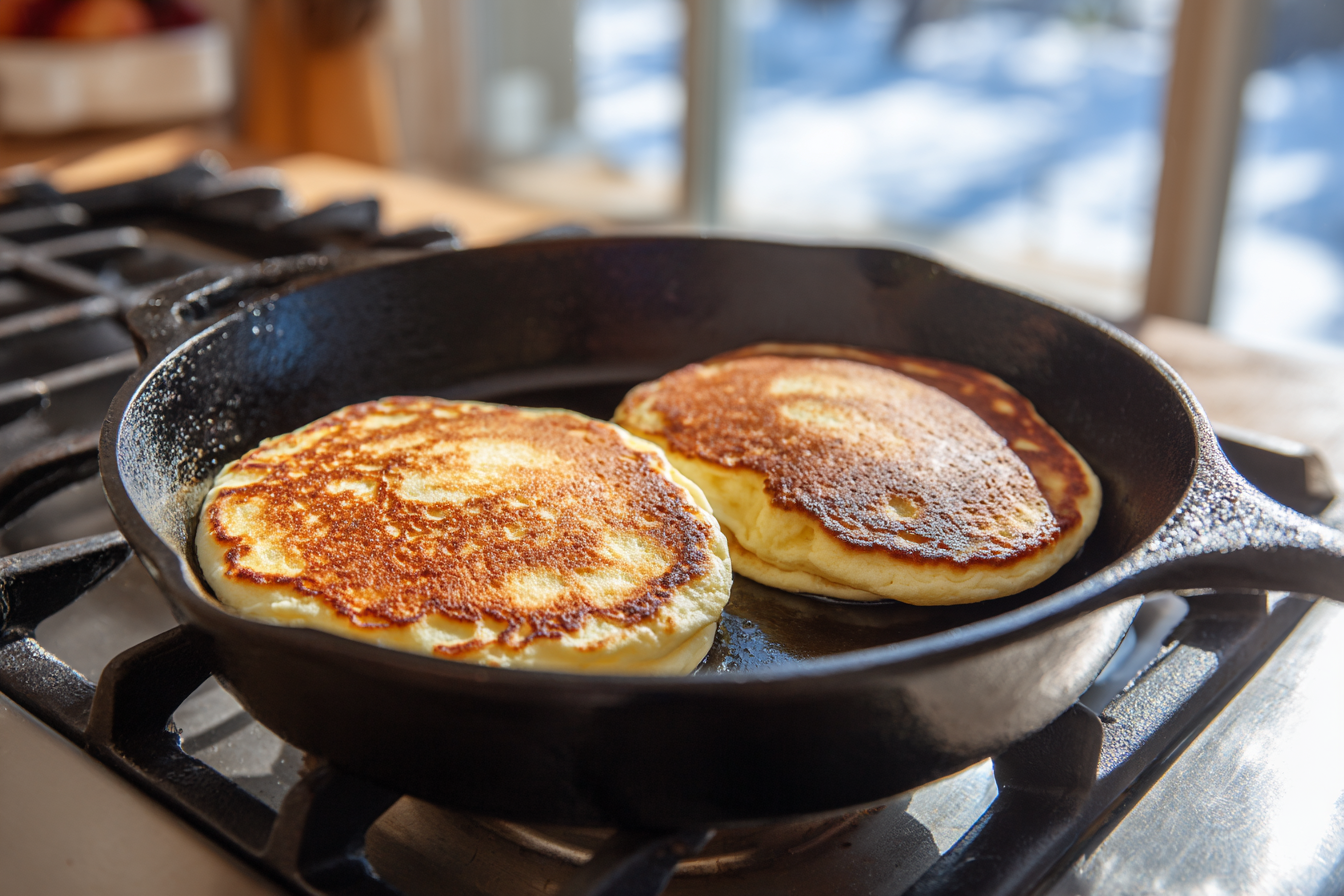
Second, use a nonstick pan or a well-seasoned cast iron skillet. These pancakes stick. They really, really stick. A thin layer of butter or a spray of cooking oil is not optional. I like to wipe the pan with a paper towel dipped in vegetable oil between batches — gives you a nice even coating without pooling.
Third, keep the heat at medium-low. These burn faster than regular pancakes because there’s so little flour absorbing the moisture. You want them golden and set, not brown and leathery. About two to three minutes per side. You’ll know they’re ready to flip when the edges look dry and the surface has a few small bubbles.
Fourth, make them small. About three inches in diameter is ideal. Bigger pancakes are harder to flip without tearing. Resist the urge to make dinner-plate-sized ones. It won’t end well.
What to Put on Top
Hepburn reportedly liked hers with applesauce, berries, honey, or just butter. All solid choices. The tanginess of the cottage cheese pairs especially well with something sweet and fruity — warmed frozen blueberries, a spoonful of raspberry jam, sliced strawberries with a drizzle of honey.
But here’s where it gets interesting: Hepburn also served these for lunch with creamed meat or seafood on top. Think creamed chicken, or a simple shrimp in cream sauce. At that point you’re basically making a savory crepe, and honestly? It’s fantastic. A little sautéed spinach with garlic and a poached egg on top would work beautifully, too.
For a more decadent breakfast, try a smear of cream cheese and some smoked salmon. Or go the cinnamon-sugar route — a little melted butter, a sprinkle of cinnamon and sugar, and a squeeze of lemon. That’s how my grandmother used to serve blintzes, which are basically cottage cheese pancakes’ Eastern European cousin.
The Cottage Cheese Matters More Than You Think
Use full-fat cottage cheese. This is not the time for the low-fat stuff. The fat in the cottage cheese is what gives these pancakes their richness and keeps them from tasting like diet food. I’ve tested this with Daisy brand full-fat cottage cheese and with store-brand 4% milkfat, and both work well. The small curd variety gives you a smoother batter, but large curd is fine too — you’ll just have more visible cheese pockets in the finished pancake.
One more thing: drain your cottage cheese slightly if it’s very wet. Just tip it into a fine mesh strainer and let it sit for five minutes while you get everything else ready. Excess liquid makes the batter too thin and the pancakes won’t hold together when you try to flip them.
A Breakfast Fit for a Four-Time Oscar Winner
There’s something appealing about the simplicity of this recipe. Katharine Hepburn had access to anything she wanted. She could have had a personal chef making eggs Benedict every morning. Instead, she ate cottage cheese pancakes — a recipe so basic it barely qualifies as a recipe. Five ingredients, one pan, ten minutes.
That tracks with everything else we know about her. She liked simple, hearty food — meatloaf, stew, big salads, brownies with barely any flour. She had dinner at 6 PM and was asleep by 8:15. She wore the same style of pants for fifty years because they worked. Hepburn didn’t chase trends, in her career or in her kitchen.
These pancakes won’t change your life. But they might change your Tuesday morning. They’re fast, they’re filling, and they taste better than they have any right to given how little goes into them. Make a batch this weekend. Top them however you want. Eat them at midnight if you feel like it — Katharine Hepburn certainly did.
Frequently Asked Questions
Q: Can I make these ahead of time and reheat them?
A: Yes, they reheat well. Let them cool completely, then store in the fridge for up to three days. Reheat in a skillet over medium heat for about a minute per side, or pop them in the toaster on a low setting. The microwave works in a pinch but makes them a little rubbery.
Q: Can I substitute ricotta for the cottage cheese?
A: Ricotta works, but it makes a different pancake — denser and smoother, without the tanginess that cottage cheese brings. If you go with ricotta, add a tiny squeeze of lemon juice to get some of that brightness back. Use whole milk ricotta, not part-skim.
Q: Can I use all-purpose flour instead of whole wheat?
A: Absolutely. The pancakes will be slightly lighter in color and milder in flavor, but they’ll still hold together just fine. The amount is so small — just four tablespoons — that the difference between flour types is subtle. Use whatever you’ve got in the pantry.
Q: Why do my cottage cheese pancakes fall apart when I flip them?
A: Three likely reasons. Your pan isn’t hot enough, you’re making them too big, or your batter is too wet. Make sure the pan is properly preheated over medium-low heat, keep the pancakes about three inches across, and drain your cottage cheese for a few minutes if it seems watery. Also, let the first side cook fully before you attempt to flip — the edges should look set and dry.
2
servings5
minutes10
minutes280
kcalThe five-ingredient cottage cheese pancakes that a four-time Oscar winner ate every morning — tangy, tender, and ready in ten minutes.
Ingredients
1 cup full-fat cottage cheese (small curd preferred)
3 large eggs
4 tablespoons whole wheat flour
2 tablespoons olive oil (plus more for the pan)
Pinch of salt
Butter, honey, applesauce, or fresh berries for serving
Directions
- If your cottage cheese is very wet or liquidy, tip it into a fine mesh strainer set over a bowl and let it drain for about 5 minutes. This removes excess moisture and helps the pancakes hold together when cooking.
- In a medium bowl, beat the 3 eggs with a whisk or fork until they’re frothy and slightly increased in volume, about 1 to 2 minutes. This is the only leavening in the recipe, so don’t skip this step.
- Add the drained cottage cheese, whole wheat flour, olive oil, and salt to the beaten eggs. Stir gently until everything is just combined. Don’t overmix — a few lumps of cottage cheese are fine and expected.
- Heat a nonstick skillet or well-seasoned cast iron pan over medium-low heat. Lightly oil the surface by wiping it with a paper towel dipped in vegetable oil or melting a small pat of butter.
- Spoon about 2 tablespoons of batter per pancake onto the pan, keeping them about 3 inches in diameter. Don’t crowd the pan — leave at least an inch between each pancake so you have room to flip them.
- Cook for 2 to 3 minutes on the first side, until the edges look set and dry and the bottom is golden brown. Carefully flip with a thin spatula and cook for another 2 minutes on the second side.
- Transfer finished pancakes to a plate and keep warm in a 200°F oven while you cook the remaining batter. Re-oil the pan between batches to prevent sticking.
- Serve warm topped with butter, honey, applesauce, fresh berries, or a drizzle of maple syrup. For a savory version, skip the sweet toppings and serve with creamed chicken or sautéed vegetables and a poached egg.
Notes
- For a smoother pancake with no visible cottage cheese curds, blend all the batter ingredients in a blender for 10 to 15 seconds before cooking.
- Use full-fat cottage cheese (4% milkfat) for the best flavor and texture. Low-fat versions make the pancakes taste flat and produce a wetter batter.
- All-purpose flour can be substituted for whole wheat flour in equal amounts. The pancakes will be slightly lighter in color and milder in flavor but will hold together the same way.