


Ever wonder why KFC’s Extra Crispy Chicken has that insanely crunchy coating while the inside stays juicy? The secret isn’t some mysterious ingredient locked in a vault. It’s actually a simple technique that anyone can do at home. KFC breads their Extra Crispy Chicken twice, creating that signature craggy exterior that makes every bite crunch. Before you grab another bucket from the drive-thru, you might want to know how easy it is to make this at home with better ingredients and way less money.
Why double breading changes everything
Most fried chicken recipes tell you to coat the chicken once in seasoned flour and call it a day. That works fine for a basic crispy coating, but it won’t give you that ultra-crunchy texture KFC is famous for. When you bread chicken twice, you’re building up layers of coating that create more surface area. More surface area means more places for the hot oil to work its magic and create those crispy, golden-brown bits that everyone fights over.
The first coating acts like a base layer that sticks to the chicken, while the second coating adds extra thickness and those bumpy, irregular textures that get super crispy when fried. According to restaurant copycat experts, this double breading technique is what separates KFC’s Extra Crispy from their Original Recipe, which only gets breaded once and is pressure fried instead. The difference in texture is huge, and once you try making it at home, you’ll understand why people specifically request the Extra Crispy version.
Brining makes the chicken stay juicy inside
Here’s where most homemade fried chicken goes wrong. You get a great crispy outside, but the meat inside ends up dry and disappointing. KFC solves this problem by brining their chicken before it ever gets near the breading. A brine is just salt dissolved in water, and when you soak chicken in it for a few hours, the salt works its way into the meat. This doesn’t just add taste throughout the chicken, it actually changes the protein structure so it holds onto moisture better during cooking.
For a basic brine, mix a quarter cup of salt into 8 cups of water and submerge your chicken pieces for at least two hours, or overnight if you’re planning ahead. Some recipes suggest using buttermilk instead of a salt brine, which also tenderizes the meat while adding a slight tangy taste. Either method works great, but the key is giving the liquid enough time to penetrate the chicken. Don’t skip this step thinking you can just season the outside, because you’ll end up with bland meat no matter how good your coating tastes.
The 11 herbs and spices aren’t that mysterious
KFC’s famous blend of 11 herbs and spices has been treated like a national secret for decades, locked in a vault and protected like nuclear codes. Turns out, it’s not that complicated. A Chicago Tribune reporter visited Colonel Sanders’ nephew and found an old scrapbook with a recipe that listed all the spices. After testing it extensively, they confirmed it was the real deal. The blend includes salt, thyme, basil, oregano, celery salt, black pepper, dried mustard, paprika, garlic salt, ginger, and white pepper.
What’s surprising is the amounts. Some of these spices show up in bigger quantities than you’d expect, which is why homemade versions often taste bland compared to the real thing. The recipe uses Tellicherry black pepper specifically, which is a higher-quality pepper from India with a more complex taste. You can find it at better grocery stores or online. Mix these spices with all-purpose flour, and you’ve got the coating that’s made KFC famous. One thing the Tribune missed though is that KFC also uses MSG, which adds that savory, can’t-quite-put-your-finger-on-it taste that makes the chicken so addictive.
Temperature control is everything when frying
The biggest mistake people make with fried chicken is not paying attention to oil temperature. Too hot and the outside burns before the inside cooks. Too cold and the chicken absorbs oil like a sponge, getting greasy and soggy instead of crispy. KFC fries their Extra Crispy Chicken at 350 degrees Fahrenheit, which is the sweet spot for getting golden-brown coating in about 12 minutes while cooking the meat through.
You’ll need a good thermometer to monitor the oil temperature, because it will drop when you add cold chicken. This is why frying in small batches matters so much. If you crowd the pot with too many pieces, the temperature crashes and stays too low, ruining your chicken. Add just three or four pieces at a time, then wait for the oil to come back up to 350 before adding the next batch. It takes longer this way, but the results are worth it. Keep the finished pieces warm in a 300-degree oven on a wire rack while you finish frying the rest.
Pressure fryers are KFC’s secret weapon
Here’s something most people don’t know about KFC. They don’t use regular deep fryers like you’d have at home. They use commercial pressure fryers that cook the chicken under pressure, similar to a pressure cooker but with oil instead of water. This lets the oil get much hotter than normal frying temperatures, which means the chicken cooks faster and stays juicier inside. Colonel Sanders invented this method back in the 1940s when he dangerously put oil in a regular pressure cooker, which is absolutely something you should never try at home.
Since most of us don’t have pressure fryers sitting around, you’ll need to work around this limitation. A heavy Dutch oven or a tabletop electric fryer works fine, you just need to be more careful about cooking times. The chicken might not be completely done after 12 minutes of frying, especially the thicker breast pieces. That’s okay because you can finish cooking them in the oven at 300 degrees. This actually works in your favor because it gives you a place to keep the first batch warm and crispy while you fry the rest of the chicken.
Buttermilk and eggs help the breading stick
Getting breading to actually stay on chicken while it fries is trickier than it sounds. The coating needs something to grab onto, which is where buttermilk and eggs come in. After brining your chicken, you dip each piece in a mixture of buttermilk and beaten egg. The buttermilk is slightly acidic and thick, which helps it cling to the wet chicken. The egg proteins act like glue, creating a sticky surface for the flour mixture to adhere to.
When you press the buttermilk-coated chicken into the seasoned flour, really push it down hard to make sure the coating sticks. Don’t just dunk it and pull it out, because the breading will fall off in the fryer. Some recipes tell you to let the breaded chicken rest for 20 or 30 minutes before frying, but that actually makes the crust tough and thick. For the crispiest results, go straight from the flour into the hot oil. The moisture from the buttermilk will create steam as the chicken fries, which helps the coating puff up and get extra crunchy.
Using smaller chicken pieces cooks faster
KFC uses smaller chickens than what you typically find at the grocery store, usually around 2 to 3 pounds. Smaller chickens mean smaller pieces, which cook through faster without burning the coating. When you’re buying chicken at the store, you’ll probably end up with larger pieces, especially if you’re cutting up a whole chicken yourself. This isn’t a huge problem, but it does mean you need to adjust your cooking approach a bit.
Start with the thickest pieces first, which are usually the breasts. These take the longest to cook through, so getting them in the oil first means they’ll be done around the same time as the smaller pieces that you add later. If you’re worried about undercooking, an instant-read thermometer is your best friend. Chicken needs to reach 165 degrees internally to be safe to eat. Don’t try to guess by cutting into the meat, because that just lets all the juices run out. Stick the thermometer into the thickest part of the meat without touching bone, and you’ll know exactly when it’s done.
Keeping fried chicken crispy after cooking
You’ve done all this work to get perfectly crispy fried chicken, and the last thing you want is for it to get soggy while it sits. The secret is keeping the chicken elevated so air can circulate around it. Never put fried chicken directly on a plate or paper towels, because the steam coming off the hot chicken will get trapped underneath and make the bottom coating soft and mushy.
Use a wire cooling rack set over a baking sheet, which lets air flow all around the chicken while catching any dripping oil. KFC actually holds their cooked chicken in a 175-degree oven for up to 20 minutes before serving it, and the chicken stays crispy the whole time. The warm oven helps any excess oil drip off while keeping everything hot. If you’re making a big batch for a party or family dinner, this method lets you fry everything ahead of time without sacrificing that fresh-from-the-fryer crunch. Just don’t cover the chicken with foil or put it in a closed container, or you’ll steam it and ruin all your hard work.
Why MSG makes such a big difference
There’s one ingredient that copycat recipes often skip, but it’s actually crucial to getting that authentic KFC taste. Monosodium glutamate, or MSG, is a salt-like powder that amplifies savory tastes. Despite decades of bad press, MSG is perfectly safe and naturally occurs in foods like tomatoes and cheese. It’s what makes KFC chicken taste so good that you keep reaching for another piece even when you’re full.
You only need a small amount, maybe half a teaspoon mixed into your flour and spice blend. The MSG doesn’t make the chicken taste artificial or weird. Instead, it makes all the other spices taste more intense and satisfying. You can find MSG at most grocery stores in the spice aisle, often sold as Accent seasoning. Some Asian grocery stores sell it in larger bags for cheaper. Once you start using it in fried chicken, you’ll notice that versions without it taste a bit flat and one-dimensional. That’s the missing piece that makes restaurant fried chicken taste different from homemade versions, and now you know the secret.
Making KFC-style Extra Crispy Chicken at home isn’t as complicated as you might think. The double breading technique, combined with proper brining and temperature control, gets you most of the way there. Sure, you won’t have a commercial pressure fryer, but with a little extra time in the oven, you can still make fried chicken that rivals anything you’d get at the restaurant. The best part is using better quality chicken and controlling exactly what goes into your food, all while saving money compared to buying bucket after bucket from the drive-thru.
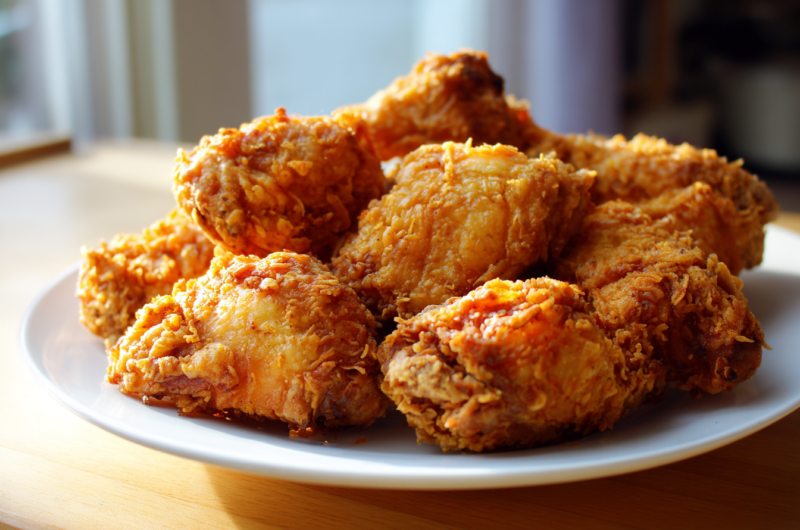
KFC Extra Crispy Fried Chicken Copycat
Course: Main CourseCuisine: American4
servings30
minutes1
hour520
kcalUltra-crunchy fried chicken with a double-breaded coating and 11-spice blend that tastes just like the real thing.
Ingredients
8 cups water
1/4 cup salt
1 whole chicken (3-4 pounds), cut into 8 pieces
2 cups all-purpose flour
2 tablespoons salt
1 tablespoon dried thyme
1 tablespoon dried basil
1 tablespoon dried oregano
1 tablespoon celery salt
1 tablespoon black pepper (preferably Tellicherry)
1 tablespoon ground mustard
4 teaspoons paprika
1 teaspoon garlic salt
1 teaspoon ground ginger
1 teaspoon white pepper
1/2 teaspoon MSG (optional but recommended)
1 cup buttermilk
1 large egg
Vegetable or peanut oil for frying
Directions
- Combine 8 cups of water with 1/4 cup salt in a large bowl or container, stirring until the salt completely dissolves. Add the chicken pieces to the brine, making sure they’re fully submerged. Cover and refrigerate for at least 2 hours, or up to overnight for best results.
- In a large mixing bowl, combine the flour with all the dried spices: 2 tablespoons salt, thyme, basil, oregano, celery salt, black pepper, mustard, paprika, garlic salt, ginger, white pepper, and MSG if using. Mix everything together thoroughly with a whisk until all the spices are evenly distributed throughout the flour.
- Whisk together the buttermilk and egg in a separate bowl until completely combined and smooth. Remove the chicken from the brine and pat each piece dry with paper towels. This helps the buttermilk mixture stick better to the chicken surface.
- Pour oil into a heavy Dutch oven or large pot until it’s about 3 inches deep. Heat the oil over medium-high heat until it reaches exactly 350 degrees Fahrenheit on a thermometer. Having the right temperature is critical for getting crispy chicken that’s not greasy.
- Dip each chicken piece in the buttermilk mixture, letting excess drip off. Press the chicken firmly into the seasoned flour, making sure to coat all sides completely. For the double breading, dip the floured chicken back into the buttermilk briefly, then immediately press it into the flour mixture again for a second, thicker coating.
- Carefully place the breaded chicken pieces into the hot oil, working in batches of 3-4 pieces at a time to avoid crowding. The oil temperature will drop when you add the chicken, so adjust the heat to maintain 350 degrees. Fry for 12-15 minutes, turning occasionally, until the coating is deep golden brown and crispy.
- Remove the fried chicken from the oil and place it on a wire rack set over a baking sheet. If you’re concerned about the chicken being fully cooked, insert an instant-read thermometer into the thickest part without touching bone. It should read 165 degrees Fahrenheit.
- Keep the finished chicken warm in a 300-degree oven while you fry the remaining batches. Make sure the oil returns to 350 degrees before adding more chicken. Once all the chicken is fried, let it rest for 5 minutes before serving to allow the juices to redistribute throughout the meat.
Notes
- For best results, use Tellicherry black pepper if you can find it at specialty stores or online. It has a more complex taste than regular black pepper.
- The double breading is what makes this extra crispy. Don’t skip the second coating or it will taste like regular fried chicken.
- If your chicken pieces are particularly large, they may need a few extra minutes in the oven to reach 165 degrees internally.
- Don’t let the breaded chicken sit before frying. Go straight from the flour into the hot oil for the crispiest results.
- Leftover seasoned flour can be stored in an airtight container for up to 3 months and used as an all-purpose seasoning.
Frequently asked questions
Q: Can I make this without MSG?
A: Yes, but the chicken won’t taste quite as close to KFC’s version. MSG amplifies the savory taste of the spices, giving it that restaurant quality. If you skip it, the chicken will still be good, just not as intensely seasoned.
Q: Why does my breading fall off in the fryer?
A: This usually happens when you don’t press the chicken firmly enough into the flour or when the oil temperature is wrong. Make sure you really push the chicken down into the seasoned flour to help it stick, and keep your oil at a steady 350 degrees.
Q: Can I use chicken breasts only instead of a whole cut-up chicken?
A: Absolutely, but boneless chicken breasts will cook much faster, in about 8-10 minutes. Bone-in pieces work better for this recipe because they stay juicier during the longer frying time and taste more like restaurant fried chicken.
Q: How do I store leftover fried chicken?
A: Keep it in the refrigerator in an uncovered container or loosely covered with paper towels for up to 3 days. Don’t seal it in plastic or the coating will get soggy. Reheat in a 375-degree oven for 10-15 minutes to crisp it back up.