


There is something about a foil-wrapped baked potato that feels like a steakhouse splurge. The shiny silver jacket, the soft fluffy inside, the little pat of butter melting into it. I grew up thinking foil was just how you made a “real” baked potato. Turns out the foil itself is not the issue. The mistake is what most people do after the potato comes out of the oven, and it can actually turn deadly.
That sounds dramatic. It is not. Food safety experts have tied foil-wrapped baked potatoes to one of the scariest forms of food poisoning out there, and the worst part is you would never see it, smell it, or taste it coming. So before you wrap another spud, let me walk you through what goes wrong, why it happens, and how to make a genuinely great baked potato without the gamble.
The Mistake Isn’t Baking the Potato. It’s What Happens Next.
Here is the short version. The danger comes from a bacterium called Clostridium botulinum. Its spores live in soil, which means they can hitch a ride on your potatoes before you ever bring them home. Baking does not always kill those spores. They are tough, and they can survive the heat of your oven.
On their own, spores are harmless. The trouble starts when they wake up and start growing, which they will happily do in a warm, moist, low-oxygen spot. A baked potato sitting in its foil wrapper on the counter is pretty much a perfect home. The USDA flags foil-wrapped baked potatoes as a known source of botulism in the United States, right alongside home-canned foods and garlic in oil.
What Actually Happened in El Paso
This is not a theoretical “what if.” In April 1994, a Greek restaurant in El Paso, Texas served a potato dip called skordalia, and 30 people got sick. Four of them ended up on ventilators, meaning machines were breathing for them. Investigators traced it back to the dip, which was made from baked potatoes.
The detail that stuck with me: the chef baked the potatoes wrapped in foil at 450°F for about two hours, pulled them out, and then left them sitting on the counter, still in the foil, for 18 hours before turning them into dip. The published CDC investigation found that simply refrigerating those potatoes would have stopped the toxin from ever forming. Eighteen hours at room temperature in a foil wrapper was all it took.
Why Foil Turns a Potato Into a Problem
Aluminum foil does a nice job during baking. It keeps the skin soft and moist, and it holds in heat. The catch is that it also seals oxygen out. When you wrap a potato tightly, you create a low-oxygen pocket right against that warm, starchy surface, and botulinum bacteria love a low-oxygen environment.
It gets worse as the potato cools. A whole baked potato holds heat for a long time, especially wrapped up or stacked with others. That means the center can sit for hours in what food safety pros call the temperature danger zone, the range between 41°F and 135°F where bacteria multiply fastest. One food safety group puts it plainly: foil-wrapping a baked potato and letting it sit creates the exact conditions these bacteria need.
How to Bake a Potato the Right Way
Good news. You do not need foil at all, and honestly the potato comes out better without it. Foil steams the skin. Skipping it gives you that crackly, salty, restaurant-style skin everyone fights over.
Start with russets, the classic baking potato. Scrub them, dry them, and poke each one six to eight times with a fork so steam can escape. Rub them with a little oil and a generous pinch of kosher salt, then set them right on the oven rack at 450°F. In about 45 to 60 minutes they will be fork-tender, with an inside temperature around 205°F to 210°F.
If you really want to use foil for the grill or a potluck, the CDC’s guidance is clear: either keep the potatoes at 140°F or hotter until they are served, or take the foil off and refrigerate them. The only real rule is do not let a foil-wrapped potato cool down and hang out at room temperature.
Storing Leftovers Without Rolling the Dice
Baked potatoes make great leftovers, but timing matters. Any cooked potato needs to be cooled and refrigerated within two hours. If your kitchen or the backyard is above 90°F, that window drops to one hour. After that, you are gambling.
The single most important move is to take the foil off before the potato goes anywhere near the fridge. If you refrigerate it still wrapped, the potato has to creep through the danger zone as it cools with no oxygen reaching the surface, which is the worst-case setup. Extension experts recommend removing the foil, then spreading potatoes on a tray to cool faster instead of piling them in a deep dish. Cutting big potatoes in half helps too. Once chilled, they keep about three to four days in an airtight container.
The Reheating Myth That Trips Everyone Up
This is the part people get wrong all the time. The thinking goes: if I left it out too long, I’ll just blast it in the microwave or pop it back in the oven, and the heat will fix it. It will not.
High heat can kill the bacteria, but it does not destroy the toxin they may have already made. That toxin is heat-stable, which is a fancy way of saying a hot oven or microwave does not break it down. And you cannot rely on your senses, because a contaminated potato looks, smells, and tastes completely normal. The rule is not “if it looks bad, toss it.” The rule is “if it was left out, toss it.” When in doubt, throw it out. A two-dollar potato is not worth it.
Toppings and Variations Worth Trying
Once you have a properly baked potato, the fun begins. The classic loaded version gets butter, sour cream, sharp cheddar, crumbled bacon, and sliced green onions. I like a little extra salt and cracked pepper right on the fluffy inside before anything else goes on.
From there, mix it up. Chili and cheese turns it into dinner. Broccoli with a sharp cheddar sauce is a solid meatless option. Leftover pulled pork or shredded chicken works too. Just remember the same rule applies to a loaded potato sitting on a buffet: keep it hot or get it cold, because a topped potato left out carries the same risk as a plain one.
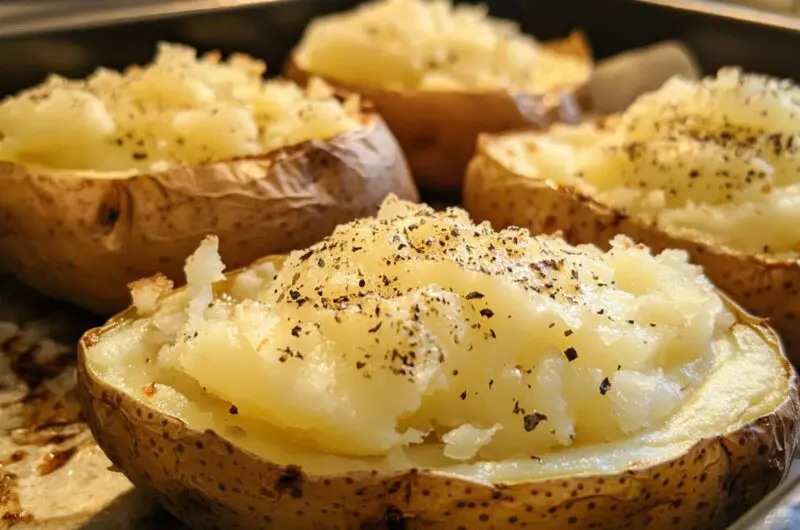
Perfect Oven Baked Potato (No Foil Needed)
Course: Side DishCuisine: American4
servings10
minutes55
minutes320
kcalCrispy-skinned, fluffy baked potatoes done the smart way, with no risky foil wrapping.
Ingredients
4 large russet potatoes (about 10 oz each)
1 tablespoon olive oil (or melted butter)
1 teaspoon kosher salt, plus more for serving
1/2 teaspoon black pepper
4 tablespoons butter
1/2 cup sour cream
1/2 cup shredded sharp cheddar cheese
4 strips bacon, cooked and crumbled
3 green onions, thinly sliced
Directions
- Preheat your oven to 450°F and set a rack in the center. Skip the foil entirely so the skins crisp up instead of steaming.
- Scrub the russet potatoes clean under cold water and dry them well. Poke each potato 6 to 8 times with a fork so steam can escape while they bake.
- Rub each potato all over with olive oil, then sprinkle with kosher salt and black pepper. The oil and salt give you that crackly steakhouse skin.
- Place the potatoes directly on the oven rack, not wrapped in foil. Bake for 45 to 60 minutes, until a fork slides in easily and the inside reads about 205°F to 210°F.
- Pull the potatoes out and let them rest for about 5 minutes. They will be very hot, so handle them with a towel or mitt.
- Cut a slit down the top of each potato and gently squeeze the ends to open it up. Fluff the inside with a fork to make it light and airy.
- Top with butter, sour cream, shredded cheddar, crumbled bacon, and sliced green onions. Add an extra pinch of salt and pepper right on the fluffy inside.
- Serve right away while hot. If you have leftovers, never leave them sitting out longer than two hours, remove any foil, and refrigerate in an airtight container within that window.
Notes
- Never wrap a baked potato in foil and leave it on the counter. If you bake in foil, peel it off the moment the potato comes out of the oven.
- Reheating will not undo a potato that sat out too long. When in doubt, throw it out.
- Cooled potatoes keep 3 to 4 days in the fridge without foil. Spread them out to cool faster instead of stacking them.
Frequently Asked Questions
Q: Can I ever bake potatoes in foil?
A: Yes, foil is fine during baking and it keeps the skin soft. The catch is you have to take it off the second the potato leaves the oven, then serve it hot or refrigerate it. The problem is never the baking, it is leaving a wrapped potato to cool on the counter.
Q: How long can a baked potato sit out at room temperature?
A: Two hours, max. If it is warmer than 90°F in your kitchen or outside, that window shrinks to one hour. After that, the safe move is to toss it rather than chance it.
Q: If I reheat a potato that was left out, does that make it safe?
A: No. Heat can kill bacteria, but the toxin they may have already produced is heat-stable, so a hot oven or microwave will not break it down. You also cannot see, smell, or taste it, so reheating is not a fix.
Q: How long do baked potatoes last in the fridge?
A: About three to four days, stored without foil in an airtight container at or below 40°F. Cool them quickly by spreading them on a tray, and cut very large ones in half to speed things up.