


My grandpa never followed a recipe in his life. He’d stand at the stove with a cast iron skillet that was older than most of his grandchildren, and somehow those pork chops came out tender every single time. No measuring spoons. No thermometer. Just decades of doing it right. When I finally started cooking for my own family, I ruined more pork chops than I care to admit before I figured out what he knew instinctively — and what I’m about to share with you.
The truth about pork chops is that they’re incredibly easy to mess up. They’re lean, they cook fast, and the window between “perfect” and “cardboard” is painfully small. But once you understand a few key principles — the right thickness, proper seasoning timing, and knowing when to pull them off the heat — you’ll wonder why you ever stressed about them.
Why Most Pork Chops Turn Out Dry (and How to Fix It)
Here’s what happens in most kitchens across America on any given Tuesday night: Someone grabs a package of thin pork chops from the grocery store, throws them in a pan over high heat, cooks them until they’re gray all the way through, and then wonders why dinner tastes like it needs to be washed down with a glass of water. The problem isn’t the cook. The problem is that almost everything about that approach is working against you.
First, thickness matters more than anything. You want pork chops that are at least 1 inch thick. Thin chops overcook in a flash because there’s simply not enough meat to retain moisture during the sear. A thick chop gives you time to build a golden crust on the outside while the inside stays juicy. Both boneless and bone-in work fine, though bone-in chops tend to be slightly more flavorful because the bone helps insulate the meat during cooking.
Second, most people skip the step that makes the biggest difference: salting ahead of time. If you salt your pork chops 30 minutes before they hit the pan, the salt draws out a little moisture, then that moisture gets reabsorbed along with the salt, seasoning the meat deep inside. Use a little less than 1/4 teaspoon of kosher salt per chop and let them sit at room temperature on a plate. This isn’t optional. This is the difference between “fine” and “fantastic.”
The Spice Rub That Makes Everything Better
After those 30 minutes, pat the chops completely dry with paper towels. This is another step people skip, and it costs them dearly. Wet meat doesn’t sear — it steams. And steamed pork chops are nobody’s idea of a good time.
For the seasoning, I use a blend of chili powder, garlic powder, onion powder, smoked paprika, dried thyme, and black pepper. Here’s the trick that makes it special: mix in just 1 tablespoon of all-purpose flour with the spices. That tiny bit of flour creates a thin coating that browns beautifully in the pan, giving you a crusty, flavorful exterior that looks and tastes like you spent way more time than you actually did. Rub the mixture generously on both sides of each chop, pressing it in with your fingers.
Now, you can absolutely keep things simple if you prefer. Italian seasoning and salt rubbed on both sides and cooked in butter over medium heat will give you a perfectly respectable pork chop in about 8 to 10 minutes total. There’s no shame in simple. But that spice-and-flour rub is what makes people ask for your recipe, so I’d go that route when you want to impress.
The Cooking Method: Sear, Then Trap the Steam
Get your skillet — cast iron is ideal, but any heavy-bottomed skillet works — over medium-high heat. Add about 2 tablespoons of olive oil or avocado oil and wait until it shimmers. That shimmer tells you the oil is hot enough to sear. If the oil is smoking, you’ve gone too far. Dial it back. Excessive smoke means your kitchen is going to smell like a grease fire and your chops are going to develop a bitter char instead of a golden crust.
Lay the chops in the skillet — don’t overcrowd the pan. If you’re cooking for a crowd and your skillet only comfortably fits two chops, then cook in batches. Crowding drops the temperature of the pan and you end up with pale, steamed meat instead of a proper sear. Give each chop space.
Sear for 2 to 3 minutes on the first side. Don’t touch them. Don’t peek. Don’t fidget. Let the heat do its job. When you flip them, reduce the heat to low and cover the skillet with a lid. This is the move that changes everything. The lid traps steam inside the pan, creating a gentle, moist environment that cooks the interior through without drying it out. It’s basically braising and searing at the same time. My grandpa used to just flip a dinner plate upside down over his cast iron — same concept.
The Temperature That Actually Matters
If you remember one number from this whole article, make it 145°F. That’s the safe internal temperature for pork according to the USDA, and it was lowered from 160°F back in 2011. A lot of people still cook pork to 160°F or beyond because that’s what their parents taught them, and that’s exactly why so many people think they don’t like pork chops. You’ve been overcooking them by 15 degrees your whole life.
Here’s an even better trick: pull your chops off the heat at 140°F. During the resting period, the internal temperature will coast up another 5 degrees to hit that 145°F mark. Stick a digital meat thermometer into the thickest part of the chop, avoiding the bone if it’s bone-in. Check each chop individually since they won’t all be the same thickness, and even a quarter inch of difference affects cooking time.
When you slice into a properly cooked chop, the inside should be mostly beige with a hint of pale pink in the center and plenty of juice. That pink is safe. That pink is flavor. Don’t be afraid of it.
The Rest Is Not Negotiable
Once the chops come out of the skillet, transfer them to a clean plate and cover loosely with aluminum foil. Let them sit for 5 minutes. One reviewer of a similar technique said they wrapped their chops in foil for 10 minutes and they were “swimming in juice.” That’s what resting does — it lets the muscle fibers relax so the juices redistribute throughout the meat instead of pouring out the second you cut in.
I know it’s hard to wait when the kitchen smells incredible and everyone’s hovering around the stove. But cutting into a pork chop straight out of the skillet is like opening the oven door on a soufflé — all that good stuff escapes and you’re left wondering what went wrong.
Want to Go the Extra Mile? Brine Them
If you have a little extra time, brining is the single most effective thing you can do for a pork chop. A simple brine of 1 cup water, salt, and brown sugar brought to a simmer until dissolved, then mixed with cold water and garlic, will transform even a bargain-bin chop into something special. Submerge the chops in the brine for at least 1 hour or up to 6 hours for thicker cuts. The brine seasons the meat all the way through without making it overly salty.
Another option some cooks swear by is marinating in apple cider vinegar for an hour. The acid breaks down the proteins in the meat and acts as a tenderizer. I wouldn’t do both — pick one or the other. The brine gives you more flavor. The vinegar gives you more tenderness. Your call.
The Pan Sauce That Turns a Weeknight Dinner Into Something Special
While the chops rest, you’ve got a skillet full of browned bits and rendered fat — that’s pure gold. Don’t wash that pan. Pour in about 1/2 cup of chicken stock, a splash of apple cider vinegar, and a drizzle of honey. Crank the heat to medium-high and stir up all those browned bits from the bottom. Let it reduce by about half, then drop in a tablespoon of cold butter and swirl until it melts into the sauce. It’ll thicken up into something glossy and rich that makes everything on the plate taste better.
If you want a proper gravy instead, add butter to the skillet over medium-low heat, whisk in a tablespoon or two of flour, cook for a minute to get rid of the raw flour taste, then slowly whisk in chicken broth until it thickens. Some people stir in a spoonful of Greek yogurt or sour cream at the end for a creamy version. Pour that over the chops and suddenly you’re making Southern smothered pork chops — the kind that make people go quiet at the dinner table because they’re too busy eating to talk.
Which Pork Chops to Buy at the Store
Not all pork chops are created equal. Rib chops are fattier and very tender — they’re forgiving if you overcook them slightly. Loin chops are very lean and mild, which means they’re also the easiest to dry out. Boneless chops are convenient but have less flavor. Sirloin chops have tons of pork flavor but they’re tough and better suited for braising. For this skillet method, go with rib chops or center-cut bone-in chops. Look for some marbling — those little white lines of fat running through the meat — and make sure they’re at least an inch thick. If the only chops at your grocery store are the thin-cut kind, ask the butcher to cut them fresh. Most stores will do this for free.
What to Serve Alongside
Garlic mashed potatoes are the classic pairing and for good reason — they catch that pan sauce perfectly. Roasted asparagus, steamed broccoli, or sautéed green beans all work. If you want something lighter, a simple green salad or coleslaw cuts through the richness nicely. Honestly though, a microwave baked potato and a pile of steamed veggies is a completely respectable weeknight plate. Don’t let anyone make you feel bad about keeping it simple.
Leftovers store well in the fridge for up to 4 days in an airtight container. They also freeze for up to 3 months and reheat surprisingly well. Slice them thin and toss with pasta, pile onto a sandwich, or chop and throw into fried rice. A good pork chop earns its keep twice.
My grandpa passed away without ever writing down a single recipe. But every time I salt a pork chop, let it rest, and hear that sizzle when it hits the cast iron, I know exactly what he’d say: “Don’t mess with it. Let the pan do the work.” He was right about that, and about most things.
Frequently Asked Questions
Q: Can I use boneless pork chops instead of bone-in?
A: Yes, boneless chops work fine with this method. Just know they’ll cook a bit faster — roughly 10 minutes less overall — and they tend to be leaner, so pulling them at 140°F and letting them rest to 145°F is even more important. Bone-in chops will give you more flavor because the bone insulates the meat and adds richness to any pan sauce you make.
Q: What if my pork chops are thinner than 1 inch?
A: Thin chops can still taste great, but they need less time and more attention. Reduce your sear time to about 2 minutes per side and skip the covered low-heat step — they’ll be cooked through already. Use a thermometer and check each one individually since even small differences in thickness change the timing.
Q: Is it safe to eat pork with a little pink in the center?
A: Absolutely. The USDA lowered the safe cooking temperature for whole pork cuts to 145°F with a 3-minute rest back in 2011. At that temperature, any parasites are eliminated and the pork will look mostly beige with a pale pink center. That pink means it’s juicy and properly cooked, not underdone.
Q: Can I season the pork chops in advance?
A: You can season them up to 2 days ahead as a dry brine. Rub the spice mixture on all sides, cover with plastic wrap, and refrigerate. The longer the seasoning sits, the deeper it penetrates. Just make sure to bring the chops to room temperature for about 30 minutes before cooking so they cook evenly.
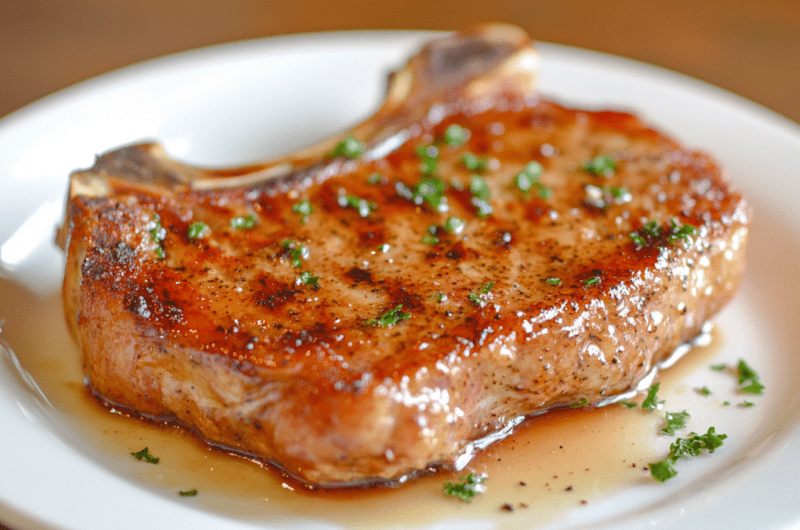
Grandpa’s Extra Tender Skillet Pork Chops
Course: DinnerCuisine: American4
servings35
minutes10
minutes310
kcalGolden-crusted, impossibly juicy pork chops with a simple spice rub and optional pan sauce — ready in about 30 minutes and tender enough to cut with a fork.
Ingredients
4 bone-in pork chops, at least 1 inch thick (about 1.5 to 2 pounds total)
1 teaspoon kosher salt (a little less than 1/4 teaspoon per chop)
1 teaspoon chili powder
1 teaspoon garlic powder
1 teaspoon onion powder
1 teaspoon smoked paprika
1/2 teaspoon dried thyme
1/2 teaspoon black pepper
1 tablespoon all-purpose flour
2 tablespoons olive oil or avocado oil
1/2 cup chicken stock (for optional pan sauce)
1 splash apple cider vinegar (for optional pan sauce)
1 tablespoon honey (for optional pan sauce)
1 tablespoon cold butter (for optional pan sauce)
Directions
- Salt each pork chop with a little less than 1/4 teaspoon of kosher salt per chop and place them on a plate. Let them sit at room temperature for 30 minutes. The salt will draw out a small amount of moisture, which then gets reabsorbed, seasoning the meat from the inside out.
- In a small bowl, combine the chili powder, garlic powder, onion powder, smoked paprika, dried thyme, black pepper, and flour. Stir until evenly mixed. This spice-flour blend is what creates the golden, crusty exterior on the chops.
- After 30 minutes, pat each pork chop thoroughly dry with paper towels. This is critical — wet meat steams instead of sears, and you won’t get good color or crust. Rub the spice mixture generously on both sides of each chop, pressing it into the meat with your fingers.
- Heat 2 tablespoons of oil in a large cast iron or heavy-bottomed skillet over medium-high heat until the oil shimmers. If the oil starts smoking, reduce the heat slightly. The shimmer tells you the pan is ready for a proper sear.
- Place the pork chops in the skillet without overcrowding — cook in batches of two if needed. Sear undisturbed for 2 to 3 minutes until a golden-brown crust forms on the bottom. Do not move or press down on the chops during this time.
- Flip the chops, immediately reduce heat to low, and cover the skillet with a lid. The trapped steam gently cooks the interior while keeping the meat moist. Cook covered for another 4 to 6 minutes, then check the internal temperature with a digital meat thermometer at the thickest point.
- Remove the chops from the skillet when they reach 140°F — the temperature will rise to 145°F during resting. Transfer to a clean plate, cover loosely with aluminum foil, and let rest for 5 minutes. This allows the juices to redistribute throughout the meat.
- For the optional pan sauce, place the skillet back over medium-high heat. Pour in the chicken stock, apple cider vinegar, and honey, stirring and scraping up any browned bits. Let the liquid reduce by half, about 2 to 3 minutes, then remove from heat and swirl in the cold butter until melted and glossy. Spoon over the rested pork chops and serve.
Notes
- For even more tender results, brine the chops before cooking: dissolve salt and brown sugar in 1 cup of simmered water, add cold water and garlic, then submerge chops for 1 to 6 hours in the fridge. Skip the pre-salting step if you brine.
- Boneless chops work with this recipe but cook faster — reduce the covered cooking time by a few minutes and watch the thermometer closely.
- You can season the chops up to 2 days ahead as a dry brine. Rub with the spice mixture, cover with plastic wrap, and refrigerate. Bring to room temperature for 30 minutes before cooking.