


I’m going to tell you something you already know but maybe haven’t said out loud: you cook the same meals every single week. Monday might be chicken something. Tuesday is tacos. Thursday is pasta. Sunday you might get ambitious with a slow cooker situation. And the cycle repeats, forever, until someone in your house finally snaps and says “I’m tired of this.”
You’re not alone. A survey of 5,000 U.S. adults found that 86% of Americans are meal repeaters, eating the same dinners over and over again at least some of the time. Sixty percent do it because everyone in the house actually agrees on those meals — which, if you have kids, you know is basically a miracle. Another 21% just don’t have the energy to try something new.
And honestly? There’s nothing wrong with that. Cookbook author Claire Tansey grew up on a two-week rotation that included pan-fried pork chops, spaghetti, meatloaf, and something called “Spanish rice” that was apparently its own thing. Most of our parents did the same. The problem isn’t repetition. The problem is when you’re bored out of your mind and still making the same bland ground beef tacos you’ve been phoning in since 2016.
So instead of asking you to overhaul your entire dinner routine — which nobody is actually going to do — I’m going to ask you to fix one meal. Just one. Let’s make your Taco Tuesday actually worth showing up for.
The Dinner Rut Is Real, and It’s Fine (Mostly)
Here’s the thing about cooking the same seven meals forever: it works. You know what to buy. You know how long it takes. Nobody complains — or at least, nobody complains more than usual. Over a quarter of Americans actually cook specific meals on specific days of the week, like Meatless Monday or Pizza Friday. It’s a system, and systems keep households running.
But there’s a cost. Another survey found that the average person only knows how to cook about five meals without a recipe. Five. And one in three people say they only try a new recipe about once a year. That means your cooking skills are basically frozen in place, and dinner becomes something you survive rather than enjoy.
The research actually backs this up. People who try new things for dinner report cooking as stress-relieving at a rate of 78%, compared to only 64% of people who eat the same meals all the time. Trying something new — even once — seems to make the whole act of cooking feel less like a chore.
Why Tacos Are the Best Place to Start
If you’re going to improve one meal in your rotation, tacos are the smartest choice. American cuisine is the most commonly attempted style at home (53%), followed closely by Italian at 43%. But tacos sit in this sweet spot where almost everyone already makes them, the ingredients are cheap, and the format is infinitely flexible. You don’t need to learn a new technique. You just need to stop dumping a packet of seasoning into a pound of ground beef and calling it a night.
I’m talking about slow-roasted pork tacos with a quick-pickled onion and a real salsa verde. It sounds fancy. It’s not. It’s a pork shoulder, a few spices, a sheet pan, and about 15 minutes of actual work. The oven does the rest. And when it comes out — falling apart, caramelized on the edges, smoky and a little sweet — you will wonder why you ever settled for those sad ground beef tacos.
The Recipe: Slow-Roasted Pork Tacos With Quick-Pickled Onions
This recipe is built around a boneless pork shoulder (also called pork butt — yes, it’s the shoulder, don’t ask). You can find it at any grocery store, and it’s one of the cheapest cuts of pork you can buy. At most Walmart or Kroger locations, you’re looking at $2 to $3 per pound. A 3-pound piece will feed a family of four with leftovers, which means next-day taco bowls or quesadillas with basically zero effort.
The trick is low and slow. You’re roasting this at 300°F for about 3 hours. I know that sounds like a long time, but Americans spend around 400 hours a year in the kitchen already. This isn’t adding to your workload — it’s shifting it. Fifteen minutes of prep in the afternoon, then you ignore it until dinner.
While the pork roasts, you make quick-pickled red onions. This takes five minutes and transforms the whole taco. Thinly sliced red onion goes into a jar with white vinegar, a little sugar, and salt. By the time the pork is done, the onions are bright pink, tangy, and crisp. They keep in the fridge for two weeks, so make extra. You’ll start putting them on everything.
The Spice Rub Makes or Breaks It
Throw away the taco seasoning packets. I mean it. They’re mostly salt, cornstarch, and garlic powder in ratios that don’t make sense. You can make a better spice rub with stuff that’s already in your cabinet.
You need: chili powder (regular, nothing exotic), cumin, smoked paprika, garlic powder, onion powder, salt, pepper, and a little brown sugar. The brown sugar is important — it helps the outside of the pork caramelize in the oven, and it balances the heat from the chili powder. Mix it all together, rub it on the pork, and you’re done. Two in three Americans believe their cooking tools and equipment impact the quality of their food, and 41% say a good spice collection matters. They’re right. A $4 jar of smoked paprika will do more for your cooking than a $200 gadget.
Common Mistakes People Make With Pork Tacos
The biggest one: cooking it too hot and too fast. If you crank the oven to 400°F, the outside will dry out before the inside breaks down. Pork shoulder needs time for the connective tissue to melt and turn into that pull-apart texture. At 300°F, you’re giving it that time. Be patient.
Second mistake: not searing it first. I know I said this is easy, and it is, but take five minutes to sear the pork in a hot skillet with a tablespoon of oil before it goes in the oven. You want a dark brown crust on at least two sides. That crust is flavor. Skip it and you’ll have perfectly tender pork that tastes like nothing.
Third mistake: soggy tortillas. If you’re using store-bought flour or corn tortillas, heat them in a dry skillet — not the microwave. Thirty seconds per side in a hot pan gives them a little char and makes them pliable without being wet. The 45% of consumers who rely on air fryers can do this there too — 350°F for about 2 minutes works great.
Variations That Keep Tuesday Interesting
This is where you break the cycle. The base recipe stays the same — slow-roasted spiced pork, pickled onions, warm tortillas. But every week, you change one thing. Week one: top with crumbled cotija cheese and chopped cilantro. Week two: add sliced avocado and a squeeze of lime. Week three: make a quick slaw with shredded cabbage, lime juice, and a pinch of salt. Week four: drizzle with a chipotle crema (sour cream plus a spoonful of canned chipotles in adobo, blended together).
Same core meal. Different enough to not feel repetitive. Experts recommend adding two to four new recipes per month to break out of a dinner rut, but honestly, just rotating toppings on one good base recipe counts. You’re training yourself to think about food differently without the pressure of starting from scratch every time.
The Leftovers Strategy
Make a full 3-pound pork shoulder even if there are only two of you. The leftover pork stores in the fridge for four days or the freezer for three months. On Wednesday, pile it on rice with black beans and salsa for a burrito bowl. On Thursday, stuff it into a quesadilla with Monterey Jack cheese. On Friday, toss it in a skillet with scrambled eggs for breakfast tacos.
This solves one of the biggest cooking problems out there: 38% of Americans say they don’t have groceries on hand when they need them. If you’ve got leftover pork in the fridge, you’ve got a head start on three more meals without a single extra trip to the store. That’s not meal prep in the Instagram sense — it’s just being smart about what you already cooked.
Stop Trying to Overhaul Everything
Nearly two-thirds of home cooks have wanted to quit making dinner at some point. I get it. Dinner is relentless. It shows up every single day whether you’re ready for it or not. The answer isn’t to suddenly become someone who cooks elaborate meals seven nights a week. The answer is to make the meals you already cook a little bit better.
Start with tacos. Nail this recipe once, and it becomes part of your rotation — one of your seven meals, but better than what was there before. Then maybe next month you fix your pasta night. Then your chicken situation. You don’t have to change everything. You just have to change one thing at a time.
Your dinner rut isn’t the enemy. A boring dinner rut is.
Frequently Asked Questions
Q: Can I use a slow cooker instead of the oven?
A: Yes. Place the seared, seasoned pork shoulder in a slow cooker with about 1/2 cup of chicken broth or orange juice. Cook on low for 8 hours or high for 5 hours. The texture will be slightly different — more shredded and saucy rather than caramelized — but it’s still great in tacos. You’ll miss the crispy edges, though, so consider broiling the shredded pork on a sheet pan for 3-4 minutes after pulling it apart.
Q: How do I know when the pork shoulder is done?
A: The internal temperature should hit 195°F to 205°F for pull-apart tenderness. If you don’t have a meat thermometer, poke it with a fork — it should slide in and out with almost no resistance, and the meat should fall apart when you twist the fork. If it feels tough or rubbery, it needs more time. Give it another 30 minutes and check again.
Q: Can I use a different cut of pork?
A: Pork shoulder (pork butt) is the best cut for this because of its fat content and connective tissue. A pork loin will dry out badly at this cooking time and temperature. If you can’t find boneless pork shoulder, bone-in works just as well — it’ll actually have a little more flavor. Just add about 30 extra minutes of cooking time and pull the bone out before shredding.
Q: How far in advance can I make the pickled onions?
A: The onions are ready to eat after about 30 minutes but get better after a few hours. They’ll keep in a sealed jar in the fridge for up to two weeks. Make a big batch on Sunday and use them throughout the week on tacos, sandwiches, salads, grain bowls — basically anything that needs a hit of acidity and crunch.
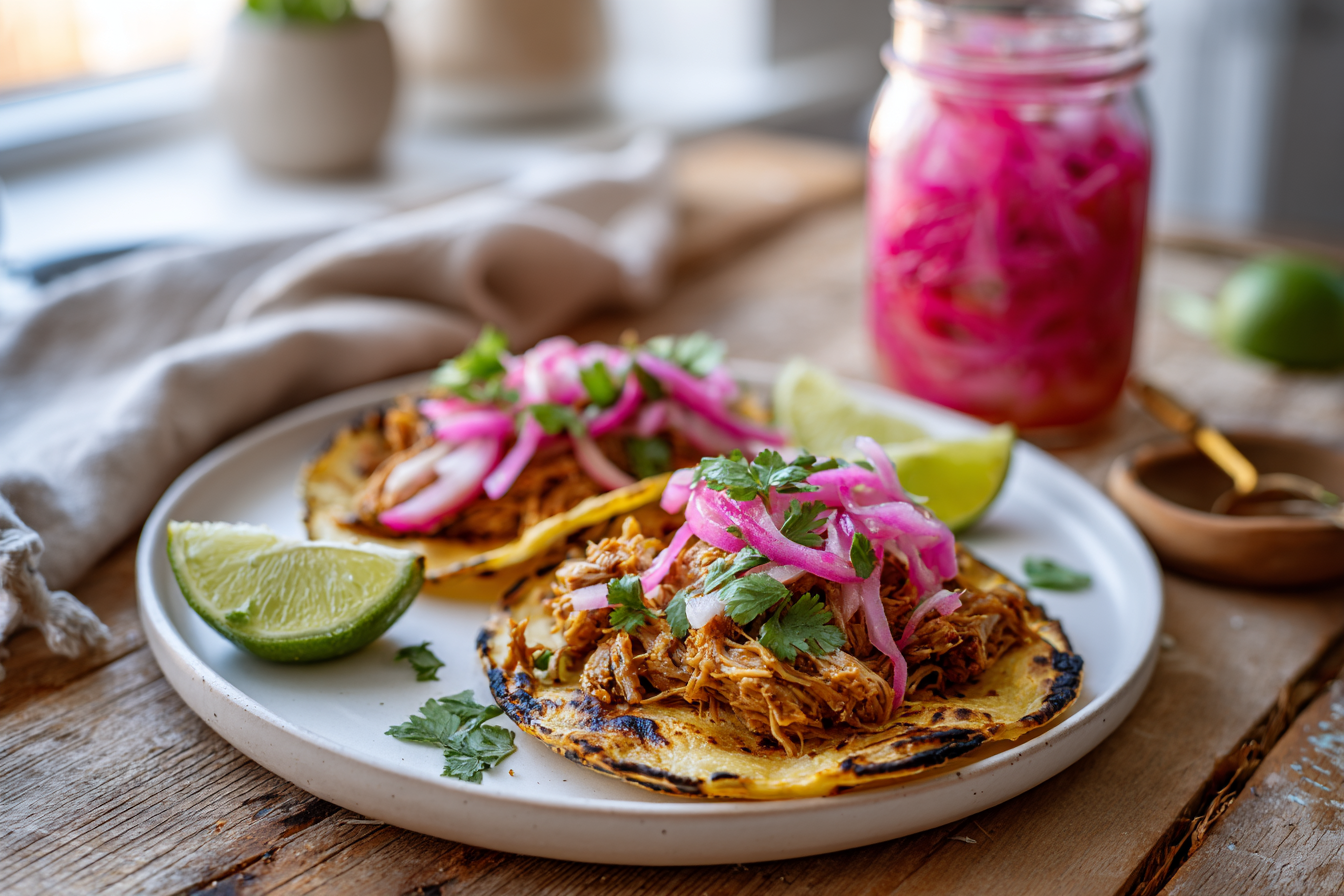
Slow-Roasted Pork Tacos With Quick-Pickled Onions
Course: DinnerCuisine: Mexican-American6
servings15
minutes3
hours10
minutes380
kcalThe taco recipe that replaces your sad ground beef Tuesday forever — fall-apart pork with tangy pink onions on charred tortillas.
Ingredients
3 pounds boneless pork shoulder (pork butt), patted dry
2 tablespoons chili powder
1 tablespoon cumin
1 teaspoon smoked paprika
1 teaspoon garlic powder, 1 teaspoon onion powder, 1 tablespoon brown sugar, salt and pepper to taste
1 tablespoon vegetable oil
1 large red onion, thinly sliced into rings
1 cup white vinegar, 1 tablespoon sugar, 1 teaspoon salt (for pickling liquid)
12 small corn or flour tortillas, lime wedges and cilantro for serving
Directions
- Preheat your oven to 300°F. In a small bowl, combine the chili powder, cumin, smoked paprika, garlic powder, onion powder, brown sugar, 1 1/2 teaspoons of salt, and 1 teaspoon of black pepper. Mix it together with a fork until everything is evenly blended.
- Pat the pork shoulder completely dry with paper towels — this is important for getting a good sear. Rub the spice mixture all over the pork, pressing it into the meat so it sticks. Cover every surface generously.
- Heat the vegetable oil in a large oven-safe skillet or Dutch oven over medium-high heat until the oil is shimmering and just starting to smoke. Sear the pork shoulder for about 3 minutes per side until a deep brown crust forms on at least two sides. Don’t move it around — let it sit and develop that color.
- Transfer the skillet or Dutch oven to the preheated oven (or move the pork to a roasting pan if your skillet isn’t oven-safe). Cover tightly with aluminum foil or a lid. Roast at 300°F for about 3 hours, or until the pork reaches an internal temperature of 195-205°F and falls apart easily when prodded with a fork.
- While the pork roasts, make the pickled onions. Place the thinly sliced red onion in a mason jar or heatproof bowl. Heat the white vinegar, sugar, and salt in a small saucepan until the sugar dissolves — about 2 minutes. Pour the hot liquid over the onions, making sure they’re submerged. Let them sit at room temperature for at least 30 minutes. They’ll turn bright pink and tangy.
- When the pork is done, remove it from the oven and let it rest for 10 minutes. Then use two forks to shred the meat, pulling it apart into rough chunks and strands. Toss the shredded pork in any juices that collected in the pan — that’s where a ton of flavor is hiding.
- Heat your tortillas in a dry skillet over medium-high heat for about 30 seconds per side, until they have a few light char marks and are warm and pliable. Stack them on a plate and cover with a clean kitchen towel to keep them warm while you work through the batch.
- Assemble the tacos by piling shredded pork onto each warm tortilla. Top with drained pickled red onions, fresh cilantro, and a squeeze of lime juice. Serve immediately with extra lime wedges on the side.
Notes
- For crispier pork edges, spread the shredded meat on a sheet pan after pulling it apart and broil on high for 3-4 minutes until the tips get dark and crispy. Watch it closely — it goes from perfect to burnt fast.
- Leftover pork stores in an airtight container in the fridge for up to 4 days or in the freezer for up to 3 months. Reheat in a skillet with a splash of water or broth to keep it moist.
- The pickled onions will keep in a sealed jar in the refrigerator for up to 2 weeks and get better with time. Use them on sandwiches, grain bowls, burgers, or anything that needs brightness and crunch.