


The hamburgers your grandparents ate looked nothing like the towering monsters you see on menus today. Back in the 1950s, a burger was simple, thin, and cooked with a crispy crust that made every bite count. The patties were about a third of the size we eat now, and they came off flat griddles sizzling with butter and caramelized onions. If you want to taste what the golden age of burgers was really like, making a classic 1950s smashburger at home is easier than you might think.
The 1950s burger boom changed everything
After World War II ended, Americans were ready to celebrate. People had money to spend and cars to drive, and eating out became a national pastime. Drive-in restaurants popped up everywhere, and hamburgers became the food of the moment. McDonald’s and In-N-Out had already opened their doors by the late 1940s, and Burger King joined the party in 1954. Millions of hungry customers were pulling into parking lots across the country, ordering burgers through their car windows from carhops in roller skates.
This was the era that made the burger an American icon. The popularity of hamburgers took off during this decade and never slowed down. Drive-ins were nearly synonymous with burgers, and the experience of eating one in your car became part of the fun. The checkered floors, jukeboxes, and poodle skirts you see in old movies? They were real, and burgers were at the center of it all.
Smashing the patty was the secret technique
Ever wonder why old-school burgers look so different from the thick patties at modern restaurants? The answer is simple: they smashed them flat. When you press a ball of ground beef onto a hot griddle, something magical happens. The meat spreads thin and develops a crispy, caramelized crust along the edges. This crust is where all the good stuff lives. It locks in moisture while adding a satisfying crunch that thick burgers just cannot match.
The smashing technique was also practical. During the burger boom, restaurants needed to serve customers fast. Thinner patties cooked much quicker than big steaks, which meant shorter lines and happier customers. Burger experts say this method also keeps the meat juicy because it cooks so fast that the juices do not have time to escape. Modern restaurants that specialize in retro-style burgers still use this exact technique, pressing balls of beef flat with heavy spatulas to recreate that perfect 1950s crisp.
Home cooks used simple ingredients back then
Cookbooks from the 1950s kept burger recipes refreshingly basic. Most called for nothing but ground chuck, butter, onions, and a pinch of salt or pepper. You would not find the eggs, breadcrumbs, or fancy binders that modern recipes often include. The thinking was straightforward: good beef does not need much help. Home cooks let the meat speak for itself, and the results were consistently delicious. Sometimes the simplest approach really is the best one.
The cooking method was just as uncomplicated. Butter or margarine would go into a frying pan first, then the patties would follow. Caramelized onions often went directly on top of the patties while they cooked. There were even gadgets to help shape perfect circles, like the Bun-Burger Patty Maker, which closed around the meat like a sandwich. Anyone who has struggled with patties falling apart while shaping them can appreciate that little invention. These simple techniques made weeknight dinners easy and satisfying.
The meat was fresher than what we get today
Here is something surprising about 1950s burgers: the beef was probably much fresher than what most of us buy now. Before the burger boom led to massive feedlots and frozen patties shipped across the country, restaurants used never-frozen meat. The earliest burger chains actually ground their meat on-site to prove how fresh and pure their patties were. Customers could watch the beef being prepared right in front of them.
This freshness was a big part of what made those burgers taste so good. Much of the beef at the start of the decade was still grass-fed. McDonald’s started with fresh patties before switching to frozen products as the franchise grew larger. Interestingly, they went back to fresh beef for some products in 2018, taking a page from their own history. When you make burgers at home with fresh ground chuck from your butcher, you are actually cooking closer to the 1950s style than you realize.
Butter and lard made everything taste better
Nobody was counting calories in the 1950s kitchen. Before cooking anything, home cooks would coat the pan or griddle in butter, lard, or bacon grease. This was true for vegetables, eggs, and especially burgers. The extra fat helped create that signature crispy exterior while adding richness to every bite. Some families kept a tin of bacon grease on the stove specifically for seasoning and frying. It was just how things were done.
Frying an already-fatty beef patty in even more fat might sound excessive today. But this technique was standard practice back then. The lard or butter in the pan helped the patty cook evenly and prevented sticking. It also added another layer of rich taste that you cannot get any other way. When making an authentic 1950s smashburger at home, using real butter in your pan is not optional. It is essential to getting that genuine retro experience.
Onions went on the patty while cooking
Adding raw onion slices to a finished burger is actually a modern habit. In the 1950s, the onions went on while the meat was still cooking on the griddle. Sometimes cooks would place the patties directly on top of piles of diced onions, letting the steam and sizzle infuse the beef with that sweet, savory onion goodness. The heat softened the onions and melted their sharp bite into something mellow and delicious.
White Castle gets credit for helping popularize this technique. They created their famous slider by poking holes in the meat and cooking it on top of diced onions starting in 1921. By the 1950s, this method had spread to diners, fast food joints, and home kitchens everywhere. Even if a customer did not order onions, the grill was often so seasoned with them that every burger picked up a hint of that taste anyway. It is a trick worth stealing for your own kitchen.
Classic toppings were kept simple and traditional
These days, you can find burgers topped with everything from avocado to kimchi to peanut butter. But 1950s burgers stuck to the basics. The standard toppings included mustard, ketchup, pickles, onions, and sometimes a slice of American cheese. That was it. No fancy sauces, no gourmet additions, just simple condiments that let the beef stay front and center. There is something refreshing about that approach.
Of course, people were starting to get creative even back then. Good Housekeeping magazine suggested adding fried eggs as early as 1944, and by the 1950s, they were recommending flavored butters, chives, olives, horseradish, and even apple slices. The seeds of burger innovation were being planted, even if most people still reached for the ketchup and mustard. For an authentic experience, keep your toppings simple and let the smashed patty do the heavy lifting.
The burgers were much smaller back then
Those enormous stacked burgers with multiple patties and cheese dripping down the sides? That is a totally modern invention. A typical 1950s burger was about a third the size of what restaurants serve today. Portion sizes were genuinely modest, and nobody expected to need two hands and a fork to eat their lunch. A single thin patty on a soft bun was the standard, and it was considered a complete meal.
The smaller size actually worked in the burger’s favor. With a thinner patty, you got a better ratio of crispy crust to soft meat in every bite. The bun did not get overwhelmed, and you could actually taste all the elements together. When making a 1950s-style smashburger at home, start with about two to three ounces of ground beef per patty. It might seem small, but once you taste that perfect crust-to-meat ratio, you will understand why this size became a classic.
How to make your own 1950s smashburger
Making a true 1950s-style smashburger at home does not require any special equipment. All you need is a hot pan or griddle, a sturdy spatula, and some good ground chuck. Skip the lean beef and go for something with about 80% lean to 20% fat. That fat content is what gives you the juicy interior and crispy edges that made these burgers famous in the first place.
Start by heating your pan over high heat and adding a good chunk of butter. Form loose balls of beef, about two to three ounces each, and place them on the hot surface. Immediately press them flat with your spatula, pushing down hard for about 10 seconds. Add your sliced onions on top, let the bottom get golden brown, then flip and finish cooking. Top with American cheese, and you have got an authentic taste of the 1950s sitting right in front of you.
The best part about the 1950s smashburger is that anyone can make it. You do not need restaurant equipment or fancy ingredients. Just good beef, butter, onions, and a hot pan. The techniques that made these burgers famous 70 years ago still work perfectly today. Give this recipe a try, and you might find yourself wondering why burgers ever got so complicated. Sometimes the old ways really are the best ways.
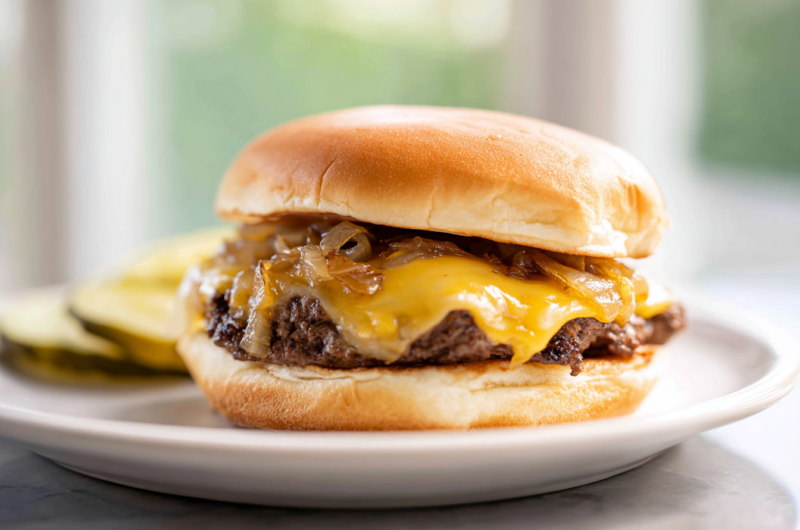
Classic 1950s Smashburger
Course: Main CourseCuisine: American4
burgers10
minutes10
minutes380
kcalThin, crispy-edged, and dripping with butter, this authentic 1950s smashburger brings back the golden age of American diners.
Ingredients
1 pound ground chuck (80/20 lean to fat ratio)
3 tablespoons salted butter, divided
1 medium yellow onion, thinly sliced
4 slices American cheese
4 soft hamburger buns
1/2 teaspoon kosher salt
1/4 teaspoon black pepper
Yellow mustard, for serving
Ketchup, for serving
Dill pickle slices, for serving
Directions
- Divide the ground chuck into four equal portions, about 4 ounces each, and roll them into loose balls. Do not pack the meat too tightly, as loose balls smash better and create more crispy edges. Season the outside of each ball lightly with salt and pepper.
- Heat a large cast iron skillet or flat griddle over high heat for at least 3 minutes until very hot. Add 1 tablespoon of butter and let it melt and start to sizzle. The pan needs to be screaming hot to get that signature crust.
- Place two beef balls on the hot surface, leaving plenty of space between them. Immediately press down hard with a sturdy flat spatula or burger press, smashing the balls into thin patties about 4 to 5 inches wide. Press firmly for about 10 seconds to create maximum contact with the cooking surface.
- Immediately place a small pile of sliced onions on top of each patty while the bottom is searing. The steam from the cooking meat will soften the onions and infuse their flavor into the burger. Let the patties cook undisturbed for 2 to 3 minutes until the edges are deeply browned and crispy.
- Use your spatula to scrape under each patty, making sure to get all the crispy bits from the pan. Flip the patties with the onions still on top. Place a slice of American cheese over each patty immediately after flipping so it starts to melt from the residual heat.
- Cook for another 1 to 2 minutes until the cheese is melted and the second side has developed a nice crust. Remove the finished patties to a plate and repeat the process with the remaining two beef balls, adding more butter to the pan as needed.
- While the second batch cooks, spread the remaining butter on the cut sides of the hamburger buns. Toast them in the pan or on the griddle until golden brown and slightly crispy. This adds another layer of richness and helps the buns hold up to the juicy patty.
- Assemble the burgers by spreading mustard on the bottom bun, adding the cheesy patty with onions, topping with pickle slices, and finishing with ketchup on the top bun. Serve immediately while everything is still hot and the cheese is melty.
Notes
- For the best results, use fresh ground chuck from your butcher rather than pre-packaged ground beef. The fresher the meat, the closer you get to an authentic 1950s experience.
- Do not press down on the patties after the initial smash. Pressing multiple times pushes out the juices and makes the burger dry.
- If you want even more onion flavor, you can cook the sliced onions in butter first until caramelized, then set them aside and use the same pan for the burgers.
- Soft potato buns or Martin’s sandwich rolls work great for an authentic diner feel.
Frequently Asked Questions
Q: Why do you smash the burger right when it hits the pan?
A: Smashing immediately while the meat is still cold creates maximum contact with the hot surface. This gives you that signature crispy, caramelized crust that made 1950s burgers famous. If you wait too long, the outside starts to cook and you lose that perfect sear.
Q: Can I use a regular spatula to smash the burgers?
A: A sturdy metal spatula works fine, but a flat burger press or even the bottom of a small pan gives more even pressure. The key is pressing hard enough to make the patty thin and creating good contact with the cooking surface. Avoid flimsy spatulas that might bend under pressure.
Q: What kind of ground beef is best for smashburgers?
A: Ground chuck with an 80/20 lean-to-fat ratio works best. The fat content is essential for keeping the thin patty juicy and creating those crispy edges. Leaner beef will give you a dry, less flavorful burger that misses the whole point of the smashing technique.
Q: Can I make smashburgers on a regular stovetop or do I need a flat griddle?
A: A cast iron skillet works perfectly on a regular stovetop. The heavy material holds heat well and gives you a great sear. Just make sure to preheat it for several minutes over high heat before adding the butter and beef. A flat griddle is nice if you have one, but it is not required.