


There’s this old-school casserole that’s been around since the 1940s, and honestly, it looks like someone just threw everything into a baking dish without a second thought. That’s kind of the point. Shipwreck casserole isn’t winning any beauty contests, but it might just become your new favorite weeknight dinner. Think layers of ground beef, potatoes, rice, bacon, tomatoes, and cheese all baked together until everything gets soft and the cheese gets all bubbly on top. The name probably comes from how messy it looks, or maybe from sailors throwing together whatever they had after a rough day at sea. Either way, this thing is seriously good.
Everything gets layered instead of mixed together
Most casseroles have you mixing everything in a bowl first, but shipwreck casserole takes a different approach. You start with uncooked rice right in the bottom of your baking dish, then add layers of tomatoes, onions, potatoes, bacon, and seasoned ground beef. The whole thing gets covered with a mixture of tomato soup and beef broth before going into the oven. Each layer stays pretty distinct while everything cooks together, which means you get different textures and tastes in every bite instead of one uniform mixture.
This layering method also means the rice and potatoes soak up all the tomato and beef broth as everything bakes, getting incredibly tender and packed with taste. The recipe from Gonna Want Seconds includes bacon as one of the layers, which adds a smoky element that regular versions might skip. The whole thing bakes covered for about 90 minutes, giving everything time to get completely cooked through. When you uncover it and add the cheese at the end, you get that perfect melted, slightly browned top that makes any casserole worth eating.
The ingredients are probably already in your kitchen
One of the best things about shipwreck casserole is that you don’t need to make a special trip to the store for weird ingredients. Ground beef, potatoes, rice, canned tomatoes, and cheese are basic staples that most people keep around anyway. Some versions use hash browns instead of fresh potatoes, which works great if that’s what you’ve got in the freezer. The Baked Bree version uses frozen hash browns divided into two layers, which cuts down on prep time since you don’t have to peel and slice potatoes.
You can also swap out cheeses based on what’s in your fridge. Cheddar, mozzarella, pepper jack, or even a Mexican cheese blend all work fine. Same goes for the vegetables – if you’ve got celery, bell peppers, or onions hanging around, throw them in. Some people add corn or frozen peas and carrots for extra vegetables. The recipe is really forgiving, which is probably why it’s stuck around for so many decades. You’re basically just layering meat, starch, vegetables, and cheese, so it’s hard to mess up.
Better Than Bouillon makes a huge difference
While you could just use water with the tomato soup, adding Better Than Bouillon takes this casserole from good to really good. This concentrated beef paste dissolves in hot water to create a rich broth that soaks into the rice and potatoes as everything bakes. The Gonna Want Seconds recipe specifically calls for dissolving a tablespoon of Better Than Bouillon in hot water before whisking it with the tomato soup. This creates a much more developed taste than plain water would give you.
If you’ve never used Better Than Bouillon before, it comes in a small jar and lasts forever in the fridge. A little goes a long way, and it adds depth to soups, stews, gravies, and casseroles without taking up much space. For shipwreck casserole, it helps create that comforting, home-cooked feel that makes you want seconds. Make sure to heat the water first before stirring in the Better Than Bouillon so it dissolves completely without any lumps. This ensures the beefy taste gets distributed evenly throughout the casserole instead of concentrating in one spot.
The bacon layer adds something special
Not every shipwreck casserole recipe includes bacon, but the ones that do are definitely better for it. Half a pound of bacon gets cooked until crispy, then crumbled and layered over the potatoes. As the casserole bakes, some of that bacon fat melts down into the other layers, adding a smoky richness that complements the beef and tomatoes. You also get to use a couple tablespoons of the bacon drippings to cook the onions and garlic, which adds even more depth.
Cooking the onions in bacon fat instead of oil makes them taste so much better. The recipe has you sauté the onions until they’re translucent, then add minced garlic and cook for another minute until everything smells amazing. These aromatics get layered over the rice and tomatoes, creating a base of taste that permeates the whole dish. The bacon itself stays pretty crispy throughout baking since it’s protected by the layers above and below it. When you dig into a serving, you get these little pockets of smoky, salty bacon that contrast perfectly with the soft potatoes and rice.
Seasoning the beef properly makes all the difference
Plain browned ground beef is fine, but seasoning it while it cooks takes shipwreck casserole to another level. The recipe calls for sprinkling Cajun seasoning and Italian seasoning over the beef as it browns and crumbles in the skillet. Cajun seasoning adds a little heat and complexity with its blend of paprika, cayenne, garlic powder, and other spices. Italian seasoning brings in herbs like oregano, basil, and thyme that pair really well with the tomatoes and tomato soup.
Using ground beef with 20% fat content works best because it has enough fat to stay moist and taste good, but not so much that you’re drowning in grease. After browning and seasoning the meat, drain off the excess fat before transferring it to a paper towel-lined plate. This step keeps your casserole from getting greasy while still maintaining good texture and richness in the beef itself. The seasoned beef becomes one of the top layers, so every serving gets plenty of it along with all the other components underneath.
Rice and potatoes both cook perfectly in the same dish
You might wonder how rice and potatoes can both cook properly in the same casserole, but the long baking time and liquid ratio make it work. The uncooked rice goes directly into the bottom of the baking dish with no pre-cooking needed. As the casserole bakes covered for 90 minutes, the rice slowly absorbs the tomato soup mixture and the juices from the tomatoes, beef, and vegetables above it. The result is tender, perfectly cooked rice that’s infused with all those great tastes.
The potatoes, sliced into quarter-inch rounds, are layered in the middle of the casserole where they also have access to the liquid. Keeping them submerged in the tomato soup mixture is important so they don’t dry out during the long baking time. If you notice all the liquid has been absorbed before the rice is fully cooked, just add another half cup of water, re-cover with foil, and continue baking. The Allrecipes community loves how forgiving this dish is, with many people noting it’s been a family favorite since the 1960s.
Covering it with foil is actually important
Don’t skip the step where you cover the baking dish tightly with foil before putting it in the oven. The foil traps steam inside, which is what cooks the rice and potatoes properly. Without that cover, the top would dry out and burn while the bottom stayed undercooked and crunchy. The recipe also suggests placing the covered casserole on a rimmed baking sheet in case any liquid bubbles over during the long cooking time. This saves you from having to clean baked-on drips from the bottom of your oven.
After 90 minutes of covered baking, you remove the foil and sprinkle cheese over the top. Then it goes back in the oven uncovered for just long enough to melt the cheese and get it slightly browned and bubbly. This final step adds that irresistible cheesy crust that makes casseroles so good. The cheese also acts as a seal, keeping everything underneath moist and hot when you bring it to the table. Letting the casserole rest for about 10 minutes after it comes out of the oven helps everything set up a bit, making it easier to serve neat portions instead of soupy scoops.
Leftovers somehow taste even better the next day
Like most casseroles, shipwreck casserole reheats really well and some people actually prefer it as leftovers. After sitting in the fridge overnight, all the tastes have more time to blend together. The rice continues to absorb any remaining liquid, becoming even more tender and packed with taste. Reheating individual portions in the microwave works perfectly fine, or you can warm the whole thing in the oven if you’re feeding the family again. The casserole will keep in the fridge for up to four days in an airtight container.
You can also freeze shipwreck casserole for up to three or six months, depending on which source you trust. The best method is to fully cook it first, let it cool completely, then wrap it tightly in plastic wrap and foil before freezing. When you’re ready to eat it, thaw it overnight in the fridge and reheat in the oven. Some people bake it straight from frozen by adding about 20 minutes to the cooking time. Either way, having a complete meal ready to go in your freezer is pretty handy for those nights when you just can’t deal with cooking from scratch.
You can customize it to match what your family likes
The basic structure of shipwreck casserole is flexible enough to accommodate different taste preferences. Want a Mexican version? Add a can of Rotel tomatoes instead of plain diced tomatoes, throw in some frozen fajita vegetables, season the beef with taco spices instead of Cajun and Italian seasonings, skip the bacon, and top it with cheddar or Mexican blend cheese. For an Italian twist, add extra garlic, Italian seasoning, and top with mozzarella cheese. Some versions include celery and bell peppers for extra vegetables and crunch.
If your kids won’t eat certain vegetables, leave them out or hide them better by chopping everything really small. If you want more vegetables, add layers of frozen corn, peas, and carrots. The casserole can handle quite a bit of variation while still turning out good. Just keep the basic ratios of liquid to rice the same, and make sure everything stays covered during baking so the starches cook through properly. The beauty of this recipe is that it’s almost impossible to mess up as long as you follow those two basic rules.
Shipwreck casserole might not be fancy, but it definitely gets the job done when you need something hearty and satisfying. The combination of meat, potatoes, rice, and cheese covers all the comfort food bases without requiring much skill or effort. Plus, you can throw it together with whatever you’ve got in your pantry and fridge, which makes it perfect for those nights when grocery shopping just didn’t happen. Give it a try and see why this humble casserole has been feeding families for decades.
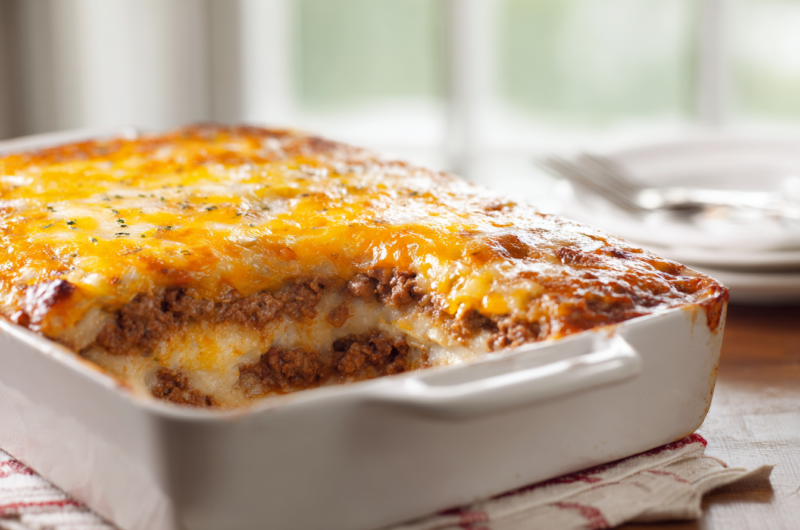
Shipwreck Casserole
Course: Main CourseCuisine: American8
servings25
minutes1
hour30
minutes609
kcalThis hearty layered casserole combines ground beef, bacon, potatoes, rice, and cheese in a rich tomato broth for the ultimate comfort food dinner.
Ingredients
1 tablespoon vegetable oil
1 pound ground beef
1½ teaspoons Cajun seasoning
2 teaspoons Italian seasoning
½ pound bacon, chopped
1 medium onion, minced
1 tablespoon garlic, minced
3 medium potatoes, peeled and sliced into ¼-inch rounds
½ cup uncooked long-grain white rice
1 (14-ounce) can diced tomatoes, including juices
2 tablespoons butter, cut into small cubes
1 (10.5-ounce) can tomato soup
1 soup can of water (about 1¼ cups)
¾ cup water
1 tablespoon beef flavored Better Than Bouillon
1½ cups mozzarella cheese, shredded
Directions
- Arrange an oven rack to the lower third of the oven and preheat to 350°F. Generously butter or spray a 9×13-inch baking dish and set aside.
- Heat 1 tablespoon oil in a large skillet over medium-high heat. Add the ground beef and cook, breaking it up with a spoon, until browned and no longer pink. While the beef cooks, sprinkle it with the Cajun seasoning and Italian seasoning. Drain the excess fat and transfer the beef to a paper towel-lined plate.
- In the same skillet, cook the chopped bacon over medium heat until crispy, about 8 minutes. Remove to a paper towel-lined plate, leaving 2 tablespoons of bacon drippings in the skillet. If there aren’t 2 tablespoons, add vegetable oil to make up the difference.
- Add the minced onion to the bacon drippings and sauté over medium heat until translucent, about 5 minutes. Stir in the minced garlic and continue cooking until fragrant, about 1 minute more. Remove from heat.
- Begin assembling the casserole by sprinkling the uncooked rice evenly in the bottom of the prepared baking dish. Pour the diced tomatoes with their juices over the rice. Spread the sautéed onion and garlic mixture over the tomatoes.
- Arrange the potato slices in an overlapping layer over the onions. Dot the potatoes with the butter pieces. Sprinkle the cooked bacon evenly over the potatoes, then top with the cooked ground beef, spreading it into an even layer.
- Heat ¾ cup water in the microwave until very hot, about 1 minute. Add the Better Than Bouillon and whisk vigorously until completely dissolved with no lumps remaining. In a medium bowl, whisk together the tomato soup, one soup can of water, and the dissolved Better Than Bouillon mixture until smooth.
- Pour the tomato soup mixture evenly over the layered casserole. Cover the baking dish tightly with aluminum foil and place it on a rimmed baking sheet to catch any drips. Bake for 90 minutes, or until the potatoes are tender and the rice is fully cooked. If the liquid has been absorbed but the rice isn’t tender yet, add ½ cup more water, re-cover, and continue baking.
- Remove the casserole from the oven and uncover. Sprinkle the shredded mozzarella cheese evenly over the top. Return to the oven, uncovered, and bake for an additional 15 minutes, or until the cheese is melted and beginning to brown. Let the casserole rest for about 10 minutes before serving to allow it to set up.
Notes
- To prevent the potatoes from browning while you prepare the other ingredients, place the peeled potatoes in a large bowl of cold water. As you slice each potato, return the slices to the water until you’re ready to assemble the casserole.
- Instead of fresh potatoes, you can use a 30-ounce package of frozen hash browns. Use two-thirds of the hash browns for the first potato layer, then sprinkle the remaining hash browns on top of the beef layer. Season with salt and pepper before baking.
- For a Mexican variation, use Rotel tomatoes instead of plain diced tomatoes, add taco seasoning to the beef, omit the bacon and Italian seasoning, and top with cheddar cheese.
- Leftovers can be stored in an airtight container in the refrigerator for up to 4 days or frozen for up to 6 months. Thaw overnight in the refrigerator before reheating.
Common questions about shipwreck casserole
Q: Can I make shipwreck casserole ahead of time?
A: You can assemble the entire casserole earlier in the day and keep it covered in the refrigerator until you’re ready to bake it. Just add about 10 extra minutes to the baking time since you’re starting with a cold dish. For best results, serve it fresh from the oven rather than reheating.
Q: What kind of cheese works best for this recipe?
A: Mozzarella, cheddar, pepper jack, or Mexican blend cheese all work great in shipwreck casserole. Mozzarella melts smoothly and has a mild taste, while cheddar adds more sharpness. Pick whatever your family prefers or use what you already have in the fridge.
Q: Why is my rice still crunchy after the full baking time?
A: If your rice isn’t fully cooked after 90 minutes, all the liquid has probably been absorbed too quickly. Add another ½ cup of water, cover tightly with foil again, and continue baking until the rice is tender. Make sure the casserole is tightly covered during baking to trap the steam that cooks the rice.
Q: Can I use instant rice instead of regular long-grain rice?
A: Instant rice cooks much faster than regular rice, so it’s not the best choice for this recipe since the casserole bakes for 90 minutes. If you must use instant rice, add it during the last 30 minutes of baking instead of at the beginning, or it will turn to mush.