


Mildred Ricke has been making cookies for decades, and at 98 years old, she’s earned legendary status across Iowa. Her secret? Soft sugar cookies hiding mini Snickers bars inside. What started as a simple treat for her nine grandchildren turned into something bigger when her granddaughter Kelli brought them to work in Colorado. Coworkers couldn’t stop talking about them, and years later, people still ask for the recipe. These aren’t your typical cookies—they’re soft, sweet, and packed with chocolate-peanut surprise that makes them impossible to forget.
How a simple cookie recipe traveled from Iowa to Colorado
Kelli Chiri worked at a travel marketing company in Denver for five years, and she regularly brought plastic containers filled with her grandmother’s cookies to share. These weren’t just any cookies—they were soft sugar cookies with mini Snickers bars hidden inside. Her coworkers went crazy for them. Even after Kelli stopped working there, former colleagues still asked about those cookies. The recipe became so popular that people who’d never met Gram still knew her name.
What makes these cookies special isn’t just the chocolate surprise. It’s the texture—soft and almost cake-like on the outside, with a melty chocolate-caramel-peanut center. The dough uses instant vanilla pudding mix, which keeps the cookies incredibly moist. Unlike regular sugar cookies that can get dry or crumbly, these stay soft for days. Kelli says her grandmother keeps a freezer stocked with them year-round, and nobody leaves her house without a full container.
Why instant pudding mix makes these cookies different
Most sugar cookie recipes stick to basics—butter, sugar, flour, eggs. Gram’s recipe adds something unexpected: a four-serving package of instant vanilla pudding mix. This ingredient might sound odd, but it changes everything. The pudding mix adds moisture and helps the cookies stay soft even after sitting out. It also gives them a slight vanilla boost that pairs perfectly with the Snickers filling. If you’ve ever made cookies that turned rock-hard the next day, pudding mix solves that problem.
The pudding trick isn’t new—bakers have used it for years in cake mixes and other desserts. But many home bakers don’t know about it. The instant pudding contains modified food starch, which absorbs moisture and releases it slowly. This keeps baked goods tender longer. For these cookies specifically, it creates that soft, almost chewy texture that makes them addictive. Gram doesn’t recall where she found the original recipe, but she’s been making them for years with this exact formula.
The Snickers unwrapping situation that slowed Gram down
At 98, Gram still bakes regularly, but arthritis has made one part of this recipe particularly annoying—unwrapping mini Snickers bars. She calls them “pesky Snickers” because each cookie needs one unwrapped candy, and a full batch requires dozens. Unwrapping that many tiny candy bars takes time, especially with stiff fingers. Despite this challenge, she still makes them for special occasions, though not as often as she used to. Her family sometimes helps with the unwrapping part to speed things along.
This minor inconvenience hasn’t stopped the cookies from remaining a family favorite. Gram attends every grandchild and great-grandchild event—recitals, concerts, ball games—and she never shows up empty-handed. Over the years, teammates, coaches, and even opposing teams started asking if there would be Grandma Ricke Cookies at games. The cookies became so well-known that people would specifically request them. Kelli says they still get asked about them constantly, proving that a little arthritis won’t stop a legend.
What makes these better than regular stuffed cookies
Plenty of recipes exist for cookies with candy inside—some use Rolos, others use peanut butter cups. But mini Snickers bring something special. They’ve got multiple textures happening: chocolate coating, chewy caramel, crunchy peanuts, and nougat. When the cookies bake, everything gets warm and gooey but doesn’t completely melt out. The candy stays mostly intact, so when someone bites in, they get that full Snickers experience wrapped in soft cookie dough.
Other candy-stuffed cookies often have problems. Chocolate chips melt too much. Hard candies can crack teeth. Caramel alone leaks everywhere. Mini Snickers hit the sweet spot—they soften without making a mess, and the combination of chocolate, caramel, and peanuts works perfectly with vanilla cookie dough. The recipe itself is straightforward, but choosing the right candy makes all the difference. Gram figured this out years ago, and it’s why her cookies stand out.
Why Gram switched from margarine to butter
The original recipe Gram found called for Oleo, which is what people used to call margarine. Back in the day, margarine was cheaper than butter and considered a practical substitute. Many vintage recipes from the 1960s and 1970s list Oleo as the fat of choice. But Gram eventually switched to butter, and she hasn’t looked back. Butter gives cookies a richer taste and better texture. Margarine can make cookies spread too thin or taste slightly artificial.
The switch to butter wasn’t just about taste—it’s also about how the cookies hold their shape. Margarine has higher water content than butter, which can cause cookies to spread more during baking. With candy hidden inside, you want the dough to hold together well. Butter creates a sturdier cookie that keeps the Snickers centered and prevents leaking. Gram’s instinct to use butter instead of following the original recipe exactly shows why she’s been baking successfully for decades.
The technique for getting candy perfectly centered
Getting a Snickers bar centered inside cookie dough sounds simple, but it takes practice. The recipe says to roll dough into 1.5-inch balls, slightly smaller than a golf ball. Then flatten each ball, place a mini Snickers in the middle, and carefully wrap the dough around it. The trick is making sure the candy is completely covered with no gaps. Any exposed chocolate will leak out and burn during baking.
Some people struggle with this part because the dough can be sticky. If that happens, chilling the dough for 15-20 minutes helps. Cold dough is easier to handle and less likely to stick to your hands. Another tip: make sure the Snickers is at room temperature, not cold from the fridge. Cold candy is harder to wrap, and the dough might crack. Room temperature candy wraps smoothly and creates that perfect surprise center everyone loves.
How long these cookies actually stay soft
One of the best things about these cookies is how long they stay fresh. Thanks to the pudding mix and butter, they don’t dry out quickly like regular sugar cookies. Stored in an airtight container at room temperature, they’ll stay soft for about five days. In the freezer, they last months. Gram keeps her pantry freezer stocked year-round, pulling them out whenever someone visits or for events.
Freezing these cookies works perfectly because the Snickers filling doesn’t get weird or crystallized. Just let them thaw at room temperature for about 30 minutes before eating, and they taste freshly baked. Some people even like eating them straight from the freezer for a firmer, almost candy-bar-like texture. The versatility makes them perfect for meal prep or making ahead for parties. Bake a huge batch, freeze most of them, and pull out what you need.
What happened when people tried copycat recipes
Before getting Gram’s actual recipe, people tried making similar cookies using online recipes for “Snickers Surprises” or “Santa Surprises.” Most versions disappointed. Some recipes made cookies that were too cakey. Others created dough that spread too thin, exposing the candy. Some versions used way too much flour, making the cookies dry and crumbly. The pudding mix ingredient is what many copycat recipes skip, and that’s exactly what makes Gram’s version special.
Even small changes can ruin the recipe. Using cold butter instead of softened butter affects texture. Skipping the brown sugar and using all white sugar makes them less chewy. Not measuring flour correctly—too much flour is the most common mistake—creates dense, hard cookies instead of soft ones. Gram’s exact proportions matter. That’s why so many people who tasted the real thing couldn’t recreate them until they got her actual recipe with precise measurements.
Why nine grandkids and nine great-grandkids keep requesting these
Gram’s cookies aren’t just about taste—they’re about showing up. She has perfect attendance at family events, and she always brings cookies. For kids growing up, having Grandma at every game or concert with treats creates memories. The cookies become tied to those moments—winning a game, finishing a recital, celebrating holidays. Now those grandkids are adults with kids of their own, and they’re still requesting the same cookies.
Food has a way of connecting generations. When Kelli’s kids bite into these cookies, they’re tasting the same recipe their great-grandmother made for their mom years ago. That connection matters. It’s not fancy or complicated—just a reliable recipe that Gram has made countless times. The fact that she still bakes at 98, even with arthritis slowing her down, shows how much these traditions mean. The cookies represent consistency, love, and family in a way that fancy desserts never could.
These cookies prove that the best recipes aren’t always the most complicated ones. Gram’s formula is simple—butter, sugar, pudding mix, flour, and mini Snickers. But the combination creates something people remember for years. Whether you’re making them for your own family or bringing them to share at work, they’re guaranteed to become someone’s favorite. Just remember to save some before everyone else finds them.
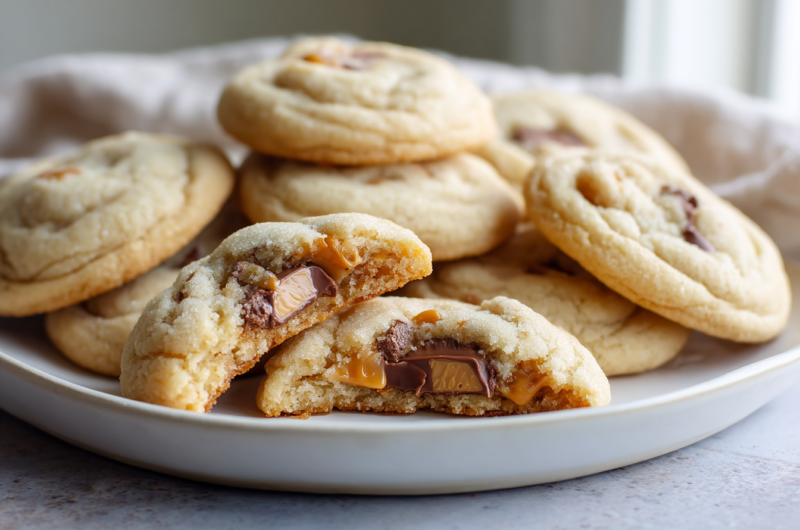
Grandma Ricke’s Snickers Surprise Cookies
Course: DessertCuisine: American Recipes36
cookies20
minutes12
minutes165
kcalSoft sugar cookies with a hidden mini Snickers bar inside that stay incredibly moist thanks to instant vanilla pudding mix.
Ingredients
1 cup butter, softened (not margarine)
1/4 cup white sugar
3/4 cup brown sugar, packed
1 teaspoon vanilla extract
1 package (4-serving size) instant vanilla pudding mix
2 large eggs, room temperature
2 1/4 cups all-purpose flour
1 teaspoon baking soda
36 mini Snickers bars, unwrapped
Directions
- Preheat your oven to 350 degrees F and line two baking sheets with parchment paper or silicone mats. Make sure the butter is softened to room temperature so it creams properly with the sugars. Unwrap all the mini Snickers bars and set them aside—this takes a few minutes but makes assembly much faster.
- In a large mixing bowl, combine the softened butter, white sugar, brown sugar, vanilla extract, and the entire package of instant vanilla pudding mix. Beat with an electric mixer on medium speed for 2-3 minutes until the mixture is light, fluffy, and creamy. The pudding mix should be fully incorporated with no dry powder visible.
- Add the eggs one at a time, beating well after each addition until fully combined. The mixture should look smooth and slightly glossy. Scrape down the sides of the bowl to make sure everything is evenly mixed.
- In a separate bowl, whisk together the flour and baking soda. Gradually add this dry mixture to the wet ingredients, mixing on low speed just until combined. Don’t overmix—stop as soon as you no longer see dry flour streaks. Overmixing creates tough cookies.
- Scoop about 1.5 tablespoons of dough and roll it into a ball roughly 1.5 inches across, slightly smaller than a golf ball. Flatten the ball in your palm, creating a disk about 1/4 inch thick. If the dough is too sticky to handle, chill it in the refrigerator for 15-20 minutes.
- Place one mini Snickers bar in the center of the flattened dough. Carefully wrap the dough around the candy, pinching the edges together and rolling it back into a smooth ball. Make sure the Snickers is completely covered with no gaps or exposed candy—this prevents leaking during baking.
- Place the filled dough balls on the prepared baking sheets, spacing them about 2 inches apart. They will spread slightly during baking but not much. You should fit about 12-15 cookies per standard baking sheet.
- Bake for 12 minutes exactly—no more, or the cookies will be too firm. They should look set around the edges but still slightly soft in the center. Let them cool on the baking sheet for 5 minutes before transferring to a wire rack. The centers will firm up as they cool, creating that perfect soft texture.
Notes
- Use real butter, not margarine, for the best taste and texture. The original recipe called for margarine but butter works much better.
- Make sure the Snickers bars are completely wrapped in dough with no exposed candy to prevent leaking during baking.
- These cookies freeze beautifully for up to 3 months in an airtight container. Thaw at room temperature for 30 minutes before serving.
- If the dough feels too sticky to work with, chill it for 15-20 minutes in the refrigerator before forming the balls.
- Don’t overbake—12 minutes keeps them soft. They’ll look slightly underdone but will firm up as they cool.
Frequently asked questions
Q: Can I use regular-sized Snickers instead of mini ones?
A: Mini Snickers work best because they’re proportional to the cookie size. Regular Snickers would be too big and cause the cookies to spread too much or not seal properly. You could try cutting regular Snickers into smaller pieces, but minis are easier to work with and create the right candy-to-cookie ratio.
Q: What other candy bars work well in this recipe?
A: Mini Milky Ways, Twix, or Rolos all work great. Each creates a different texture—Rolos get very gooey, Twix adds crunch, and Milky Ways are smooth like Snickers but without the peanuts. Peanut butter cups work too but can melt more than Snickers during baking.
Q: Why do my cookies spread too much and expose the candy?
A: This usually happens when the butter is too warm or the dough hasn’t been chilled enough. Make sure your butter is softened but not melted, and if the dough feels very sticky, refrigerate it for 15-20 minutes before forming the cookies. Also check that the candy is completely wrapped with no gaps in the dough.
Q: How do I store these cookies to keep them soft?
A: Store them in an airtight container at room temperature for up to 5 days. The pudding mix helps them stay soft naturally. For longer storage, freeze them in a freezer-safe container for up to 3 months. Let them thaw at room temperature before eating, or enjoy them slightly frozen for a firmer texture.