


Standing at the meat counter, staring at those budget steaks while the fancy cuts cost twice your grocery budget? That thin ribeye without much marbling or the tough-looking sirloin on sale might seem like a disappointment waiting to happen. But here’s something most people don’t know: with the right techniques, you can transform that five-dollar steak into something that tastes like it came from a high-end steakhouse. The secret isn’t about spending more money, it’s about knowing what to look for and how to treat the meat you bring home.
Looking for the right marbling makes all the difference
When you’re shopping for affordable steaks, the first thing to check is the marbling. Those white streaks running through the meat aren’t just for show, they’re what makes steak juicy and full of taste. Even if you’re buying a cheaper cut, pick the one with the most visible white streaks running through it. The marbling should look white, not yellow, which means the meat is fresh and hasn’t been sitting around too long.
Check the color of the meat too. Fresh steak should be a vibrant cherry-red, not brown or gray. If you’re buying from a supermarket instead of a butcher, look at the packaging carefully. Any liquid pooling in the package could mean the steak was frozen and thawed, which affects both texture and taste. Also, avoid steaks with huge chunks of fat on the edges, those won’t add anything good to your meal.
Thickness matters more than you think
Ever wonder why restaurant steaks always seem better than what you cook at home? One big reason is thickness. Those paper-thin steaks at the store cook so fast that they go from raw to overcooked in seconds, leaving you with a tough, chewy piece of meat. You want to find steaks that are at least one and a half inches thick, maybe even closer to two inches if you can find them.
A thicker steak gives you way more control over the cooking process. You can get that beautiful brown crust on the outside while keeping the inside perfectly medium or medium-rare. When you only have thin steaks available, they’re still salvageable, but you’ll need to use a marinade technique to help tenderize them. The extra thickness also means more time to develop that restaurant-quality sear without drying out the meat completely.
Korean marinade transforms tough cuts completely
Sometimes you end up with a steak that’s just not going to be tender no matter what you do. That’s where a good marinade comes in, and this Korean-style version works like magic. Mix together half a cup of soy sauce, a quarter cup of white wine, three tablespoons of sugar, four cloves of finely diced garlic, a tablespoon of red pepper flakes if you like some heat, a tablespoon of sesame oil, and a quarter teaspoon of ground black pepper.
Put your steaks in a zip-top bag and pour the marinade right in, no need to dirty a bowl. Shake it around until the sugar dissolves, then let the meat sit for at least thirty minutes. The acids and enzymes in the marinade break down the tough muscle fibers, making even a cheap cut tender and packed with a sweet, salty, slightly spicy taste. After marinating, pour that liquid into a saucepan and simmer it until it reduces by about a third to make an amazing sauce.
Don’t season your steak too early
This mistake trips up so many people. You might think salting your steak an hour before cooking is being prepared, but it actually pulls moisture out of the meat. When salt sits on raw steak for too long, it draws out the juices through osmosis, and you end up with a drier finished product. Either salt your steak right before it hits the grill, or if you want to salt ahead of time, do it at least four hours before so the moisture has time to reabsorb back into the meat.
The best approach for most home cooks is to pat the steak completely dry with paper towels, then season it right before cooking. Use kosher salt or sea salt because the larger crystals stick better to the meat and give you more control over how much you’re adding. Ruth’s Chris chefs recommend taking a moment to shape the steak too, pressing the edges to make sure it’s evenly thick all around for a cleaner presentation.
Your grill needs to be screaming hot
The single biggest mistake people make with steak is putting it on a grill that’s not hot enough. If your grill isn’t properly preheated, the steak just sits there steaming instead of searing, and you miss out on all that crispy, caramelized crust that makes steak taste like steak. Your grill should be at its absolute hottest, somewhere between 450 and 500 degrees Fahrenheit, before that meat touches the grates.
This high heat triggers something called the Maillard reaction, which happens between 300 and 500 degrees. That’s the chemical process that creates all those complex, savory, slightly sweet notes in a perfectly seared steak. If your grill gets hotter than 500 degrees, the outside will burn before the inside cooks, so that’s your upper limit. Let your grill preheat for at least fifteen minutes with the lid closed so the grates get properly hot all the way through.
Using a meat thermometer saves your steak
Guessing when your steak is done by poking it or cutting into it is a gamble you’ll lose more often than you win. A cheap meat thermometer costs less than ten bucks and tells you exactly what’s happening inside that steak. For medium-rare, you want 130 degrees Fahrenheit. For medium, aim for 140 degrees. The USDA recommends 145 degrees, but most people find that a bit too done for a good steak.
Here’s the trick though: take your steak off the grill when it’s about five degrees under your target temperature. The steak keeps cooking after you remove it from the heat, a process called carryover cooking. So if you want medium-rare at 130 degrees, pull it off at 125. Insert the thermometer through the side of the steak into the thickest part, making sure you’re not touching bone or fat, which can throw off the reading.
Resting the meat isn’t optional
This is where impatient people ruin a perfectly good steak. After all that careful shopping and cooking, you absolutely have to let the steak rest for at least three to five minutes before cutting into it. When meat cooks, all the juices get pushed toward the center. If you cut into it right away, those juices run all over your cutting board instead of staying in the meat where they belong.
During the resting period, those juices redistribute throughout the steak, so every bite is moist and tender. Just set the steak on a plate or cutting board and leave it alone. Don’t cover it with foil or anything that will trap steam and make your crust soggy. Those few minutes of waiting make the difference between a dry, disappointing steak and one that tastes like it came from an expensive restaurant. Your patience gets rewarded with a much better eating experience.
Always cut against the grain
Look closely at your cooked steak and you’ll see lines running through the meat. Those lines are muscle fibers, and which way you cut matters a lot. If you slice with the grain, following those lines, you’re leaving long muscle fibers intact, which makes every bite chewy and tough. When you cut across those lines, perpendicular to them, you’re shortening the muscle fibers and making the meat much more tender.
This technique works especially well on cheaper, tougher cuts of meat. A flank steak or skirt steak can be almost impossible to chew if you cut it wrong, but slice it properly against the grain and it becomes tender and enjoyable. Use a sharp knife and cut at a slight angle for the best results. This single step can transform how a steak eats, taking it from shoe leather to something that melts in your mouth.
The reduced marinade makes restaurant-quality sauce
Remember that Korean marinade from earlier? Don’t throw it away after the steak comes out. Pour it into a small saucepan and bring it to a rolling boil to kill any bacteria from the raw meat. Then reduce the heat and let it simmer until it thickens up and reduces by about a third. What you end up with is a glossy, intensely seasoned sauce that turns plain steamed rice into something special.
Drizzle this sauce over your sliced steak and rice, and suddenly you’ve got a meal that looks and tastes like something from a restaurant. The concentrated soy sauce, garlic, and sesame create a rich, complex taste that complements the beef perfectly. This technique works with other marinades too, just make sure you always boil it first to make it safe to eat. It’s an easy way to get maximum value from ingredients you already used.
Making a cheap steak taste expensive isn’t about fancy ingredients or complicated techniques. It comes down to picking the right piece of meat, treating it properly, and not rushing the process. Whether you’re using a marinade to tenderize a tough cut or just grilling a better quality budget steak, these methods work every single time. Next time beef prices have you reaching for the value cuts, you’ll know exactly how to make them taste like you spent fifty bucks instead of five.
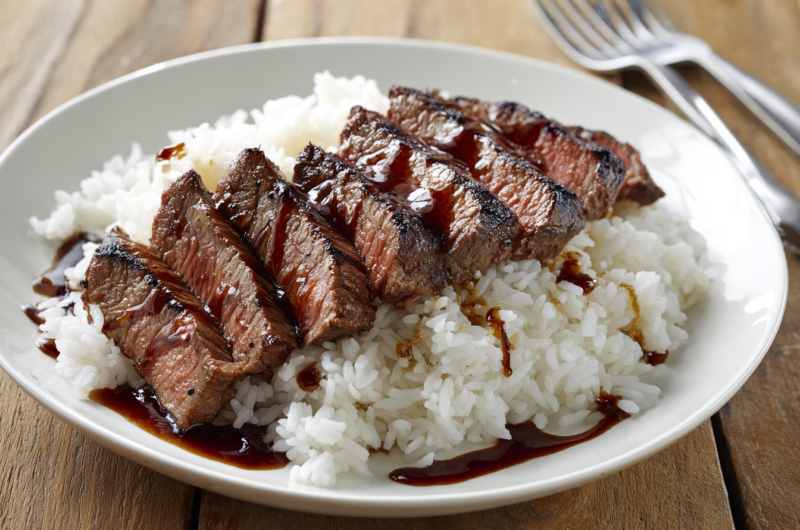
Korean Style Marinated Steak with Rice
Course: Main CourseCuisine: Asian Recipes4
servings10
minutes10
minutes380
kcalTransform a cheap steak into a tender, restaurant-quality meal with this sweet and spicy Korean marinade that doubles as an amazing sauce.
Ingredients
4 budget steaks (ribeye, sirloin, or flank), about 1 to 1.5 inches thick
1/2 cup soy sauce
1/4 cup white wine
3 tablespoons sugar
4 cloves garlic, finely diced
1 tablespoon red pepper flakes (optional)
1 tablespoon sesame oil
1/4 teaspoon ground black pepper
4 cups cooked white rice for serving
Directions
- Pat the steaks completely dry with paper towels and place them in a large zip-top bag. Remove as much air as possible from the bag to ensure the marinade makes full contact with the meat. Set the bag in a shallow dish to catch any potential leaks.
- In a measuring cup or bowl, combine the soy sauce, white wine, sugar, diced garlic, red pepper flakes, sesame oil, and black pepper. Stir the mixture until the sugar completely dissolves into the liquid. Pour the marinade directly into the bag with the steaks, seal it tightly, and massage the bag to distribute the marinade evenly over all the meat.
- Let the steaks marinate in the refrigerator for at least 30 minutes, though you can go up to 4 hours for tougher cuts. Turn the bag over once or twice during marinating to make sure all sides of the meat get equal exposure to the marinade.
- When ready to cook, remove the steaks from the marinade and pour the liquid into a small saucepan. Bring the marinade to a rolling boil over high heat, then reduce to a simmer. Let it cook down until it reduces by about one-third and becomes thick and glossy, which takes about 8 to 10 minutes.
- Preheat your grill to high heat, between 450 and 500 degrees Fahrenheit. Make sure the grates are clean and the grill has been heating for at least 15 minutes so the entire cooking surface is uniformly hot.
- Place the steaks directly over the hottest part of the grill and cook for 2 to 4 minutes without moving them, allowing a proper sear to develop. Flip the steaks using tongs and cook for another 2 to 4 minutes on the second side. Use a meat thermometer to check the internal temperature, pulling the steaks off when they reach about 5 degrees below your target doneness.
- Remove the steaks from the grill and place them on a cutting board. Let them rest for 3 to 5 minutes without covering or cutting into them. This resting period allows the juices to redistribute throughout the meat for maximum tenderness and moisture.
- Identify the grain of the meat by looking for the direction of the muscle fibers. Using a sharp knife, slice the steak against the grain at a slight angle. Serve the sliced steak over bowls of steamed white rice and drizzle generously with the reduced marinade sauce.
Notes
- For tougher cuts like flank or skirt steak, marinate for the full 4 hours to get maximum tenderizing benefits. Thicker ribeyes or sirloin only need 30 minutes to an hour.
- If you don’t have white wine, you can substitute with rice wine, dry sherry, or even apple juice for a slightly different but still delicious result.
- The red pepper flakes add a nice kick of heat that builds gradually. If you’re sensitive to spice, start with just a teaspoon or leave them out entirely.
- Always boil the used marinade before serving it as sauce to kill any bacteria from the raw meat. Don’t skip this step.
- Target temperatures for doneness: rare is 120-125°F, medium-rare is 130-135°F, medium is 140-145°F. Remember to pull steaks off about 5 degrees early.
Frequently asked questions
Q: Can I use this marinade on expensive cuts of steak?
A: You can, but most people prefer not to because the strong marinade can overpower the natural beef taste of premium cuts like filet mignon or prime ribeye. Save the marinade for budget steaks that need the extra help with tenderness and taste, and just use salt and pepper on your pricier cuts.
Q: What if I don’t have a grill?
A: You can absolutely cook these steaks in a cast iron skillet on your stovetop. Get the pan screaming hot over high heat, add a little oil with a high smoke point like vegetable or avocado oil, and cook the steaks the same way you would on a grill. You might want to crack a window because it’ll get smoky.
Q: How long can I keep the leftover sauce?
A: Store the reduced marinade sauce in an airtight container in the refrigerator for up to a week. It’s great on more than just steak, try it on grilled chicken, pork chops, or even as a stir-fry sauce for vegetables and rice throughout the week.
Q: Why does my steak always turn out tough even when I follow the recipe?
A: The most common reason is overcooking. Cheap cuts have less fat, so they dry out faster than expensive ones. Get a meat thermometer and pull your steak off early, it’ll keep cooking while it rests. Also make sure you’re cutting against the grain, which makes a huge difference in how tender the meat feels when you eat it.