


I used to think cooking bacon was idiot-proof. Rip open the package, toss strips into a hot pan, flip them around for a few minutes, done. And honestly, that approach gave me edible bacon for years. Not great bacon. Not the kind of bacon that makes you close your eyes and wonder why you ever bother eating anything else. Just… fine bacon. Bacon with burnt edges and weirdly chewy fat. Bacon that curled up into sad little tubes. Bacon that spattered grease all over my stovetop and the front of my shirt.
Then I learned the one thing you should always do before cooking bacon, and I’m genuinely annoyed nobody told me sooner. It’s so simple it almost feels stupid to write about. But it makes such a dramatic difference in the final product that I now consider it non-negotiable. Here it is: start with a cold pan, and let your bacon come to room temperature before it goes anywhere near heat.
That’s two parts of one concept, really. The idea is that bacon and heat need to get acquainted slowly. Rush the introduction and everything goes wrong. Let me explain why this works, how to do it right, and all the other mistakes you’re probably making along the way.
Why Cold Bacon in a Hot Pan Is Your Biggest Mistake
Here’s what happens when you grab bacon straight from the fridge and throw it into a screaming hot skillet. The meat, which is thin and cooks fast, starts searing immediately. But the fat, which holds onto cold much longer than the lean parts, doesn’t get the memo. It seizes up instead of melting. The result? You get strips that are simultaneously burnt in some spots and rubbery in others. The fat never fully renders, so you end up with soggy, chewy sections right next to bits that taste like charcoal.
On top of that, the extreme temperature difference between fridge-cold bacon and a hot pan causes the strips to curl and shrink aggressively. We’re talking up to 40% length loss in some cases. That’s almost half your bacon strip, gone. Nobody is paying $7 or $8 a pound for bacon just to watch it shrivel up into a twisted little nub.
And then there’s the splatter. Going from extremely cold to extremely hot means more popping, more smoke, and more tiny burns on your forearms. It’s unpleasant, and it’s completely avoidable.
The Fix: Let It Rest, Then Start Cold
The move is simple. Pull your bacon out of the fridge about 10 to 15 minutes before you plan to cook it. Just set the package on the counter and go about your morning. Make coffee. Feed the dog. Scroll your phone. You’re not waiting for it to hit full room temperature; you’re just taking the chill off so the fat and meat are closer to the same starting temperature.
Chef Billy Parisi put it this way: letting bacon sit out for five to ten minutes leads to more uniform, even cooking. He also noted that it reduces splatter, since the temperature shock between cold bacon and hot fat is what causes all those pops and sizzles that leave grease spots on your stove.
There’s a bonus practical reason too. Cold bacon is a pain to separate. The fat sticks the slices together, and when you try to peel them apart they tear and come out looking ragged. A brief rest on the counter makes the slices much easier to pull apart cleanly, which means more attractive strips on the plate.
Once your bacon has rested, lay the strips into a cold skillet. Not a preheated one. Cold. This is the second half of the equation. Starting in a cold pan lets the fat render slowly and evenly as the pan heats up. The bacon will naturally release from the surface as the fat melts, so you don’t need oil or cooking spray. By the time things are really sizzling, the fat has already started doing its job, and you’re on your way to perfectly crispy, perfectly flat strips.
The Right Way to Cook Bacon on the Stovetop
Once your rested bacon is laid out in a cold pan (a heavy cast iron skillet is ideal for even heat), turn the burner to medium-low. Not medium-high. Not high. I know the temptation. You’re hungry, you can smell it, and you want it done three minutes ago. But cranking the heat is how you end up with bacon that’s burnt on the outside and chewy inside.
Low and slow is the entire philosophy here. It’ll take about a minute or two before things even start to sizzle. That’s fine. That’s the fat rendering. After about 2 to 3 minutes, flip the strips. Then keep flipping every minute or so until they look the way you want them. Total cook time for regular sliced bacon at medium heat is roughly 8 to 12 minutes.
One important note on flipping: don’t overdo it. The Maillard reaction, which is what creates that deep brown color and incredible flavor, requires the bacon to stay in contact with the hot surface for at least 90 seconds at a stretch. If you’re constantly fidgeting with the strips, you’re interrupting that process. Wait until the edges start to curl and the strip lifts easily from the pan before you flip.
Don’t Crowd the Pan
I know you want to cook the whole package at once. Resist. When you cram too many strips into a skillet, they steam instead of fry. That trapped steam keeps the bacon soggy no matter how long you leave it in there. You’ll never get crispy strips out of an overcrowded pan.
For a standard 12-inch skillet, stick to about 6 strips per batch. The strips can touch when you lay them in (they’ll shrink), but they shouldn’t overlap. If you’re cooking for a crowd, work in batches or move to the oven method on a sheet pan.
Pat It Dry Before It Hits the Pan
Here’s another quick pre-cooking step that makes a difference. Before laying your strips in the skillet, give them a quick pat with paper towels. This removes surface moisture and cure residue that can burn at higher temperatures. It also reduces spattering, which is always welcome. Stick with paper towels, not cloth or microfiber, which can leave lint behind.
The Oven Alternative
If you’re cooking for more than a few people, the oven is honestly the way to go. Preheat to 400 degrees, line a baking sheet with parchment paper, lay out the strips in a single layer, and bake for 15 to 20 minutes. The same rule applies: let the bacon rest on the counter first. Cold bacon going straight into a hot oven just doesn’t turn out as well. Let it sit out for about 10 minutes beforehand.
Parchment paper is your friend here because it contains the rendered fat and makes cleanup a breeze. If you want to get fancy, drizzle a little honey over the strips before they go in. The sugar caramelizes in the oven and gives you these sweet, crispy, slightly sticky strips that are dangerous to have around. You will eat the entire tray.
Save That Grease
One more thing. Whatever you do, don’t pour your bacon grease down the drain. It’s terrible for your pipes, and more importantly, it’s a waste. That rendered fat is liquid gold. Let it cool slightly, pour it into a glass jar, and keep it in the fridge. Use it to fry eggs, roast vegetables, cook fried chicken, or even pop popcorn. One tablespoon adds a rich, smoky flavor to basically anything.
Pull It Off Early
Last tip. Bacon keeps crisping even after you take it off the heat. The residual warmth continues cooking it for another 30 seconds or so. So if you wait until it looks perfect in the pan, it’ll be overdone by the time you eat it. Pull your strips when they look just slightly shy of your ideal crispness, transfer them to a plate lined with paper towels or a brown paper bag, and let them rest for a minute. They’ll firm up to exactly where you want them.
That’s it. Let your bacon rest before cooking, start in a cold pan, go low and slow, and don’t crowd the skillet. It’s the difference between bacon that’s just okay and bacon that makes people ask what you did differently. And when they ask, feel free to act like you’ve always known.
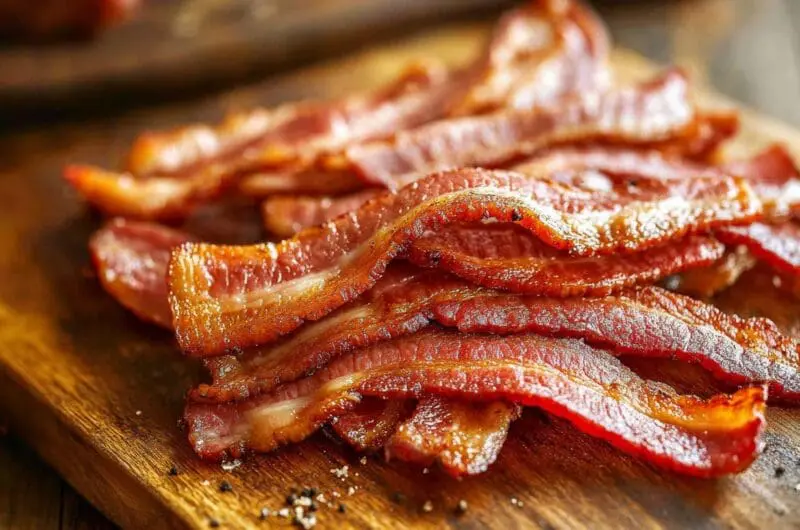
Perfect Stovetop Bacon
Course: BreakfastCuisine: American4
servings15
minutes12
minutes180
kcalThe simple pre-cooking trick that turns ordinary bacon into the crispiest, most evenly cooked strips you’ve ever made.
Ingredients
1 pound thick-cut bacon (about 12 slices)
Paper towels for patting dry and draining
Glass jar or metal can for saving grease
Directions
- Remove the bacon from the refrigerator and place it on the counter 10 to 15 minutes before you plan to cook. This allows the fat and meat to come closer to the same temperature, which means more even cooking and less splatter. It also makes the slices much easier to separate without tearing.
- Once the bacon has rested, separate the slices and pat each strip dry with a paper towel on both sides. This removes surface moisture and excess cure residue that can burn during cooking. It also helps reduce popping and grease splatter.
- Lay 6 strips in a single layer in a cold cast iron skillet or heavy-bottomed pan. The strips can touch but should not overlap. Do not preheat the pan or add any oil. The bacon’s own fat will provide all the lubrication you need.
- Turn the burner to medium-low heat. The bacon will begin to sizzle after 1 to 2 minutes as the fat starts to render. Let the strips cook undisturbed for about 2 to 3 minutes before your first flip.
- Flip the bacon using tongs (not a fork, which pierces the meat and releases juices). Continue flipping every 60 to 90 seconds, allowing each side to develop good contact with the pan surface between flips. Total cook time will be roughly 8 to 12 minutes depending on thickness.
- Remove the bacon from the pan when it looks just slightly less done than your ideal crispness. Bacon continues to crisp as it cools, so pulling it a little early prevents overcooking. Transfer strips to a plate lined with paper towels or a brown paper bag.
- If cooking a second batch, leave the rendered fat in the pan and repeat with the remaining strips. The second batch often cooks a bit faster since the pan is already warm, so keep an eye on it and reduce heat if needed.
- Once all bacon is cooked, let the grease cool slightly in the pan. Carefully pour it through a fine mesh strainer into a glass jar or metal can. Store in the refrigerator for future cooking. It keeps for several months and adds incredible flavor to eggs, roasted vegetables, and more.
Notes
- Cast iron gives the best results because of its even heat distribution, but any heavy-bottomed skillet works. Avoid thin, lightweight pans that create hot spots and burn the bacon.
- For oven bacon, preheat to 400 degrees, line a sheet pan with parchment paper, arrange strips in a single layer, and bake 15 to 20 minutes. Let the bacon rest on the counter first, just like the stovetop method.
- For a sweet twist, drizzle a little honey or sprinkle brown sugar over the strips before cooking in the oven. The sugar caramelizes beautifully and creates a sticky, crispy coating.
Frequently Asked Questions
Q: How long should I let bacon sit out before cooking?
A: About 10 to 15 minutes is the sweet spot. You’re not trying to bring it to full room temperature. You just want to take the fridge chill off so the fat and meat cook more evenly. Five minutes is better than nothing if you’re in a rush, but 10 to 15 gives you the best results.
Q: Do I really need to start with a cold pan?
A: Yes, and this is the part most people skip. A cold pan lets the fat render gradually as the heat builds, so the bacon cooks through evenly instead of searing on the outside while staying rubbery inside. It also means way less grease splatter, which your stovetop and your forearms will appreciate.
Q: Can I use this method with turkey bacon?
A: Turkey bacon is much leaner, so it cooks faster and behaves differently. It works best in a non-stick skillet with no added fat. The cold pan, slow render approach is really designed for regular pork bacon, where there’s enough fat to make the technique worthwhile.
Q: Why does my bacon always curl up in the pan?
A: Curling happens when different parts of the strip cook at different rates, usually because the bacon was too cold or the heat was too high. Letting it rest before cooking and starting in a cold pan both help reduce curling. If it still curls, you can use a spatula or bacon press to gently flatten the strips while they cook.