


I used to overthink burgers. Fancy seasonings, weird mix-ins, elaborate techniques I saw on cooking shows. Then I tried something so simple it almost felt like cheating: olive oil and Worcestershire sauce, mixed straight into the ground beef before cooking. That’s it. Two ingredients. The result was a burger so juicy and flavorful that I genuinely questioned every burger I’d made before it.
This approach comes from a viral recipe that’s been tested by thousands of home cooks, and the reviews are almost annoyingly positive. One reader named Julie said it was “by far the best flavored juiciest hamburger I’ve ever made.” Another person who used lean 90/10 beef — which usually dries out like cardboard — said the olive oil completely compensated for the lower fat content. That last part is what really got my attention, because it means this trick doesn’t just work under ideal conditions. It works even when your meat is working against you.
Why Olive Oil And Worcestershire Sauce Actually Work
Here’s the thing about ground beef: the fat in it is doing most of the heavy lifting when it comes to juiciness. As the burger cooks, that fat renders and bastes the meat from the inside out, carrying flavor through every bite. But not all of that fat stays in the patty. A lot of it drips right out onto the grill or into the pan. That’s where the olive oil comes in.
When you mix olive oil directly into the meat, you’re adding an extra source of fat that helps lock in moisture during cooking. It doesn’t replace the beef fat — it supplements it. Think of it as insurance. Even if the rendered beef fat escapes, the olive oil is still in there doing its job. This is why it works so well with leaner grinds like 90/10 or even ground turkey.
Worcestershire sauce pulls a different trick. It’s packed with umami — that deep, savory, almost meaty flavor that makes food taste more like itself. A splash of it in your burger mix amps up the beef flavor in a way that salt and pepper alone just can’t. The original recipe developer describes the raw mixture as tasting “almost like a good steak should taste,” which she says is a reliable sign the burgers will come out great. I agree with her completely.
Choosing The Right Beef
Your best bet is 80/20 ground beef, which is usually labeled as ground chuck at most grocery stores. Ground chuck comes from the shoulder of the cow — a hard-working muscle with deep, beefy flavor and a natural fat ratio that hits the sweet spot for burgers. Schweid & Sons, a burger company that’s been in the beef business for four generations, calls the 80/20 ratio the most common choice among burger chefs for good reason.
If 85/15 is what’s on sale, grab it. It works great with this recipe because the olive oil picks up the slack on the fat side. Even 90/10 ground sirloin — which I’d normally never recommend for burgers — comes out well here. The one ratio I’d avoid for burgers is anything leaner than 90/10. At that point, you’re fighting an uphill battle.
If you want to go the extra mile, some chefs recommend a custom blend of 50% chuck, 25% brisket, and 25% sirloin. You can ask your butcher at the meat counter to grind this for you, or buy them separately and combine at home. It’s not necessary for a great burger, but if you’re the type who wants the absolute best, it’s worth trying once.
How To Form The Perfect Patty
This is where a lot of people sabotage themselves. You mix your beef with the olive oil and Worcestershire sauce, and then you knead and squish and squeeze the mixture like you’re making meatballs. Don’t. Overworking ground beef compresses the meat fibers and makes burgers dense and tough — more like a hockey puck than something you’d want to eat.
Instead, use your hands to gently fold the mixture together until the olive oil and Worcestershire are just incorporated. You’ll still see some variation in the meat — that’s fine. That’s what you want. Then divide the mixture into portions of about a quarter pound each (roughly 4 ounces per patty) and gently shape them into discs about 1/2 inch thick.
Here’s a critical step that too many recipes skip: press your thumb into the center of each patty to create a shallow indentation. Burgers puff up in the middle as they cook. That thumbprint counteracts the swelling so your patty stays flat and cooks evenly. Without it, you end up with a little round meatball that doesn’t sit right on the bun. Nobody wants that.
The Salt Question
There’s a real debate about when to salt your burgers, and I’m going to take a firm side: salt the outside of the patty right before it hits the heat. Do not mix salt into the beef. When salt gets mixed into ground meat before cooking, it dissolves the muscle proteins and creates a bouncy, sausage-like texture. That’s great for sausage. It’s terrible for burgers.
Also, use kosher salt — not regular iodized table salt from the shaker. Iodized salt has a faintly metallic taste, and the tiny crystals dissolve so fast that it’s easy to accidentally over-salt. Kosher salt has larger, flakier crystals that give you more control. Diamond Crystal and Morton are the two brands you’ll find in every grocery store. I use about 1/2 to 3/4 teaspoon of kosher salt per patty, sprinkled generously on both sides right before cooking.
Cooking: Grill Or Stovetop
This recipe works on an outdoor grill or on the stovetop with a cast iron skillet or grill pan. Either way, you want medium-high heat. High enough to get a solid sear and build a crust on the outside, but not so scorching that the exterior burns before the inside cooks through.
For the grill, preheat it to around 375–400°F. Lightly oil the grates so the patties don’t stick, and place them on the heat. Cook for about 3 to 4 minutes per side for medium doneness. For the stovetop, heat your cast iron skillet over medium-high heat and add a pat of butter — this helps brown the exterior quickly and creates that restaurant-style crust that traps juices inside.
Two absolutely non-negotiable rules while cooking: flip the burger only once, and never, ever press down on the patty with your spatula. I know it’s tempting. That sizzle sound is satisfying. But all you’re doing is squeezing out the juices you just spent time locking in. Every press pushes fat and moisture out of the burger and onto the grill. Stop it.
For doneness, use an instant-read thermometer. You’re looking at 130–135°F for medium-rare, 140–145°F for medium, and 160°F for well-done. Personally, I aim for 140°F — juicy with just a hint of pink in the center. The whole cook takes less than 15 minutes from start to finish.
What About Other “Secret Ingredient” Hacks?
You’ve probably heard about mixing mayonnaise into burger meat, or adding egg yolks, bread and milk, crackers, ice chips, or butter discs into the center of the patty. Some of these work fine. Mayo, for instance, is a legitimate technique — Texas grill master Tim Love recommends 1 to 2 tablespoons per pound. It adds fat and moisture without a detectable mayo taste after cooking.
But here’s why I keep coming back to olive oil and Worcestershire: they don’t change the texture of the burger. Bread and milk (a technique called a panade) make a softer, almost meatloaf-like patty — which some people love and others find off-putting. Crackers and breadcrumbs do the same thing. Egg yolks work as a binder, but they can make the patty denser if you’re not careful. Olive oil and Worcestershire sauce add moisture and flavor while letting the burger taste and feel like a burger. That’s the whole point.
Beyond Beef
This two-ingredient method also works for ground turkey, chicken, and lamb burgers. Turkey and chicken burgers are notorious for being dry, so the extra moisture from olive oil is especially helpful there. If you’re making turkey burgers, you might want to add an extra half tablespoon of olive oil to compensate for the much lower fat content. Lamb burgers already have a fair amount of fat, but the Worcestershire sauce pairs beautifully with lamb’s natural richness.
Serving Suggestions
Brioche buns are the classic move here — lightly toasted so they hold up to the juicy patty without getting soggy. For toppings, these burgers honestly don’t need much. American cheese melted on top during the last minute of cooking, some crunchy lettuce, a thick slice of tomato, pickles, and a swipe of ketchup and mustard. That’s a perfect burger.
If you want to get a little fancier, try sharp cheddar or smoked gouda, pickled red onions, or a homemade aioli. Caramelized onions are incredible here too. But honestly? Multiple reviewers said these burgers are so flavorful they didn’t even need sauce. I’d serve them alongside some fries or onion rings and call it a night.
Frequently Asked Questions
Q: Can I use extra virgin olive oil or does it need to be regular olive oil?
A: Extra virgin olive oil works perfectly. The flavor is mild enough that it won’t overpower the beef, and it adds a slightly richer taste than regular olive oil. Use whatever you have on hand.
Q: How far ahead can I make the patties before cooking?
A: You can form the patties and refrigerate them for up to 48 hours before cooking. Cover them tightly with plastic wrap on a plate or tray. Chilling for at least 10 to 30 minutes actually helps them hold their shape better on the grill.
Q: Why do my burgers always shrink so much when I cook them?
A: Shrinkage happens because the fat renders and the proteins contract during cooking. Using 80/20 beef helps limit this. Making your patties slightly wider than the bun before cooking also accounts for shrinkage. And that thumbprint indentation in the center prevents the burger from puffing up into a ball.
Q: Can I freeze uncooked patties made with this recipe?
A: Yes. Place formed patties on a parchment-lined baking sheet and freeze until solid, then transfer to a freezer bag. They’ll keep for about 3 months. Cook from frozen by adding an extra minute or two per side, or thaw overnight in the fridge before cooking.
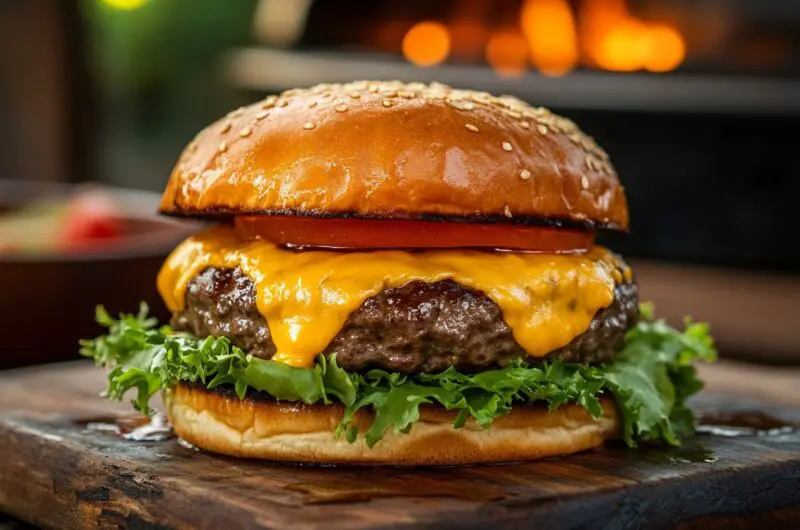
The Juiciest Two-Ingredient Burger
Course: DinnerCuisine: American4
burgers5
minutes8
minutes350
kcalThe simplest trick for incredibly juicy burgers — just olive oil and Worcestershire sauce mixed into the beef before cooking.
Ingredients
1 pound 80/20 ground beef (ground chuck)
1 tablespoon olive oil
1 tablespoon Worcestershire sauce
Kosher salt (1/2 to 3/4 teaspoon per patty)
Freshly ground black pepper
4 brioche hamburger buns
1 tablespoon butter (for stovetop cooking, optional)
4 slices American cheese (optional)
Desired toppings: lettuce, tomato, pickles, onion, ketchup, mustard
Directions
- Place the ground beef in a large mixing bowl. Add the olive oil and Worcestershire sauce. Use your hands to gently fold everything together until the liquids are just incorporated into the meat. Do not knead, squeeze, or overwork the mixture — it should take about 30 seconds of gentle folding.
- Divide the mixture into 4 equal portions, about 4 ounces each. Gently shape each portion into a patty about 1/2 inch thick and slightly wider than your hamburger bun. The patties will shrink as they cook, so making them a bit larger now accounts for that.
- Press your thumb into the center of each patty to create a shallow indentation about 2 inches wide. This prevents the burger from puffing up into a dome shape during cooking. Place the patties on a plate and refrigerate for 10 minutes if you have time — this helps them hold their shape.
- Preheat your grill to medium-high heat (375–400°F) or set a cast iron skillet on the stove over medium-high heat. If using a skillet, add a pat of butter and let it melt and coat the surface. If grilling, lightly oil the grates with a paper towel dipped in vegetable oil.
- Right before the patties go on the heat — not a moment sooner — season both sides generously with kosher salt and freshly ground black pepper. Salting too early pulls moisture out of the meat and leads to a drier burger.
- Place the patties on the grill or in the hot skillet. Cook for 3 to 4 minutes on the first side without moving them. You want a solid crust to form. Flip once, then cook for another 3 to 4 minutes on the second side for medium doneness (140–145°F internal temperature).
- If adding cheese, place a slice on each patty during the last minute of cooking and cover with a lid or dome to help it melt. Remove the burgers from the heat and let them rest for 2 minutes on a clean plate. This allows the juices to redistribute throughout the patty.
- Toast the brioche buns lightly on the grill or in the skillet, cut side down, for about 30 seconds. Assemble the burgers with your preferred toppings and serve immediately while hot and juicy.
Notes
- This recipe works with 85/15 or 90/10 ground beef as well. If using a leaner grind, consider adding an extra half tablespoon of olive oil to compensate for the lower fat content.
- Do not press down on the patties with your spatula while they cook. This forces juices out of the burger and is the number one cause of dry homemade burgers.
- Formed patties can be refrigerated for up to 48 hours or frozen for up to 3 months. If freezing, place patties on parchment paper, freeze flat, then transfer to a freezer bag.