


Most people think making great cornbread is complicated, but here’s a secret that Southern grandmothers have known for generations: it’s actually one of the easiest breads you can bake. The real trick isn’t about fancy techniques or hard-to-find ingredients. It’s about understanding a few simple rules that make the difference between dry, crumbly cornbread and the kind that makes everyone ask for seconds. Whether you’re serving it alongside a steaming bowl of chili or crumbling it into a glass of cold buttermilk, this recipe will become your go-to.
Why buttermilk makes all the difference
Have you ever wondered why some cornbread turns out light and tender while others come out dense as a brick? The answer often comes down to buttermilk. This tangy ingredient does double duty in cornbread recipes. First, it adds a subtle tang that balances the natural sweetness of corn. Second, and more importantly, buttermilk reacts with baking soda to create tiny air bubbles throughout the batter. These bubbles are what give cornbread its signature fluffy texture that practically melts in your mouth.
The acid in buttermilk also helps tenderize the gluten in flour, which keeps your cornbread from becoming tough or chewy. If you don’t have buttermilk on hand, don’t worry. You can make a quick substitute by adding two tablespoons of lemon juice or white vinegar to two cups of whole milk. Let it sit for five minutes, and you’ll have a homemade buttermilk substitute that works perfectly. It won’t taste quite the same as the real thing, but it gets the job done for baking purposes.
The cast iron skillet secret everyone should know
There’s a reason Southern cooks have been using cast iron skillets for cornbread for over a hundred years. A well-seasoned cast iron pan holds heat incredibly well and distributes it evenly across the bottom. This creates that gorgeous golden-brown crust on the bottom and edges that cornbread lovers dream about. The crust should be crispy and slightly caramelized while the inside stays soft and fluffy. No other type of pan can achieve this same result quite as well.
The real trick is preheating your skillet in the oven before adding the batter. Put a tablespoon of oil or butter in a 10-inch cast iron skillet and let it heat for five to ten minutes at high temperature. When you pour your batter into that sizzling hot pan, you’ll hear a satisfying sound. That’s the crust forming immediately on contact. This step is non-negotiable if you want authentic Southern cornbread with a proper crunch. Don’t skip it, even if you’re in a hurry.
Stone-ground versus regular cornmeal
Walk down the baking aisle at any grocery store and you’ll see several types of cornmeal. The kind you choose has a direct impact on your finished cornbread. Regular cornmeal is finely ground and produces a smoother, more cake-like texture. Stone-ground cornmeal, on the other hand, has a coarser grind that gives your cornbread more body and a stronger corn taste. It also has more nutrients since the germ and hull are often left intact during processing.
For truly authentic Southern cornbread, stone-ground cornmeal is the way to go. Brands like Bradley’s Stone Ground Cornmeal or Bob’s Red Mill work great. One important tip: always store your cornmeal in the refrigerator or freezer. Because stone-ground varieties contain natural oils from the corn germ, they can go rancid if left in the pantry too long. Fresh cornmeal smells sweet and earthy, while old cornmeal has an off smell that will ruin your recipe.
The great sugar debate in Southern cornbread
Ask any group of Southerners about putting sugar in cornbread and you might start an argument. Traditional Southern cornbread contains little to no sugar, letting the natural sweetness of the corn shine through. The bread is meant to be savory, a perfect accompaniment to beans, greens, and stews. Many Southern cooks would consider adding sugar to be almost disrespectful to the tradition. They prefer their cornbread to balance rich, hearty main dishes.
Northern-style cornbread, on the other hand, often includes a generous amount of sugar, making it taste more like cake. Some recipes call for up to two-thirds cup of sugar, which creates a sweeter, denser bread. Neither style is wrong, of course. It all comes down to personal preference and what you grew up eating. If you’re unsure, start with just a tablespoon of sugar and adjust from there based on your taste.
How much flour should you actually use
The ratio of flour to cornmeal is another area where recipes vary wildly. Some old-school Southern recipes use no flour at all, relying entirely on cornmeal for structure. These versions are denser and more crumbly. Adding flour lightens up the cornbread and helps it hold together better. Too much flour, however, and you lose that distinct corn taste that makes cornbread special. Finding the right balance is key to getting the texture you want.
A good rule of thumb is to use about three parts cornmeal to one part flour. This moist cornbread approach gives you the best of both worlds. You get a tender crumb that doesn’t fall apart when you slice it, but you still taste the corn in every bite. If you need a gluten-free version, you can skip the flour entirely and increase the cornmeal slightly. Just know that your cornbread will be a bit more crumbly and dense.
Why overmixing ruins everything
This might be the most common mistake home cooks make with cornbread, and it’s so easy to avoid. When you mix flour with liquid, you start developing gluten. A little gluten gives your bread structure. Too much gluten makes it tough and chewy like rubber. The solution is simple: stop mixing as soon as your wet and dry ingredients come together. A few lumps in the batter are perfectly fine and actually preferable to an over-mixed, smooth batter.
Think of it like this: you want to stir just until you don’t see any more dry flour or cornmeal. It’s okay if the batter looks a little rough. Once you pour it into the hot skillet and it starts baking, everything will smooth out and come together beautifully. Resist the urge to keep stirring to get a perfectly smooth batter. Your patience at this step will be rewarded with lighter, more tender cornbread that everyone will love.
The best things to serve with cornbread
Cornbread is one of the most versatile side dishes in Southern cooking. It pairs naturally with barbecue, chili, and any kind of stew. The slightly sweet corn taste complements smoky, spicy, and savory foods equally well. A classic Southern meal might include cornbread alongside black-eyed peas, collard greens, and fried fish. In the summer, it’s perfect with fresh sliced tomatoes and creamed corn straight from the garden. The possibilities are nearly endless.
One traditional way to enjoy cornbread might surprise you if you didn’t grow up in the South. Many people crumble warm cornbread into a tall glass of cold buttermilk and eat it with a spoon. It sounds strange, but the combination of warm, tender bread with cold, tangy buttermilk is surprisingly delicious. Leftover cornbread also makes an excellent base for cornbread dressing during the holidays. Just crumble it up and freeze it until you’re ready to make your stuffing.
How to store and reheat leftover cornbread
Fresh cornbread is always best, but leftovers can still be delicious if you store them properly. Keep leftover cornbread covered at room temperature for up to four days. The crust will soften over time, but the bread will still taste good. For longer storage, wrap it tightly in plastic wrap and then aluminum foil before freezing. Frozen cornbread will keep for up to thirty days without losing much quality. Just thaw it before reheating.
When it comes to reheating, avoid the microwave if you can. It tends to make cornbread rubbery and unappetizing. Instead, slice your leftover cornbread in half horizontally, add a pat of butter, and toast it under the broiler for a few minutes. This method crisps up the outside while warming the inside. An air fryer also works great for reheating. You’ll get results almost as good as fresh-baked cornbread with very little effort.
Common mistakes that lead to dry cornbread
Dry cornbread is disappointing, but it’s also completely preventable. The most common cause is overbaking. Cornbread doesn’t need much time in the oven, usually just twenty to thirty minutes depending on your pan size and oven temperature. Start checking for doneness around the fifteen-minute mark. Your cornbread is done when the top is golden brown and a toothpick inserted in the center comes out clean. Pull it out immediately when you see these signs.
Another cause of dry cornbread is not using enough fat. Butter, oil, or bacon grease all add moisture and richness to your bread. Don’t skimp on the fat called for in the recipe. Some cooks also make the mistake of using old cornmeal that has gone stale. As mentioned earlier, cornmeal can go bad, especially stone-ground varieties. Always smell your cornmeal before using it. If it doesn’t smell fresh and slightly sweet, replace it with a new bag before baking.
Southern buttermilk cornbread has been a staple on dinner tables for generations, and for good reason. It’s simple, satisfying, and pairs with almost anything. Once you master the basics like using a hot cast iron skillet, choosing quality cornmeal, and not overmixing your batter, you’ll be turning out perfect cornbread every time. So the next time you’re planning a meal, skip the store-bought stuff and make a batch from scratch. Your friends and family will notice the difference immediately.
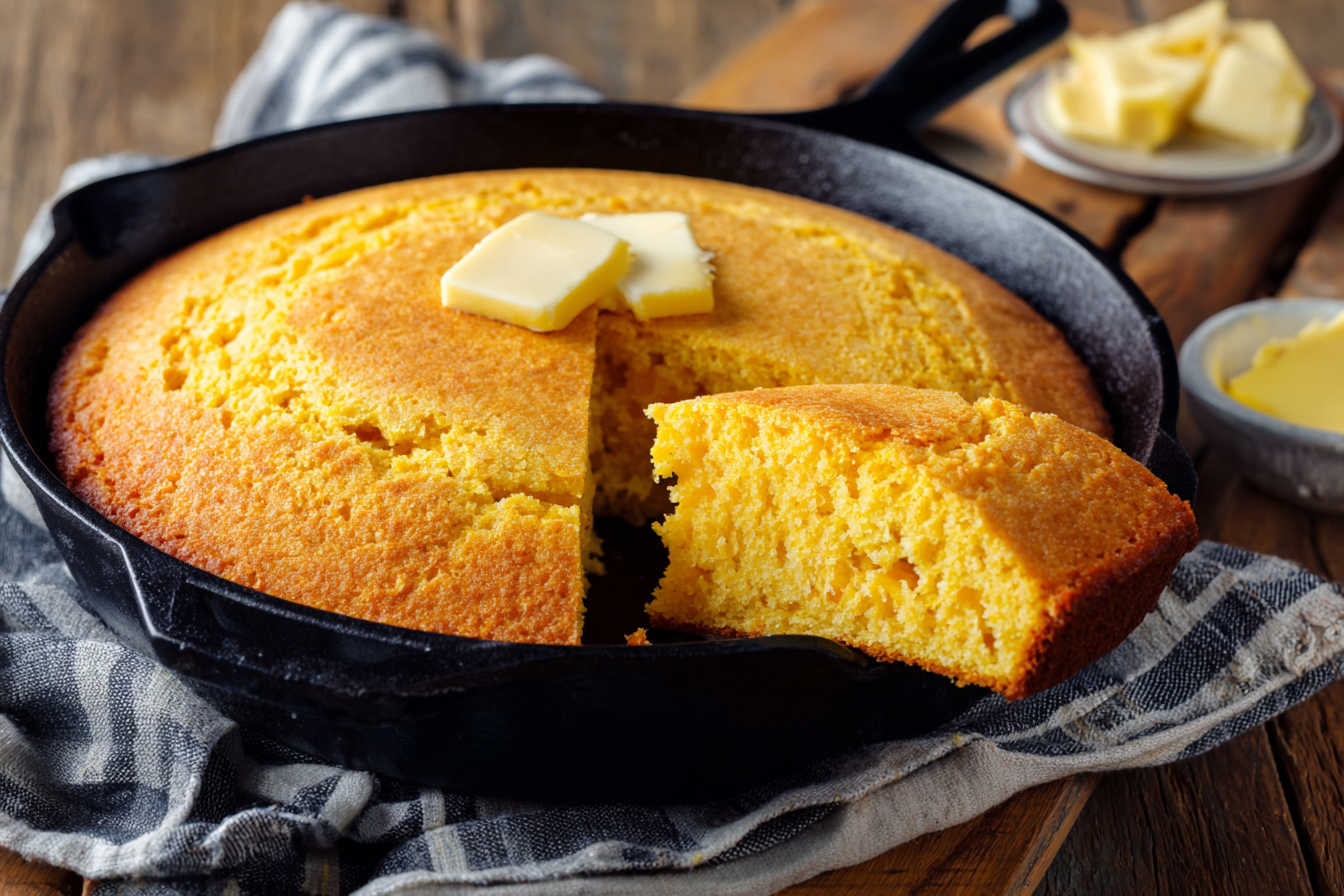
The Fluffiest Southern Buttermilk Cornbread
Course: Side DishCuisine: American, Southern8
servings10
minutes20
minutes217
kcalThis easy Southern buttermilk cornbread comes out perfectly golden and fluffy every single time.
Ingredients
2 cups stone-ground cornmeal (yellow or white)
3/4 cup all-purpose flour
2 teaspoons baking powder
1/2 teaspoon baking soda
1 teaspoon kosher salt
2 cups buttermilk
2 large eggs
1/4 cup peanut oil or vegetable oil
1 tablespoon additional oil for greasing the skillet
Directions
- Preheat your oven to 450°F (230°C). Add one tablespoon of oil to a 10-inch cast iron skillet and place it in the oven to heat for five to ten minutes. This step is crucial for developing a crispy golden crust on the bottom of your cornbread.
- While the skillet is heating, add the cornmeal, flour, baking powder, baking soda, and salt to a large mixing bowl. Whisk these dry ingredients together until they are evenly combined and no clumps remain. Set this bowl aside while you prepare the wet ingredients.
- In a separate smaller bowl, lightly beat the eggs. Add the buttermilk and peanut oil to the eggs and whisk everything together until well combined. The mixture should be smooth and slightly frothy.
- Pour the wet ingredients into the bowl with the dry ingredients. Stir gently with a wooden spoon or spatula just until the batter is moistened. Stop mixing when you no longer see dry flour, even if a few small lumps remain. Overmixing will make your cornbread tough.
- Using oven mitts, carefully remove the hot skillet from the oven. Tilt the pan in a circular motion to swirl the oil around, making sure it coats the bottom and about halfway up the sides. You should hear a slight sizzle, which means the pan is properly heated.
- Immediately pour the batter into the hot skillet. You will hear a satisfying sizzle as the batter hits the hot oil. This is the crust forming on the bottom of your cornbread. Use a spatula to gently spread the batter evenly if needed.
- Place the skillet back in the oven and bake for approximately 20 minutes, or until the top is golden brown and the edges start to pull away from the sides of the pan. The center should spring back when gently pressed, and a toothpick inserted in the middle should come out clean.
- Remove the skillet from the oven and place it on a wire rack or heat-safe surface to cool for five minutes. You can either slice the cornbread directly in the skillet to serve, or flip it onto a plate by placing a large plate over the skillet and carefully inverting both together. Serve immediately while still warm with plenty of butter.
Notes
- For extra richness, substitute melted bacon grease for the peanut oil. This adds wonderful smoky flavor to your cornbread.
- If you prefer sweeter cornbread, add 1 to 2 tablespoons of sugar to the dry ingredients. Traditional Southern cornbread contains no sugar.
- No buttermilk? Mix 2 cups of whole milk with 2 tablespoons of white vinegar or lemon juice and let sit for 5 minutes before using.
- Store leftover cornbread covered at room temperature for up to 4 days, or freeze wrapped tightly for up to 30 days. Reheat under the broiler or in an air fryer for best results.
Frequently Asked Questions
Q: Can I make cornbread without a cast iron skillet?
A: Yes, you can use an 8-inch or 9-inch metal baking pan or glass baking dish instead. However, the crust won’t be quite as crispy as when baked in a preheated cast iron skillet. Grease the pan well with butter or oil before adding the batter.
Q: Why did my cornbread turn out dry and crumbly?
A: Dry cornbread usually results from overbaking, not using enough fat, or using old cornmeal. Start checking your cornbread around the 15-minute mark, make sure to use the full amount of oil or butter called for, and always use fresh cornmeal stored in the refrigerator or freezer.
Q: What’s the difference between yellow and white cornmeal?
A: Both types work equally well in cornbread recipes. Yellow cornmeal has a slightly more pronounced corn taste and gives the bread a deeper golden color. White cornmeal produces a milder flavor and lighter appearance. Choose based on personal preference.
Q: Can I make cornbread batter ahead of time?
A: It’s best to bake cornbread immediately after mixing the batter. The baking powder and baking soda start reacting with the buttermilk as soon as they’re combined, creating the air bubbles that make cornbread fluffy. If the batter sits too long, you’ll lose that lift and end up with denser bread.