


Most people think grilled cheese is just bread and cheese in a pan, but there’s an Italian version that takes this simple sandwich to a completely different level. Called mozzarella in carrozza, which means “mozzarella in a carriage,” this dish comes from the Campania region of Italy and involves coating your assembled sandwich in flour, egg, and breadcrumbs before frying it in oil. The result is a crispy, golden shell surrounding molten cheese that pulls apart in those satisfying cheese strings everyone loves.
Why coating your sandwich in breadcrumbs changes everything
When you bread and fry a sandwich instead of just grilling it, the texture becomes something special. The breadcrumb coating creates an incredibly crispy exterior that’s way crunchier than regular grilled cheese. At the same time, frying the sandwich causes the cheese inside to get extremely melty and gooey, giving you those perfect cheese pulls that make for great photos and even better eating. The contrast between the crunchy outside and the soft, melted inside is what makes this sandwich so good.
Regular grilled cheese can get crispy too, but there’s a limit to how much crunch you can achieve with just bread. The breadcrumb layer adds an extra dimension of texture that you simply can’t get otherwise. Plus, the frying process seals everything together, so you get a neat package instead of cheese oozing out everywhere. This method might seem like extra work, but once you taste the difference, you’ll understand why Italians have been making it this way for generations.
Using stale bread makes the process work better
Fresh bread might seem like the obvious choice, but day-old bread actually works better for mozzarella in carrozza. Stale bread has less moisture, which means it won’t turn into a soggy mess when you dip it in egg wash. The firmer texture of older bread also holds up better during the coating process, and it won’t fall apart when you’re trying to flip it in the hot oil. Italian bread is the traditional choice, though any white bread with a firm texture will work well.
If you only have fresh bread, you can leave it out on the counter for a few hours or lightly toast it first. Some people remove the crusts before assembling the sandwich, which is the traditional way to make this dish. The reason for cutting off the crusts is to create a more uniform texture throughout the sandwich, and it also makes the breading process easier since you have neat, even edges to work with.
Fresh mozzarella gives you the best cheese pulls
The cheese you choose makes a huge difference in how this sandwich turns out. Fresh mozzarella is the traditional option, and it’s what gives you those amazing stretchy cheese pulls when you bite into the sandwich. The high moisture content in fresh mozzarella means it melts beautifully and becomes incredibly creamy inside that crispy shell. You can even make your own mozzarella at home if you’re feeling ambitious, though store-bought fresh mozzarella works perfectly fine.
That said, you don’t have to stick with just mozzarella. Many people add other cheeses like fontina, gruyère, or even sharp cheddar to add more depth. Some versions include a mix of shredded mozzarella for convenience, which still gives you great melting properties even if the cheese pulls aren’t quite as dramatic. Just avoid pre-shredded cheese that contains anti-caking agents, since those can affect how smoothly the cheese melts.
Getting the oil temperature right prevents greasy sandwiches
Temperature control is probably the trickiest part of making mozzarella in carrozza. If your oil isn’t hot enough, the sandwich will absorb too much oil and end up greasy and soggy. If it’s too hot, the outside will burn before the cheese has time to melt properly. The sweet spot is around 325 to 338 degrees Fahrenheit, which gives you enough heat to create a golden crust while allowing the cheese to melt completely.
A thermometer makes this much easier, but if you don’t have one, you can test the oil by dropping in a small piece of bread. If it sizzles immediately and turns golden brown in about 60 seconds, you’re at the right temperature. Use enough oil for shallow frying, which means about half an inch in your pan. Vegetable or seed oils work well because they don’t have a strong taste, though you can use olive oil if you want a more Italian character to the dish.
Fine breadcrumbs create a better texture than panko
The type of breadcrumbs you use affects the final texture of your sandwich. Fine, Italian-style breadcrumbs are the best choice because they create a delicate, even coating that becomes crispy without being overly crunchy. Panko breadcrumbs, which are popular for other fried foods, can make the exterior too hard and crunchy, which doesn’t work as well with the soft cheese inside. You want a coating that’s crispy but not so hard that it’s difficult to bite through.
You can make your own breadcrumbs by processing stale bread in a food processor until fine. Some people season their breadcrumbs with dried oregano, garlic powder, or Italian seasoning to add extra taste. The breading process itself is straightforward: dust the assembled sandwich with flour, dip it in beaten egg, then coat it thoroughly with breadcrumbs. Press the breadcrumbs gently to make sure they stick, and you’re ready to fry.
Adding anchovies or prosciutto makes it more substantial
Plain cheese is delicious, but traditional versions of mozzarella in carrozza often include other ingredients between the bread slices. Anchovies are a classic addition that adds a salty, savory depth to the sandwich. If you’re not an anchovy fan, thin slices of prosciutto work wonderfully and give you that same salty, meaty element. These additions turn the sandwich from a simple snack into something more filling that could easily be a meal.
For a vegetarian option, sun-dried tomatoes are a popular choice. They add a tangy, slightly sweet element that complements the mild mozzarella perfectly. Some people also add fresh basil leaves, which give a bright, fresh taste that cuts through the richness of the fried bread and cheese. Whatever you add, keep it thin and flat so the sandwich stays together and cooks evenly. Too many thick ingredients can make the sandwich difficult to handle and prevent the cheese from melting properly.
Letting the sandwich rest after frying is important
As tempting as it is to bite into your sandwich right out of the pan, waiting a minute or two makes a real difference. Resting the sandwich on paper towels or a wire rack allows excess oil to drain off, which prevents it from being greasy. More importantly, it gives the molten cheese inside a chance to set up slightly, so it won’t immediately burn your mouth or pour out all over the place when you take your first bite.
During this resting time, the cheese congeals just enough to stay inside the sandwich while still being perfectly melty and stringy. The coating also continues to crisp up a bit as it cools slightly. If you cut the sandwich too soon, all that beautiful melted cheese will just flow out onto your plate instead of staying where it belongs. A short wait gives you a much better eating experience, and it’s worth the patience even when the sandwich smells amazing and you’re hungry.
Marinara sauce is the perfect dipping companion
While mozzarella in carrozza is delicious on its own, serving it with marinara sauce takes it to another level. The acidity of tomato sauce cuts through the richness of the fried bread and cheese, creating a better balance. You don’t need anything fancy – a simple marinara made with crushed tomatoes, garlic, and basil works perfectly. The sauce also adds moisture, which makes each bite more interesting since you get both crispy and saucy elements.
You can make your own sauce or use a good quality store-bought version. Either way, serve it warm on the side for dipping. Some people prefer vodka sauce, which is creamier and adds a different dimension. The combination works because cheese and tomato are natural partners, as proven by pizza and pasta dishes throughout Italian cooking. Having that sauce there also makes the sandwich feel more like a complete dish rather than just a snack.
This sandwich works great as an appetizer for guests
Mozzarella in carrozza isn’t just for a fancy lunch – it makes an excellent appetizer when you have people over. Cut each sandwich into halves or quarters, and you’ve got finger food that’s way more impressive than regular grilled cheese. The individual pieces are easy to pick up and dip in sauce, and they look great on a platter. Everyone loves fried cheese, and this dish feels special enough for company but isn’t actually that difficult to make.
You can prep the sandwiches ahead of time by assembling and breading them, then keeping them in the fridge until you’re ready to fry. This makes it easier when you have guests since you can do the frying right before serving. The whole process moves quickly once you get started, and you can cook multiple sandwiches at once if you have a large enough pan. It’s the kind of dish that makes people think you went to a lot of trouble, when really it’s just a fancy version of something simple.
Making grilled cheese the Italian way means embracing a technique that’s been perfected over generations in southern Italy. The breading and frying process creates textures you simply can’t achieve with a regular pan-grilled sandwich. Once you experience that crispy golden crust surrounding stretchy, melted mozzarella, plain grilled cheese starts to seem a little boring. Give mozzarella in carrozza a try next time you’re in the mood for something comforting but special.
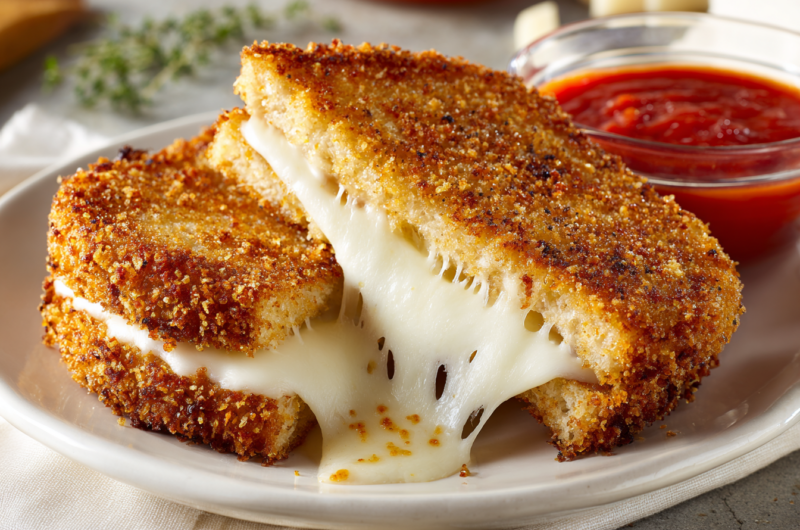
Mozzarella in Carrozza (Italian Fried Grilled Cheese)
Course: Appetizer, LunchCuisine: Italian4
sandwiches15
minutes10
minutes420
kcalThis crispy Italian grilled cheese sandwich gets coated in breadcrumbs and fried to golden perfection with stretchy mozzarella inside.
Ingredients
8 slices white Italian bread (preferably day-old)
8 ounces fresh mozzarella cheese, sliced
1/2 cup all-purpose flour
2 large eggs, beaten
1 cup fine Italian breadcrumbs
Vegetable oil for frying (about 1 cup)
Salt to taste
4 anchovy fillets or 4 thin slices prosciutto (optional)
Marinara sauce for serving
Directions
- Remove the crusts from the bread slices if desired, then lay out four slices on your work surface. Divide the mozzarella slices evenly among these four pieces of bread, making sure to leave a small border around the edges. If using anchovies or prosciutto, place them on top of the cheese now. Top each with the remaining bread slices to create four sandwiches, pressing down gently to seal the edges.
- Set up your breading station with three shallow dishes or plates. Put the flour in the first dish, the beaten eggs in the second, and the breadcrumbs in the third. Add a pinch of salt to each dish and mix to combine. This assembly line setup makes the coating process much smoother and less messy.
- Take one sandwich and dust it lightly with flour on both sides, shaking off any excess. Dip the floured sandwich into the beaten egg, making sure both sides are completely coated. Let the excess egg drip off for a moment, then place the sandwich in the breadcrumbs. Press the breadcrumbs gently onto both sides of the sandwich, making sure you have an even coating. Repeat this process with the remaining three sandwiches.
- Pour about half an inch of oil into a large skillet and heat it over medium heat until it reaches 325 to 338 degrees Fahrenheit. If you don’t have a thermometer, test the oil by dropping in a small piece of bread – it should sizzle immediately and turn golden in about 60 seconds. The oil temperature is critical for getting crispy sandwiches that aren’t greasy.
- Carefully place one or two breaded sandwiches in the hot oil, depending on the size of your pan. Don’t overcrowd the pan or the temperature will drop too much. Fry for about 2 to 3 minutes on the first side, until the coating is golden brown and crispy. Use a spatula to carefully flip the sandwich and fry for another 2 to 3 minutes on the second side.
- Remove the fried sandwich from the oil and place it on a plate lined with paper towels to drain excess oil. Let it rest for about one to two minutes before serving – this allows the cheese to set slightly and prevents it from being too molten. The resting time also helps the coating crisp up even more.
- Repeat the frying process with the remaining sandwiches, making sure to check the oil temperature between batches. Add a bit more oil to the pan if needed to maintain the half-inch depth. Keep the finished sandwiches warm in a low oven if you’re making multiple batches.
- Cut each sandwich in half diagonally and serve immediately with warm marinara sauce on the side for dipping. The sandwiches are best eaten while still hot and crispy, when the cheese is at its most stretchy and the coating is at its crunchiest.
Notes
- Day-old or stale bread works better than fresh bread because it absorbs less oil and holds together better during frying. If you only have fresh bread, leave it out uncovered for a few hours or lightly toast it first.
- Maintaining the correct oil temperature is the most important factor in getting crispy, non-greasy sandwiches. Too cool and they’ll be soggy, too hot and they’ll burn before the cheese melts.
- You can assemble and bread the sandwiches up to 2 hours ahead and keep them covered in the refrigerator until ready to fry. This makes them great for entertaining.
- For extra Italian seasoning, add dried oregano, basil, or garlic powder to your breadcrumb mixture before coating the sandwiches.
- Leftover sandwiches can be reheated in a 375-degree oven for about 10 minutes, though they’re definitely best fresh.
Frequently asked questions
Q: Can I bake these sandwiches instead of frying them?
A: You can bake them at 400 degrees Fahrenheit for about 15 minutes, flipping halfway through, but they won’t be quite as crispy as the fried version. Brushing them with oil before baking helps improve the texture.
Q: What’s the best way to cut fresh mozzarella without it falling apart?
A: Use a very sharp knife and wipe it clean between cuts. You can also pat the mozzarella dry with paper towels before slicing to remove excess moisture, which makes it easier to handle.
Q: Can I use regular sandwich bread instead of Italian bread?
A: Yes, any firm white bread will work. Just make sure it’s sturdy enough to hold together during the breading and frying process. Avoid very soft sandwich bread that might fall apart.
Q: How do I know when the cheese is fully melted inside?
A: The sandwich will feel slightly softer when you press on it gently with your spatula, and you’ll see the cheese starting to peek out at the edges. Each side should be fried for at least 2 to 3 minutes to ensure proper melting.